Iran Declares Strait Of Hormuz Closed Again After Attacking Commercial Ship
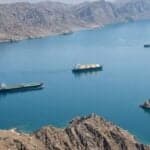


Iran said it had closed the Strait of Hormuz once again after its military struck a commercial vessel travelling on what it called an “unauthorised route.”
Iran’s Islamic Revolutionary Guard Corps (IRGC) said late Saturday that its naval forces fired a warning shot at a vessel that had switched off its systems and ignored repeated orders to change course.
The IRGC said the vessel was struck and brought to a halt after failing to follow instructions.
The force also said several ships had attempted to pass through the strait using routes it had not approved. It announced that the Strait of Hormuz would remain closed “until further notice” and until what it described as the end of US interference in the region.
In response, US Central Command said it launched a third round of strikes against Iran this week after IRGC forces attacked the Cyprus-flagged container ship M/V GFS Galaxy while it was transiting the Strait of Hormuz.
The US military said the ship suffered significant engine room damage and one civilian crew member is missing.
“The United States is imposing a heavy cost by continuing to degrade Iran’s ability to attack civilian mariners and commercial ships freely transiting the strait,” US Central Command said.
A US official said the strikes targeted Iranian surface-to-air missile launchers, drone and missile storage facilities, launch sites and surveillance radar systems.
Iranian state media reported explosions in Bushehr and Asaluyeh early Sunday, while later reports also described explosions around Bandar Abbas, Sirik and nearby Qeshm Island.
US Defence Secretary Pete Hegseth wrote on X that Iran had “made a poor choice” and would now face the consequences.
The latest military action came a day after the Trump administration called on Iran to publicly state that the Strait of Hormuz was open and that commercial ships would not be attacked.
US officials said negotiations on last month’s interim agreement could not move forward unless Iran made that commitment.
Instead, Iran said the waterway would remain closed and warned that any further action by the United States or its allies would be met with “severe” retaliation.
Earlier on Saturday, Iranian and Omani officials met in Muscat to discuss navigation through the Strait of Hormuz.
According to CNN, Oman proposed dividing the waterway into two shipping corridors. Ships using the southern corridor in Omani waters would continue operating as before, while vessels using the northern corridor in Iranian waters would require approval from Tehran.
Iranian Foreign Minister Abbas Araghchi said the talks focused on ways to ensure the safe passage of ships. Oman said discussions would continue at both the political and technical levels.
Iran’s foreign ministry later said the talks did not produce an agreement because of what it described as overt and covert US pressure on Oman.
Iran’s attacks reached Qatar, while the United Arab Emirates said it intercepted Iranian missiles and drones.
Bahrain reported intercepting several aerial attacks, Jordan reported missile strikes, Oman said it was targeted by drones, and Kuwait reported damage from strikes, including an attack on an oil drilling platform that injured one worker.
US Central Command said American aircraft shot down an Iranian cruise missile and a one-way attack drone.
Iran’s Revolutionary Guards said they had struck military-related targets in Jordan, Kuwait, Oman and Qatar.
Qatar said three people, including a child, were injured by falling shrapnel and said Iran was responsible for the attack.
Oman said it had summoned Iran’s ambassador after drone attacks in two regions, while the US embassy advised American citizens in Duqm and Musandam to shelter in place.
Iran said on Sunday it had disabled a second vessel in the Strait of Hormuz.
India said one of its nationals was missing following the attack on the container ship M/V GFS Galaxy, while Oman said 23 crew members had been rescued.
Qatar advised commercial vessels, fishing boats, leisure craft and jet skis to suspend activities because of the security situation.
Iran’s newly formed Persian Gulf Strait Authority said ships could not currently pass through the Strait of Hormuz because of what it called recent illegal US military movements in the region. It said transit permits would be issued once stability returned.
The United States rejected Iran’s position, saying Tehran does not control the strait and that ships were continuing to use an expanded southern route near Oman despite the security threat.
The US Navy-led Joint Maritime Information Center also said the southern route remained open for two-way commercial traffic.
US Central Command said more than 300 Iranian military targets had been struck over three nights to reduce Iran’s ability to attack civilian shipping.
References: NY Post, Reuters
Want to read more?
Check out the full article on the original site