UAE Condemns ‘Brazen’ Iranian Missile Attack On Two Oil Tankers In Strait Of Hormuz
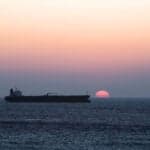


The United Arab Emirates has condemned an Iranian missile attack on two of its oil tankers in the Strait of Hormuz that killed one Indian crew member and injured eight others.
The attack adds to tensions around the Strait of Hormuz, one of the world’s most important oil shipping routes, where Iran and the United States have exchanged military actions in recent days.
According to the UAE Ministry of Foreign Affairs, the oil tankers Mombasa and Al Bahiyah were hit by two Iranian cruise missiles while sailing through the southern shipping lane of the Strait of Hormuz within Omani territorial waters.
The ministry said one Indian national was killed and eight crew members were injured, including four who suffered serious injuries. Those injured included six Indians and two Ukrainians.
The UAE expressed condolences to the family of the deceased and to the Government and people of India. It also wished the injured a speedy recovery.
In its statement, the ministry said the attack violated UN Security Council Resolution 2817, which supports freedom of navigation and rejects attacks on commercial vessels or the obstruction of international shipping routes.
It added that attacking commercial shipping and using the Strait of Hormuz as a means of economic pressure or blackmail amounted to piracy and threatened regional stability, global trade and energy security.
The UAE called on Iran to stop the attacks, commit to an immediate ceasefire and support the complete and unconditional reopening of the Strait of Hormuz.
Iran’s Islamic Revolutionary Guard Corps (IRGC) later confirmed it had struck the two tankers. It said the vessels ignored warnings, switched off their navigation systems and tried to pass through a mined route.
The IRGC said it disabled both vessels and warned that cooperation with what it called the “aggressor enemy” would delay the reopening of the Strait and contribute to an energy crisis.
The tanker attack came as US President Donald Trump announced that the United States would restore a naval blockade on Iranian ports and impose a 20% charge on cargo passing through the Strait of Hormuz.
In a post on Truth Social, Trump said the blockade would stop “Iran’s ships or customers” from entering or leaving the Strait while allowing other countries to continue using the waterway. He said the measures would take effect at 1600 Eastern Time (2000 GMT) on Tuesday.
Trump said the United States would become the “Guardian of the Hormuz Strait” and that the proposed charge would cover the cost of providing security in the area.
Speaking later at the White House, Trump said the United States was “hitting them very hard.”
“We’re knocking out all of their offensive capability. And we’re controlling the Strait,” he said, adding that he still believed a deal with Iran was possible.
US Central Command (CENTCOM) said it launched strikes on Monday at the president’s direction. It later confirmed attacks on military targets in Bushehr, Chah Bahar, Jask, Konarak, Abu Musa and Bandar Abbas, saying the operation aimed to reduce Iran’s ability to attack commercial shipping.
CENTCOM also said US forces would resume blockading maritime traffic entering and leaving Iranian ports from July 14 while continuing to support vessels that were not violating the blockade.
Iran’s army responded by targeting US military assets in Kuwait, according to Iranian state media.
The IRGC also said it had struck military facilities in Bahrain, including weapons depots, a satellite communications centre and a building housing US forces. Early on Tuesday, it said it had also targeted an air base in Jordan with ballistic missiles.
Iranian Foreign Minister Abbas Araghchi responded to Trump’s announcement by saying Iran had always been the “GUARDIAN” of the Strait of Hormuz and would remain so.
Writing on X, Araghchi said Trump was right that those providing safe passage through the Strait should be paid, but added that a 20% charge was too high.
“Iran has always been the GUARDIAN of the Strait and will remain so FOREVER,” he wrote. “20% is of course too much. We will be fair.”
Before Trump’s announcement, Iran’s Khatam al-Anbiya military headquarters said it would not allow the United States to interfere in the management of the Strait of Hormuz.
Its spokesperson, Ebrahim Zolfaghari, said repeated US actions had endangered regional security, international trade and the movement of oil tankers and commercial vessels. He added that any cooperation with the United States would be considered an act of war against Iran’s sovereignty.
The International Maritime Organization (IMO), the UN agency responsible for regulating global shipping, said there was no legal basis for introducing mandatory charges for ships simply passing through international straits.
Oil prices rose following the latest escalation. Brent crude gained 0.7% in Asian trading to $83.87 a barrel after jumping more than 9% on Monday. US crude rose 0.9% to $79.04.
Under international law, coastal states can exercise control over territorial waters extending up to 12 nautical miles from their coastline. At its narrowest point, the Strait of Hormuz and its shipping lanes lie within the territorial waters of Iran and Oman.
According to the information released, Iran effectively closed the Strait after US and Israeli strikes on Feb. 28. Before the disruption, about 25% of the world’s oil and 20% of global liquefied natural gas passed through the waterway.
Iran later launched missiles and drones at Israel and US military bases in several Gulf countries. The IRGC also fired on commercial ships attempting to pass through the Strait without its permission and seized two vessels. Maritime traffic fell sharply, contributing to higher oil prices.
The United States first imposed a naval blockade on Iranian ports in April. About five weeks later, the US military said it had redirected 100 commercial vessels and disabled four under the blockade.
The blockade was lifted in June under a memorandum of understanding aimed at easing the conflict, but tensions over the Strait of Hormuz have since returned.
References: BBC, Emirates247
Want to read more?
Check out the full article on the original site