EU Paid $6.82 Billion For Russian Yamal LNG During First Six Months Of 2026 Ahead Of Import Ban
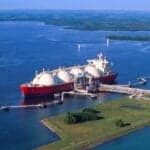


The European Union imported record volumes of liquefied natural gas (LNG) from Russia’s Yamal LNG project in the first six months of 2026, accounting for more than 97% of the project’s global exports and paying an estimated €5.96 billion ($6.82 billion), according to an analysis of Kpler shipping data by campaign group Urgewald.
The EU continues its phased ban on Russian gas imports following Russia’s invasion of Ukraine. While imports of Russian LNG under short-term contracts were banned from April 2026, deliveries under long-term contracts can continue until January 1, 2027.
According to Urgewald’s analysis, 140 cargoes carrying 10.25 million tonnes of LNG left the Yamal project in Russia’s western Arctic between January and June.
Of these, 136 cargoes carrying 9.97 million tonnes were delivered to EU ports. China received only four cargoes, totaling 282,248 tonnes.
Compared with the first half of 2025, EU imports from Yamal increased from 117 cargoes and 8.57 million tonnes to 136 cargoes and 9.97 million tonnes, a 16% increase in volume.
Over the same period, shipments to Asia dropped from 25 cargoes carrying 1.80 million tonnes to four cargoes with 282,248 tonnes, an 84% decline.
Urgewald estimated that the EU paid €2.88 billion for Yamal LNG between January and March and another €3.08 billion ($3.52 billion) between April and June.
On average, the EU received one Yamal LNG cargo every 1.3 days, or about 55,089 tonnes of LNG per day, the analysis showed.
France was the largest importer, receiving 51 cargoes carrying 3.74 million tonnes. Belgium imported 37 cargoes totaling 2.70 million tonnes, while Spain received 34 cargoes carrying 2.50 million tonnes.
The Netherlands imported 12 cargoes totaling 881,970 tonnes, and Portugal received two cargoes carrying 147,170 tonnes.
Among European terminals, Zeebrugge handled the most Yamal cargoes with 37, followed by Dunkerque (26), Montoir (25), Bilbao (17), Gate Rotterdam (12), Mugardos (10), Barcelona (4), Sagunto (2) and Sines (2).
Urgewald said Europe’s role in the Yamal project goes beyond buying LNG. The project depends on a fleet of specialised Arc7 ice-class LNG carriers that operate through Arctic sea ice during winter.
According to the group, these vessels rely on European ports for quick turnaround, while conventional LNG carriers can usually support operations only during the summer and autumn months.
The group also said Fayard shipyard in Denmark remains the last shipyard in the EU servicing these Arc7 vessels.
Up to six Arc7 tankers could require maintenance before the EU’s ban on providing maritime services to Russian LNG vessels takes effect on January 1, 2027.
The first of those vessels, Rudolf Samoylovich, arrived at Fayard on June 30, drawing criticism from Vladyslav Vlasiuk, an adviser on sanctions policy to Ukrainian President Volodymyr Zelensky.
Sebastian Rötters, sanctions campaigner at Urgewald, said Europe continues to provide the ports, shipping services and maintenance needed to keep Yamal LNG exports moving. He said almost every cargo from the project in the first half of 2026 went to Europe, while China received only a small share.
Rötters also referred to the war in Ukraine, saying the imports continued as Russia stepped up missile and drone attacks. Urgewald cited reports that several waves of attacks on Kyiv and other Ukrainian cities killed more than 40 people during the previous week.
The group also referred to a BBC report saying Ukraine had warned of a shortage of interceptor missiles after none of the 23 ballistic missiles fired at Kyiv were intercepted. Ukrainian President Volodymyr Zelensky said one attack involved 68 missiles and 351 strike drones.
The analysis also showed that non-Russian shipping companies transported all recorded Yamal LNG cargoes during the first half of 2026.
Seapeak, through entities linked to the UK and Canada, carried 56 cargoes totaling 4.10 million tonnes, or about 40% of the total volume.
Dynagas, linked to Greece, transported 49 cargoes carrying 3.58 million tonnes, while MOL/COSCO, linked to Japan and China, carried 35 cargoes totaling 2.57 million tonnes.
Urgewald also identified 18 cargoes carrying 1.32 million tonnes that involved ship-to-ship transfers in Murmansk before being delivered to EU ports. All of these shipments were linked to MOL/COSCO vessels.
The Yamal LNG project is controlled by Russian producer Novatek, with stakes held by China National Petroleum Corporation (CNPC) and France’s TotalEnergies.
Separately, the EU Agency for the Cooperation of Energy Regulators (ACER) said Russian pipeline gas imports into the EU increased 7% year-on-year between January and May 2026, while Russian LNG imports rose 11%.
ACER said companies were bringing in more supplies ahead of the upcoming EU ban, while the bloc’s 2025 ban on Russian LNG trans-shipments also resulted in more cargoes remaining in Europe instead of being shipped to other markets.
The EU plans to end imports of Russian LNG under long-term contracts from January 1, 2027. The deadline for ending Russian pipeline gas imports is September 2027. Until then, Europe remains the main destination for exports from Russia’s Yamal LNG project.
References: Reuters, Urgewald
Want to read more?
Check out the full article on the original site