U.S. Reimposes Naval Blockade Of Iranian Ports & Reveals New Hormuz Plan
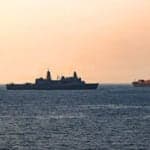


The United States has resumed its naval blockade on ships entering and leaving Iranian ports, restarting a military operation in Gulf waters as tensions with Iran continue to rise.
US Central Command (CENTCOM) said its forces began enforcing the blockade on July 14 at 4 p.m. ET (2000 GMT). The operation applies to vessels travelling to or from Iranian ports and coastal areas.
CENTCOM said it will continue to support commercial vessels operating in regional waters as long as they are not violating the blockade.
Tensions continue to grow between Washington and Tehran over the Strait of Hormuz, one of the world’s busiest shipping routes, following recent military exchanges and competing claims over the strategic waterway.
“At the Commander in Chief’s direction, U.S. Central Command (CENTCOM) forces will resume blockading maritime traffic entering and exiting Iranian ports,” CENTCOM said in a statement.
The command also advised mariners operating in the Gulf of Oman and the approaches to the Strait of Hormuz to monitor Notice to Mariners broadcasts and contact US naval forces on bridge-to-bridge Channel 16. It said more information would be issued through a formal notice to commercial shipping.
According to CENTCOM, the blockade was previously in place from April 13 to June 18. During that period, US forces redirected more than 140 compliant vessels, disabled nine non-compliant ships and allowed more than 50 commercial vessels carrying humanitarian aid to pass through the blockade.
The renewed operation follows US President Donald Trump’s announcement that Washington would restore the blockade while keeping the Strait of Hormuz open for international shipping.
In a post on Truth Social, Trump said, “The Hormuz Strait is OPEN, and will remain OPEN, with or without Iran. We are reinstating THE IRANIAN BLOCKADE.”
He also said the United States would act as the “Guardian of the Hormuz Strait” and charge a 20% fee on cargo passing through the waterway in return for providing maritime security.
Speaking separately to Fox News, Trump said the United States was effectively “taking over the Strait” and would be paid for protecting commercial shipping.
His comments came after Iran announced over the weekend that it was closing the Strait of Hormuz, raising concerns about global energy supplies and pushing oil prices higher.
Iran rejected the US position, saying it alone has authority over the strategic waterway.
Iranian Foreign Minister Abbas Araghchi said on X that Iran has always been the guardian of the Strait of Hormuz. He added that those providing safe passage should be compensated, but said the proposed 20% transit fee was too high.
“20% is of course too much. We will be fair,” Araghchi wrote.
Iran’s Khatam al-Anbiya Central Headquarters also rejected any US role in managing the strait.
Its spokesman, Brigadier General Ebrahim Zolfaghari, said Iran would not allow the United States to interfere in the management of the Strait of Hormuz.
He warned that Iran would take military action against US naval operations escorting commercial vessels outside shipping routes approved by Iran.
Zolfaghari also said Gulf countries providing logistical support to US forces would be considered to be taking part in an act of war against Iran’s sovereignty.
The International Maritime Organization (IMO) also opposed Trump’s proposal to charge transit fees. The UN agency said there is no legal basis for imposing mandatory tolls on ships simply passing through international straits such as the Strait of Hormuz.
The maritime dispute has coincided with renewed military action between the two countries.
CENTCOM said US forces carried out drone strikes on a submarine and ship maintenance facility in Iran.
Iranian state media reported strikes on military sites in Qeshm, Bandar Abbas and Abadan, confirming that at least two people were killed in Abadan.
Iran’s Revolutionary Guards later announced attacks on US military facilities in Bahrain, Kuwait, Oman and Jordan. Bahrain said it intercepted several Iranian missiles and drones, while Jordan and Kuwait also reported defensive operations.
The latest fighting has added further pressure to the interim agreement reached last month that temporarily reopened the Strait of Hormuz and paused hostilities.
Trump said he now considers that ceasefire to be over.
“We had a deal. It was a done deal, and then they broke it,” he told Fox News. “And so we’re just going to hit them very hard.”
Iran also indicated that negotiations had reached a deadlock.
Senior Iranian official Mohammad Baqer Qalibaf wrote on X that “the era of one-sided deals is over,” warning Washington to honour its commitments or face consequences.
Reference: US Centcom
Want to read more?
Check out the full article on the original site