Video: US Strikes Iran, Hits Dozens Of Military Targets Near Strait Of Hormuz And Coastal Areas
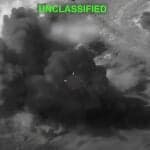


The United States carried out another round of strikes against Iran on Tuesday and reintroduced a naval blockade on vessels travelling to and from Iranian ports.
U.S. Central Command (CENTCOM) said the strikes began at 10 p.m. ET on July 14 and targeted dozens of Iranian military locations near the Strait of Hormuz and along Iran’s coastal areas.
The operation involved U.S. fighter aircraft, drones and naval vessels, which used precision weapons against Iranian missile and drone sites, naval capabilities and coastal defence systems.
CENTCOM said the seven-hour operation was aimed at reducing Iran’s ability to threaten commercial shipping and civilian crews operating in and around the Strait of Hormuz.
The U.S. military also resumed a naval blockade against vessels travelling to or from Iranian ports and coastal areas. CENTCOM said the blockade came into effect at 4 p.m. ET on the same day.
The latest strikes were the fourth consecutive day of U.S. military action against Iran. CENTCOM said the operations were focused on degrading Iranian capabilities that have been used to attack commercial shipping in the strategic waterway.
The Strait of Hormuz has remained at the centre of the conflict because of its importance as a route for Gulf oil and gas shipments. Iran has largely blocked the waterway since the start of the conflict.
A senior Iranian official said the renewed U.S. naval blockade had damaged an earlier agreement between Washington and Tehran to pause fighting and allow peace talks.
Earlier on Tuesday, Iran said previous U.S. strikes had hit Qeshm Island in the Strait of Hormuz. Local authorities also reported strikes on four locations in Bushehr, where Iran’s only civilian nuclear power plant is located, as well as an Iranian border area near Iraq and Kuwait.
The escalation also led to more incidents involving ships in the region.
The International Maritime Organization said Iran struck two ships in the Strait of Hormuz, killing two crew members. Maritime security company MTI Network also reported that a Norwegian tanker was damaged by an explosion caused by an unidentified device off the coast of Oman.
Kuwait said one of its naval vessels was hit during an Iranian missile and drone attack, injuring four crew members.
The developments came after U.S. President Donald Trump cancelled a planned 20% fee on ships passing through the Strait of Hormuz. He said the fee would instead be replaced with trade and investment agreements with Gulf countries.
The conflict also spread to other parts of the region.
Iran’s Revolutionary Guards said they launched missiles and drones towards Bahrain, targeting a residential building used by U.S. forces and other facilities.
Bahrain said it intercepted several Iranian aerial attacks and accused Tehran of targeting civilians after explosions and warning sirens were reported in Manama.
Jordan said it intercepted four missiles launched by Iran. Iran’s Revolutionary Guards said the attacks targeted U.S. forces at an air base and called on Jordanians to demand the removal of American bases from the region.
Iran has said it only targets U.S. interests, but an Iranian military spokesman warned that cooperation by Gulf countries with Washington would be considered an “act of war.”
Israeli Prime Minister Benjamin Netanyahu also warned Iran against attacking Israel, saying his country would respond strongly to any such action.
Speaking from Dimona, Netanyahu said, “Do not count on things remaining quiet if you attack us,” adding that Israel would respond to attacks.
According to an AFP tally based on Iranian media reports and official announcements, at least 28 people have been killed in Iran since renewed U.S. strikes began last week.
Iran began blocking the Strait of Hormuz after U.S.-Israeli attacks in February. The United States had previously imposed a blockade on Iranian ports from mid-April to mid-June before reinstating the measure on Tuesday.
Reference: US Centcom
Want to read more?
Check out the full article on the original site