EU Buys 9.97 Mt Of Russian LNG While Debating 21st Sanctions Package Against Moscow
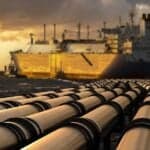


The European Union’s plan to tighten restrictions on Russian LNG has hit a wall due to resistance from Greece.
Athens has not offered support for the bloc’s 21st sanctions package against Moscow, stating that the proposed measures would ruin Dynagas, a shipping company controlled by Greek shipowner George Prokopiou.
Since unanimity is required before sanctions can be passed, the Greek objection has left measures targeting Russian financial institutions, drone manufacturing companies, cryptocurrency networks, oil traders and refiners unresolved.
At the heart of the dispute are 4 Arc7 icebreaking LNG carriers operated by Dynagas.
Built for Russia’s Yamal project, these vessels represent a third of the specialised fleet that can navigate the Arctic’s Gulf of Ob during the harsh winter.
Given their reinforced hulls and unique propulsion, they are difficult to redeploy commercially.
Greece argues that the proposed ban on shipping Russian LNG to other countries would force Dynagas to sell these specialised assets to non-Western buyers.
This would strip Europe of ownership and oversight without actually stopping the vessels from moving Russian gas.
Additionally, Dynagas LNG Partners rely heavily on the Yamal trade.
Two of its standard vessels are locked into long-term charters that extend beyond 2030, generating 35% of the partnership’s revenue in 2025.
While the EU wants to impose sanctions on Russia and prevent exports of its oil and gas, data from industry sources show a different reality.
In the first half of 2026, EU countries imported 9.97 million tonnes from Yamal, a 16% rise compared to the same period in 2025, valued at €5.96 billion.
France, Belgium, and Spain were the top importers of LNG from Yamal.
Experts note the surge is driven by companies front-loading supplies before tougher rules take effect, along with previous E.U bans on transshipping Russian LNG outside the European Union, which kept more gas within Europe.
The current dispute highlights a long-standing tension between Brussels and major EU maritime states like Cyprus and Malta.
These nations have consistently warned that additional sanctions would also affect European shipping businesses, driving the fleet into non-EU states and leaving the West with few tools to monitor safety standards or to counter sanctions evasion itself.
Want to read more?
Check out the full article on the original site