Suspected Somali Pirates Hijack Second Tanker In Three Months Off Yemen
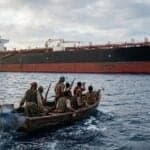


A chemical tanker was hijacked off Yemen’s southern coast on Friday in a suspected act of Somali piracy, maritime security officials said. It was the second tanker seized in the Gulf of Aden in three months.
The vessel, identified by Puntland security officials as the MT Asana, was boarded by armed men while sailing about 65 nautical miles south of Yemen’s Al Mukalla port.
Maritime security sources said initial assessments suggested the incident was linked to Somali pirates rather than Yemen’s Iran-aligned Houthi movement.
Merchant ships continue to face security risks in the Red Sea, Gulf of Aden and Strait of Hormuz.
The United Kingdom Maritime Trade Operations (UKMTO) said a vessel was boarded by “unauthorised personnel” while transiting east through the Gulf of Aden. It advised ships in the area to exercise caution and report any suspicious activity.
Three Puntland security officials told the BBC the tanker was the MT Asana, which they said was sailing under the Tanzanian flag and heading to the Puntland port of Bosaso.
According to the officials, seven armed men left a remote area near the port town of Garacad before boarding the vessel.
Ship-tracking data cited by Reuters showed Bosaso as the vessel’s next destination, although the tanker had no confirmed flag.
British maritime security company Ambrey said the tanker sent a distress call at about 0620 GMT and was operating without an armed security team. It assessed that the attackers were likely part of a pirate action group.
Vanguard, another British maritime security firm, said armed assailants had taken control of the vessel. It added that the number of attackers, the circumstances of the boarding, and the condition of the crew were still unclear.
The Regional Maritime Information Exchange Center, which is linked to Yemen’s internationally recognised government, said the incident showed “clear indications of an act of piracy aimed at detaining the ship and its crew for ransom.” It said the vessel remained under the complete control of the armed men while efforts continued to determine the safety of the crew.
The European Union’s Aspides naval mission said it was working to assist the tanker and establish what had happened. An Aspides official told Reuters that a South Korean warship was operating in the area.
Yemeni authorities said they were coordinating with international partners and maritime agencies to verify the vessel’s condition and track its movements.
Naval vessels, including a Yemeni coastguard boat, were reported to be heading towards the tanker while reconnaissance aircraft flew over the area.
Early reports cited by UKMTO indicated one person had been seen near the vessel’s bridge, with the tanker moving slowly southeast towards Somalia.
The latest hijacking follows the seizure of the MT Eureka near Yemen’s Qana port in May. Two other ships were boarded by pirates in the Indian Ocean in April, while several attempted attacks have also been reported in recent weeks.
According to the ICC International Maritime Bureau (IMB), nine piracy incidents were recorded between January and the end of June, including four ship hijackings in waters off Somalia and the Gulf of Aden. During the same period in 2025, three incidents were reported.
The Palau-flagged oil products tanker Honour 25 was also seized on April 21 about 30 nautical miles off Somalia’s Puntland region with 17 crew members on board.
Somali piracy had largely disappeared after multinational naval operations sharply reduced attacks more than a decade ago, leading the shipping industry to remove the Indian Ocean’s “high risk” designation in 2023.
However, the French Navy’s MICA Center has recorded 18 piracy incidents and hijackings since April, with at least three vessels still being held for ransom.
Maritime analysts said the rise in attacks has been linked to naval forces being stretched by conflicts in the Red Sea and the Strait of Hormuz, changing shipping routes that bring vessels closer to Somali waters, and continued instability in Somalia.
Puntland officials also said the Gulf of Aden is less heavily patrolled than the Indian Ocean, where the European Union Naval Force conducts anti-piracy operations, making it a more attractive area for pirate groups.
Since the U.S.-Israeli conflict with Iran began on Feb. 28, authorities in Somaliland and Puntland have been watching for signs that Yemen’s Houthis could transfer advanced weapons systems or maritime tactics to the region, according to security sources in the Horn of Africa.
Separately, Reuters reported on Thursday that Iran had asked the Houthis to stand ready to close the Red Sea oil route if the United States struck Iranian power infrastructure.
The Gulf of Aden forms part of the route linking the Indian Ocean with the Red Sea and the Suez Canal, through which about 12% to 15% of global trade by value and roughly 30% of the world’s container traffic passes each year.
On Thursday, European Union foreign policy chief Kaja Kallas signed a Status of Forces Agreement with Djibouti to support the bloc’s Atalanta and Aspides naval missions in the Red Sea and the Horn of Africa.
Kallas said the Aspides mission has protected more than 670 merchant vessels and rescued 128 seafarers in less than two and a half years.
References: BBC, Reuters
Want to read more?
Check out the full article on the original site