U.S Advances ‘Golden Dome’ Defence With 50% Cheaper Missile Tracking Ships
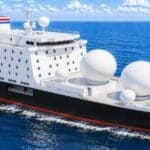


The U.S. is building new missile-range instrumentation ships to support the Missile Defence Agency and the Golden Dome missile defence initiative.
TOTE Services and Hanwha Philly Shipyard have been awarded the contract for this project, with the former serving as the ship construction manager and the latter building the ships at its Philadelphia yard.
Department of Transportation, the Department of War, and the Missile Defence Agency will work together to oversee this project’s different phases.
The Missile Range Instrumentation Vessels, or MRIVs, will replace Pacific Tracker and Pacific Collector, used to support missile range instrumentation missions. These ships were built in 1965 and 1970 and are nearing the end of their operational lives.
The first MRIV, Golden Defender, is scheduled for delivery in 2030, per reports.
The announcement of the program comes as the U.S focuses on rebuilding its domestic shipbuilding capacity and boosting its maritime industrial base.
Office of Management and Budget Director Russ Vought announced the Golden Defender project by saying that it will not only support the President’s policy of restoring America’s Maritime Dominance, but also the ‘Golden Dome’ missile defence system.
According to reports, TOTE Services and Hanwha Philly Shipyard will draw on their previous experience from the National Security Multi-Mission Vessel program, which delivered 3 ships.
The fourth one, named Lone Star State, has been christened and will be delivered in the coming months, while the fifth ship will be completed by 2027.
Hanwha plans to use the same hull form, production process, supply chain and workforce for the MRIV project, which was established at the Philadelphia yard during the National Security Multi-Mission Vessel program.
Additionally, the companies noted that the ship construction model can reduce the acquisition costs by atleast 50% compared to conventional procurement techniques.
The model depends on requirements which were already defined previously, so changes can be approved quickly.
The aim is to ensure there are no delays and the vessels are combat-ready when delivered.
Want to read more?
Check out the full article on the original site