Elizabeth Taylor's White Diamonds Icon Brings The Legendary Scent To A New Generation

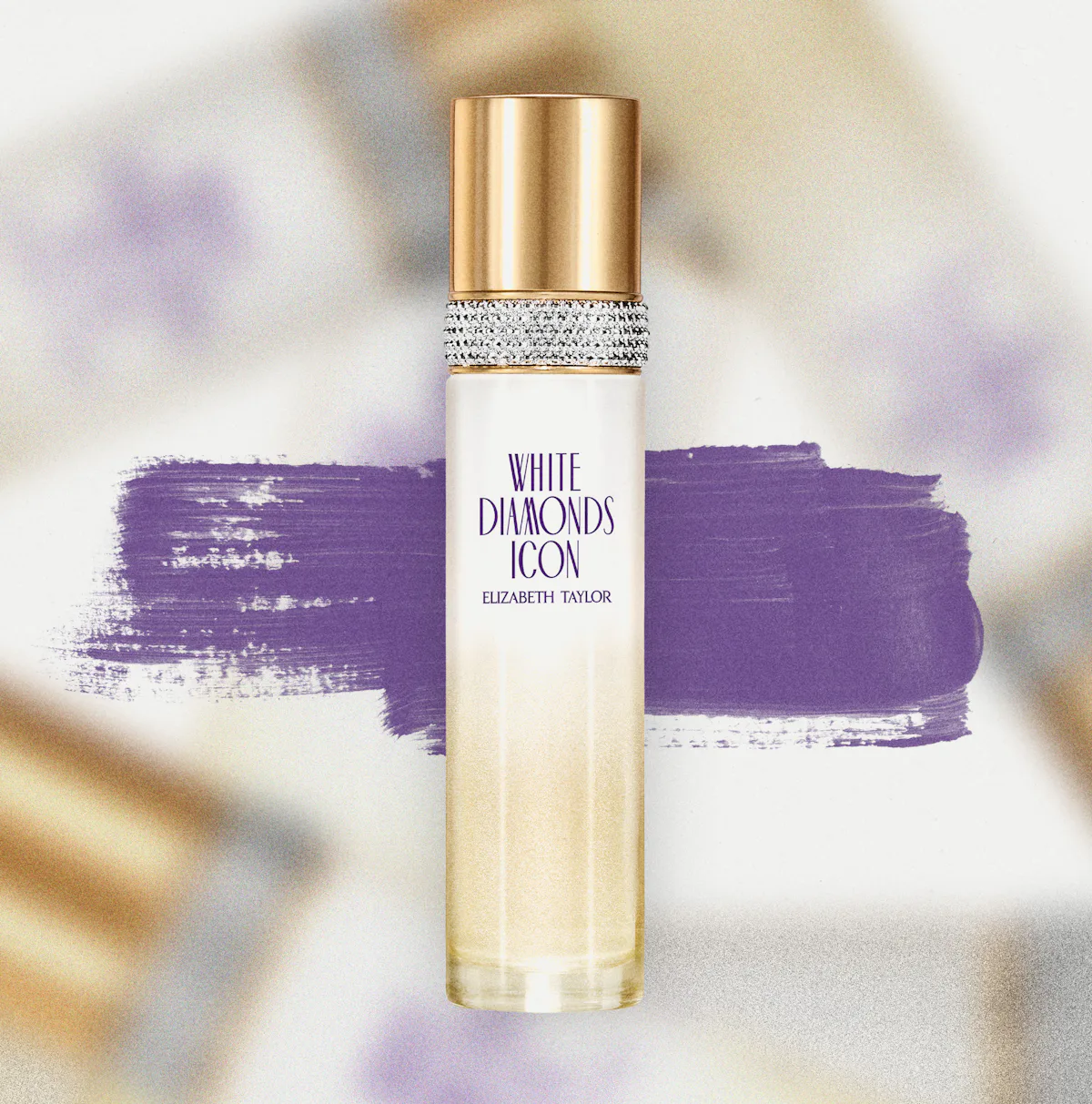
Cult Status is TZR’s series that highlights an iconic item from brands both established and buzz-worthy. In these features, you’ll discover the fascinating history of how one extra-special piece exceeded expectations and became a forever product. This time, the focus is on Elizabeth Taylor White Diamonds and its newest flanker, White Diamonds Icon.
It’s hard to imagine a fragrance landscape without celebrity scents. Perfumes bearing the names of pop stars, actors, and socialites have been staples of the fragrance department for the better part of four decades, flying off the shelves and even taking home coveted industry prizes. (Both Selena Gomez and Billie Eilish can add “Fragrance Foundation Award winner” to their resumes.) But every category has its pioneers, and in the world of celebrity perfumery, the figure of film icon Elizabeth Taylor — and her legendary fragrance White Diamonds — looms as large as one of the star’s many jewels.
Released in 1991, White Diamonds is as famous for its audacious blend of aldehydes and floral notes as it is for its cinematic campaign, the centerpiece of which was a black-and-white short film (later edited down to television-commercial length) starring the silver-screen leading lady. Both the fragrance and its savvy marketing shifted the industry for good. “Elizabeth wasn’t a model; she was an Academy-Award-winning actress and a bigger-than-life movie star,” says Tim Mendelson, co-trustee of the Elizabeth Taylor Estate and co-officer of the Elizabeth Taylor AIDS Foundation. “Capitalizing on that power showed the industry that a global identity of glamour and luxury could sell fragrance.”
“When Elizabeth Taylor introduced White Diamonds in 1991, she didn’t just launch a fragrance; she created one of the most successful franchises in the history of celebrity fragrance,” adds Amber Garrison, president of Elizabeth Arden and fragrances at Revlon. “More than three decades later, a bottle of White Diamonds still sells every minute.”
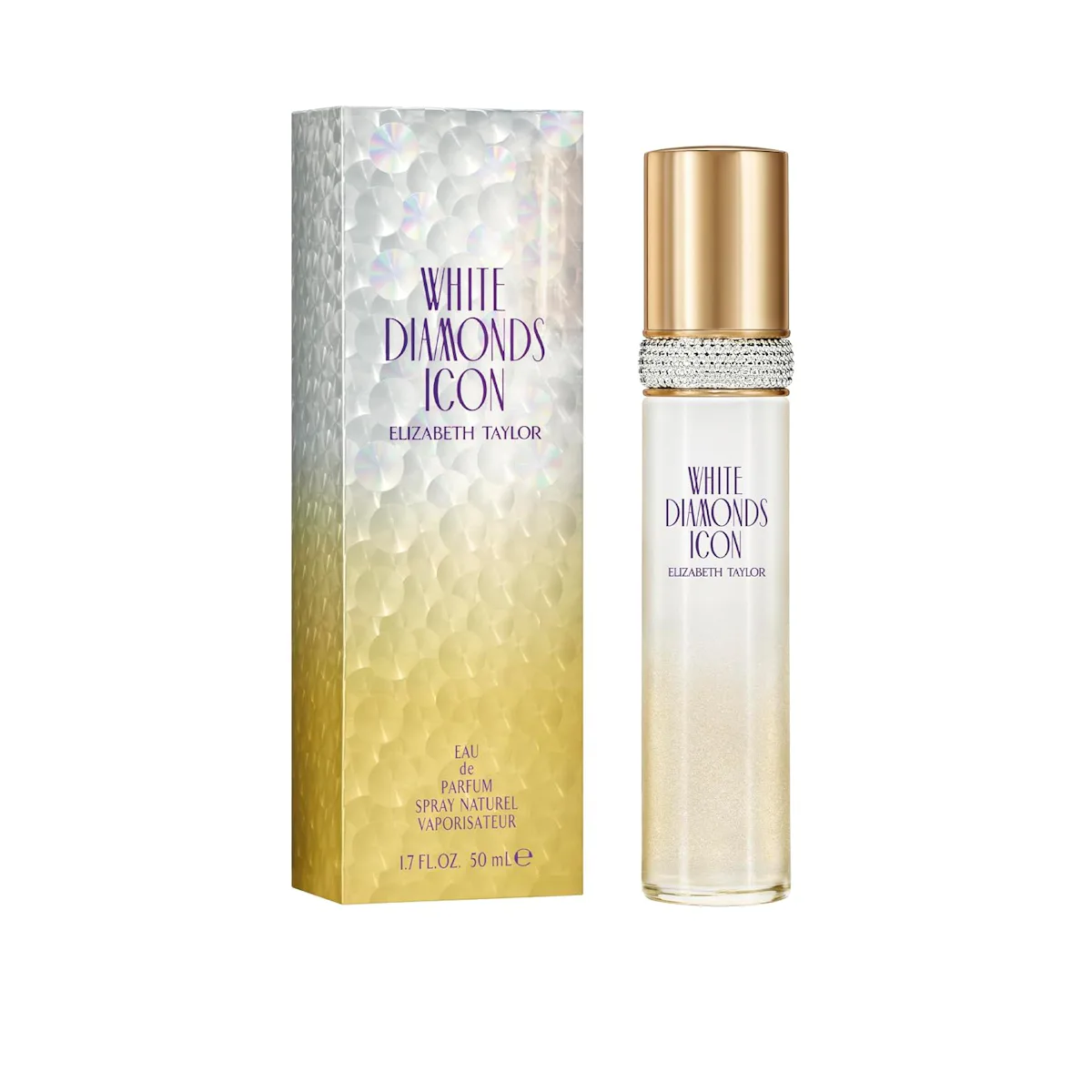
Since its initial release, the White Diamonds family has grown to include flanker fragrances such as Sparkling White Diamonds, White Diamonds Nights, and White Diamonds En Rouge. And in 2026 — 35 years after the debut of the original — a new member joined its ranks: White Diamonds Icon. To create this thoroughly modern take on the classic juice, the team tapped a familiar nose: IFF global master perfumer Carlos Benaim, who collaborated with Taylor on the original. He co-created the new scent with Natasha Côté-Mouzannar, senior perfumer Catapano at IFF, “pairing the fragrance’s legacy with new-generation talent,” as Garrison explains.
Côté-Mouzannar has her own special connection to the scent. In perfumery school, “we studied structures of different fragrances to learn — like an architect [studies] buildings — and I studied White Diamonds,” she shares. “And I remember, I thought it was so iconic. And what made it so unique was this mix of aldehydes with florals. And the chypre piece was, for me, a bit more modernized than the fragrances you saw in the ’80s. What’s so great is now I’m working with Carlos on White Diamonds Icon. It’s very interesting to see the evolution and be a part of it as well.”
Before diving into White Diamonds Icon, let’s take a look back at the original.
The Prelude To An Icon
Before she was Elizabeth Taylor, fragrance-space innovator, she was Elizabeth Taylor, one of the biggest stars of the Golden Age of Hollywood. And even though that Elizabeth Taylor “was being offered endorsement deals right and left,” she was cautious. “She had no interest in lending her name and likeness to a product unless she could be totally involved in its creation and was particularly interested in doing something special in the world of fragrance and beauty,” explains Mendelson. While Taylor, like many women of her era, had her own signature scent — Tuvaché’s Jungle Gardenia — she “also experimented with layering different perfumes,” says Mendelson. “So, when offered the opportunity to create her very own signature scent, she jumped at the chance.”
It didn’t hurt that the opportunity found Taylor during a shift in her career, one that would see her moving away from acting and toward activism. “In 1984, she found a purpose for her fame when she began committing her time and resources to the fight against AIDS. So, with that also in mind, from a business perspective, getting involved with the world of fragrance would give her more time to focus on AIDS than filmmaking, and was therefore a double win for her,” explains Mendelson. “Surely, she couldn’t have known that she would open an entire category for countless celebrities to follow.”
Taylor’s first fragrance, Passion, was released in 1987. Featuring bold top and heart notes that err on the floral and woody side — including gardenia, lily of the valley, tuberose, jasmine, and aldehydes — over a smoky, heady base with incense, civet, and leather, the fragrance served as a sumptuous start. And not just for Taylor’s brand, specifically: “It was one of the earliest modern celebrity fragrances, and Elizabeth Taylor herself was publicly hands-on in its creation,” explains Garrison. “At the January 1987 announcement, she explained that she’d be involved in ‘every aspect’ of the perfume, including its promotion, packaging, and mixing the fragrance itself.”
“With the name, Passion, it captured an aspect of Taylor’s identity for which she was so well known,” says Mendelson. “From a marketing standpoint, it was treated less like a corporate event and instead incorporated Elizabeth’s warmth, humor, and sense of romance into the launch, which was unique at the time.”
The Making Of A Legend
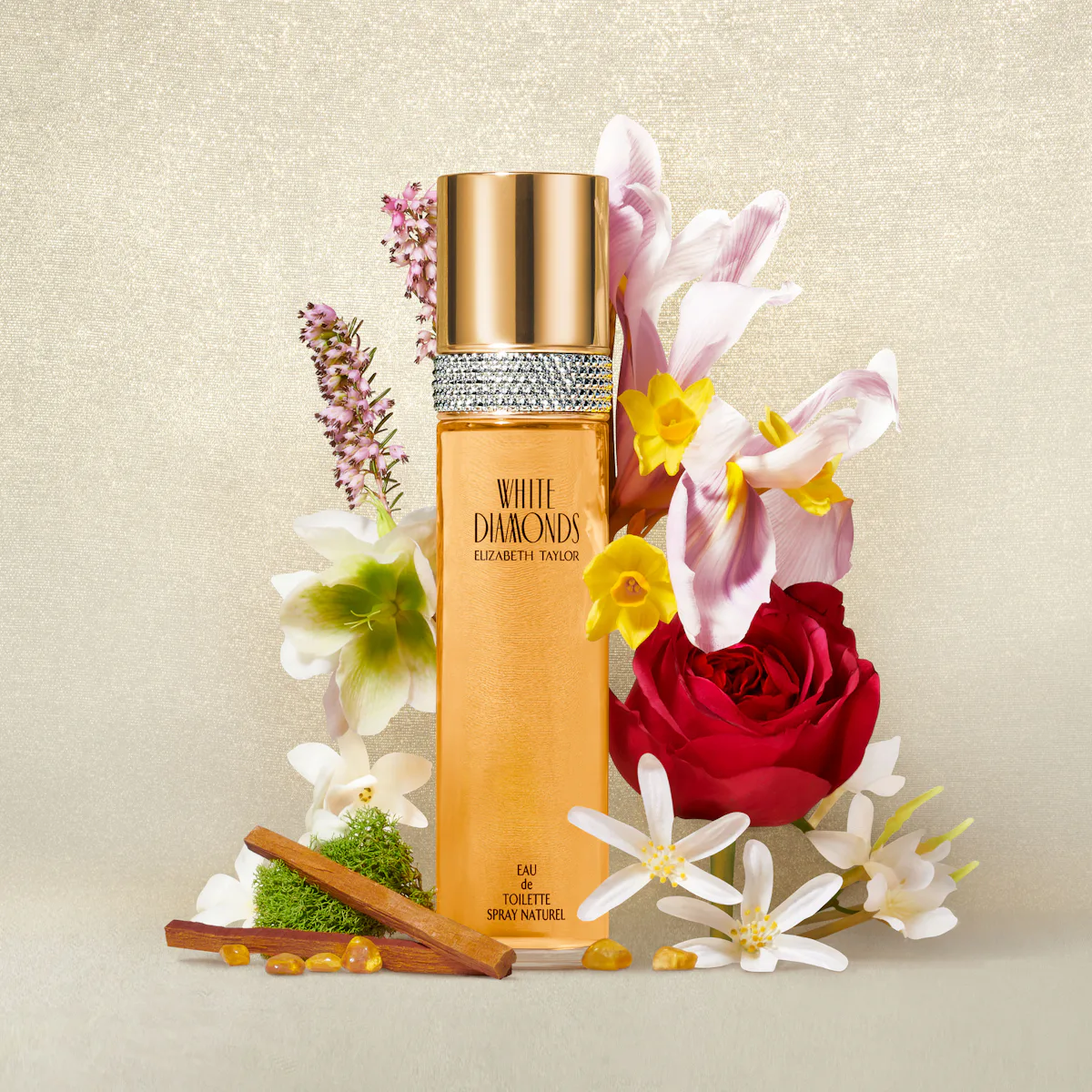
Though Passion was a hit, it was Taylor’s second fragrance that would become her brand’s crown jewel. A “more luminous, radiant white floral,” White Diamonds is “built around a bright white-floral heart of narcissus, Egyptian tuberose, jasmine, and ylang-ylang, lifted by aldehydes, lily, and neroli on top, and settled on sandalwood, amber, oakmoss, and musk,” explains Garrison. “That combination is what made that very tremendous fragrance with such a presence that you would smell it in any room,” notes Benaim. “You would know exactly that she was there. I mean the fragrance and the person, everything.”
While Passion and White Diamonds bear striking olfactory differences, Taylor remained as hands-on in her approach to her second fragrance as she was with the first — this time in collaboration with Benaim, then early in what would become a storied career. “She was extremely attentive and kind, and really wanted me to succeed,” he recalls. “I even had her sign an autograph for my son, who was a little boy, and she just went along [with] all that, you know.”
The perfumer recounts going to the movie star’s Bel Air mansion and presenting her with a lineup of fragrances to test blind, “which is my way of testing, but not something you do with a major actress,” he says with a laugh. At the end of the scent session, he asked her which ones stood out — and sure enough, “she picked the three that she really had talked about all along,” says Benaim. “Obviously, she had a very good nose, and she knew exactly what she wanted.”
Making A Modern White Diamonds
One of the notes that Taylor had a particular affinity for (and that features prominently in White Diamonds) is narcissus. A white floral, “the narcissus flower is very, very unique,” Benaim explains. “It has a sensual, jasminey, animalic effect; very bright, you know, with a lot of diffusion.” So when it came time to formulate the juice for White Diamonds Icon, he decided to stay close to home for one of the key notes. “I thought, there’s another flower that grows side by side with it in France [where the natural ingredients are extracted]: the jonquille,” he explains. “I thought it would be a great way of connecting the two.”
Itself a form of narcissus, the yellow jonquille is a slightly green-leaning floral with a touch of powdery sweetness. “What was really interesting about this creation is the amount of jonquille we have, which is a very unique ingredient [that] is very high quality,” explains Côté-Mouzannar. “It adds a new floral facet, but keeps this very elevated feeling to the fragrance.”
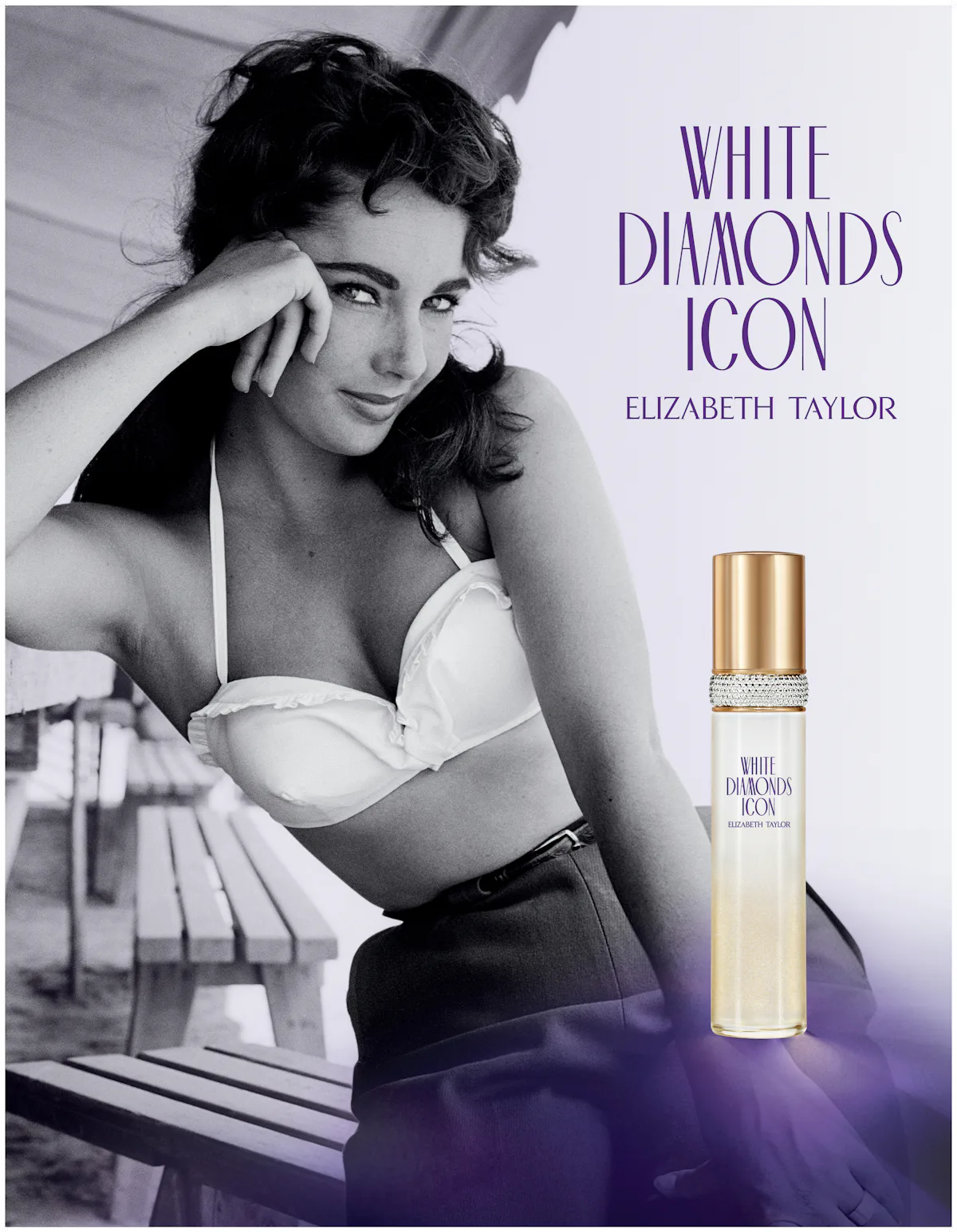
With its bold, ladylike profile, jonquille helps tie Icon to the original White Diamonds — and the picture of Elizabeth Taylor that many of us have in our heads, dripping in jewels. But if White Diamonds is Elizabeth Taylor, grande dame, Icon is more akin to Elizabeth Taylor, ingenue; think less Cleopatra, more Giant. Indeed, the campaign for the new fragrance features an iconic on-set image of the actor between takes on the latter film, wearing a cropped white halter top and loose ponytail that wouldn’t look out of place in an Instagram photo dump today.
To bring this timeless yet modern sensibility to the fragrance, “I wanted to play with different types of shiny notes, and we played with this one ingredient that’s proprietary to IFF called Cristalfizz,” says Côté-Mouzannar. As the name suggests, Cristalfizz is an effervescent and sparkly note with a touch of citrus. “Cristalfizz is cool because it’s shiny,” she says. “This is, for me, more modern… fun, and young.”
The perfumers also incorporated fruit notes, “because fruit is so contemporary nowadays,” Côté-Mouzannar notes. They include top notes of wild strawberry, which “has a kind of floral scent, which pairs perfectly with the jonquille,” she explains, along with pear blossom and mandarin. “And in the background, you have things like oak moss to give texture, and a touch of caramel; that, for me, gives modernity to the woods.”
The resulting blend is a spritely, slightly sweet scent with a certain joie de vivre that still shares “the sophistication and timeless charm of the original,” says Garrison. “It’s not a reinvention —rather, it’s a conversation between who Elizabeth was at the beginning of her iconic career and who she became.”
Want to read more?
Check out the full article on the original site