Iran Attacks Another Tanker In Strait Of Hormuz As US Completes 11th Consecutive Night Of Airstrikes
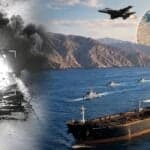


Iran attacked another tanker in the Strait of Hormuz early Tuesday, forcing its crew to abandon the vessel, as the United States carried out its 11th consecutive night of strikes against Iranian military targets.
The attack adds to growing pressure on commercial shipping in the Strait of Hormuz, a key global energy route that carried around one-fifth of the world’s traded crude oil and natural gas before the conflict disrupted traffic.
The United Kingdom Maritime Trade Operations (UKMTO) said the tanker came under attack off Oman after reporting by radio that it had been hit by an unknown projectile. The crew abandoned the vessel following the incident.
Iran’s paramilitary Revolutionary Guard claimed responsibility for the attack, along with two other ship attacks reported in the waterway on Monday.
US Central Command (CENTCOM) confirmed it had completed its 11th consecutive evening of strikes against Iran at 8:15 p.m. ET on July 21.
CENTCOM said US forces targeted Iranian military operations centres, maritime capabilities, aircraft hangars, drone storage facilities and military logistics infrastructure to reduce Iran’s ability to threaten commercial shipping in the Strait of Hormuz.
“Over the past three months, Iran has attacked more than 30 commercial vessels transiting the international waterway vital for regional and global trade,” CENTCOM said.
The command said the attacks had endangered hundreds of civilian mariners and affected freedom of navigation. However, it added that the Strait of Hormuz remains open for commercial vessel transit.
Since early May, US forces have helped facilitate the movement of about 900 commercial vessels carrying 450 million barrels of crude oil through the waterway, according to CENTCOM.
Shipping Through Strait Of Hormuz Slows
Commercial shipping through the Strait of Hormuz has slowed significantly as Iran and the United States continue military operations.
The US military has encouraged ships to use routes near Oman to avoid areas under Iranian control.
The United States said its strikes were aimed at Iranian military capabilities used to target commercial vessels.
“American forces remain postured and prepared to hold Iran accountable for unwarranted aggression toward civilian mariners seeking to freely and openly transit the strait,” CENTCOM said.
The latest strikes followed 10 previous nights of US operations targeting Iranian command centres, maritime capabilities, missile and drone launch sites, air defence systems and communications networks.
The conflict has also affected other countries in the region.
Kuwait said its air defences responded to an incoming attack, while Jordan’s armed forces said they shot down three Iranian missiles without casualties or damage.
Bahrain condemned Iranian drone strikes targeting its air traffic systems, saying they posed a risk to civilian travel.
The US State Department issued a warning that Iran and groups supporting Iran could target US interests and Americans overseas.
Oil Markets Remain Under Pressure
The escalation has affected global energy markets, with Brent crude trading above $88 a barrel. Average US gasoline prices also climbed to around $4 per gallon.
The Strait of Hormuz is a major route for oil and gas shipments, making security concerns around the waterway a key issue for energy markets and shipping companies.
US Military Soldiers Killed In Attacks
The US military identified two soldiers killed in attacks in Jordan, while another service member died in Iraq during the controlled detonation of a downed Iranian drone.
President Donald Trump warned on social media that Iran would face a strong response for attacks that kill American troops.
The Pentagon said nearly 100 US service members have been injured since strikes against Iran resumed on July 7. Pentagon spokesman Sean Parnell said 96% of those injured had returned to duty and that most injuries were minor concussions.
The Defense Casualty Analysis System, which tracks military deaths and injuries, had not been updated with the latest attacks as of Monday evening.
Iranian authorities said at least 50 people were killed and 517 wounded in the latest US strikes. Since the conflict began on Feb. 28, 17 US service members have been killed.
Houthi Naval Blockade On Saudi Arabia
A new concern for shipping emerged after Yemen’s Iran-backed Houthi rebels announced a maritime embargo against Saudi Arabia.
The Houthis said they planned to target shipping through the Bab el-Mandeb Strait, a key maritime chokepoint connecting the Red Sea and the Gulf of Aden.
The group said the move was in response to an attack on Sanaa International Airport that it blamed on Saudi Arabia.
Saudi Arabia said it would keep the waterway open and respond to threats against commercial vessels.
“All Houthi threats against transiting vessels will be dealt with swiftly and firmly, as such threats are a blatant violation of international law and fall under acts of maritime piracy,” Saudi military spokesman Maj. Gen. Turki Al-Malki said.
Diplomatic Efforts Continue
Diplomatic efforts continued alongside the military escalation.
Iranian Interior Minister Eskandar Momeni travelled to Pakistan for talks with Prime Minister Shehbaz Sharif and other officials as Islamabad attempted to revive an interim agreement signed last month.
The agreement had been intended to end the fighting but later collapsed.
US Secretary of State Marco Rubio said Washington remained open to negotiations with Iran if there was a serious diplomatic effort.
“If the door opens to diplomacy… that will be a very positive development,” Rubio said.
References: ndtv, business-standard
Want to read more?
Check out the full article on the original site