Saudi Oil Tanker Carrying 700,000 Barrels To India Reverses Course After Houthi Warning
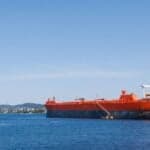


Several commercial vessels, including oil tankers carrying Saudi crude to India and China, reversed course on Tuesday after Yemen’s Iran-aligned Houthi movement warned ships against calling at Saudi ports.
The diversions are among the first signs that the Houthis are enforcing a naval blockade announced a day earlier.
The group warned shipping companies not to load or unload cargo at Saudi ports, saying vessels involved in such trade could be targeted “in any location” within the operational reach of the Yemeni Armed Forces.
According to Reuters ship-tracking data, the tanker Rodos, carrying about 700,000 barrels of Saudi crude to India, turned around in the Red Sea and headed north toward the Suez Canal instead of continuing south through the Bab el-Mandeb Strait.
Another tanker, Xin Long Yang, carrying about 2 million barrels of Saudi crude for China, also reversed course on Tuesday.
A third Very Large Crude Carrier, New Prime, which was due to arrive at Saudi Arabia’s Yanbu port later this week to load crude, turned back near Oman before entering the Red Sea.
Maritime publication Lloyd’s List reported that at least six vessels had changed course after the Houthis began enforcing the blockade.
One of them was the vehicle carrier Liu Jiang Kou, operated by China’s Cosco Shipping Specialized Carriers. The vessel was sailing through the Gulf of Aden toward Jeddah before making a U-turn, according to ship-tracking data.
Lloyd’s List reported that the Houthi-run Humanitarian Operations Coordination Center emailed the vessel’s operator to cancel its transit clearance, warning that continuing toward Saudi ports could expose the ship to targeting “in any location within the operational reach of the Yemeni Armed Forces.”
Cosco did not immediately respond to a request for comment.
The publication also reported that two Hong Kong-flagged oil tankers, Xin Tong Yang and New Prime, both bound for Yanbu, made abrupt U-turns in the Arabian Sea. New Prime later changed its reported destination from Yanbu to Egypt’s Suez Canal.
Another vessel, the Indian tanker Desh Viraat, also reversed course in the Arabian Sea, according to Lloyd’s List.
Two additional tankers changed course after leaving Saudi ports. The Cosco-operated Xin Long Yang turned back after departing on Monday, while the Greek-owned Rodos made a U-turn about 100 miles into its voyage to India and changed its reported destination to the Suez Canal.
Since shipping through the Strait of Hormuz became heavily disrupted during the U.S.-Iran conflict, Saudi Arabia has increasingly relied on its Red Sea export terminal at Yanbu to ship crude to international buyers.
Oil loaded at Yanbu normally passes through the Bab el-Mandeb Strait before crossing the Gulf of Aden and Arabian Sea on its way to Asia, including India.
For India, one of Saudi Arabia’s biggest crude buyers, the immediate concern is not a shortage of oil but possible delays, higher freight rates and rising war-risk insurance costs if more ships avoid the southern Red Sea.
Ships taking an alternative route through the Suez Canal would have to enter the Mediterranean Sea, sail around the Strait of Gibraltar, travel down Africa’s west coast, round the Cape of Good Hope and then cross the Indian Ocean before reaching India, significantly increasing voyage time and costs.
Shipping Continues Despite Warning
Despite the Houthi announcement, commercial traffic through the Bab el-Mandeb Strait continued on Tuesday.
Maritime intelligence company Windward said many vessels continued transiting the waterway, while three Saudi-linked tankers either crossed or approached the strait despite the warning.
No attacks on commercial vessels in the Red Sea or Bab el-Mandeb Strait had been reported since the Houthis announced the blockade.
Shipping sources told Reuters that Saudi Arabia’s Yanbu port was continuing normal operations, with crude still being loaded onto vessels already inside the Red Sea or entering through the Suez Canal.
Ship-tracking data showed the tanker Olympic Luck continuing toward Yanbu after entering the Red Sea through the Suez Canal, while several other vessels already near the port also continued their voyages.
British maritime security company Ambrey advised ship operators to reconsider sailing through the Red Sea after calling at Saudi ports.
Shipbroker Clarksons said a complete blockade remained unlikely because it would require significant resources to enforce.
However, it warned that any escalation could increase the risk of attacks on Saudi-linked vessels passing through the Bab el-Mandeb Strait.
References: India Today, Washingtonpost
Want to read more?
Check out the full article on the original site