China’s Gravity-1 Rocket Launches 9 Satellites From A Ship At Sea
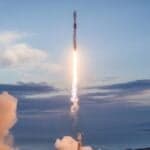


Chinese aerospace company ORIENSPACE successfully launched its Gravity-1 rocket at 10:54 am on Wednesday from a ship in the East China Sea.
The mission delivered 9 satellites and one experimental payload into orbit, making it the first-ever far-sea launch by a private commercial rocket.
The Gravity-1 launch vehicle lifted off from a launch vessel operated by the Oriental Aerospace Port in Haiyang, Yantai, East China’s Shandong Province, the country’s only commercial maritime launch base.
The 30 m launch vehicle has a mass of 405 tons and liftoff thrust of 600 tons. Its payload to low Earth orbit is 6.5 tons, and its payload to 500-kilometre sun-synchronous orbit is 4.2 tons.
This was the world’s first medium-lift rocket using only solid-propellant motors for its main body and booster configuration.
The rocket was assembled at the Oriental Aerospace Port in Shandong and launched under the direction of the Taiyuan Satellite Launch Center.
It carried nine satellites tailored for various remote sensing and testing purposes.
There were 6 satellites from the Dongpo Series, which are a mix of two optical and four
synthetic aperture radar satellites.
They will join four existing Dongpo satellites to improve mapping, emergency response, farming, forestry, and water management in Southwest China.
It also carried 2 AI & Observation Satellites: the Xiguang-2 01 and Tianyi-49, which will provide Earth observation for mineral exploration, urban planning, and agriculture.
Notably, Xiguang-2 01 is China’s first satellite featuring onboard AI computing. Instead of sending raw data back to Earth to be processed, it processes images directly in space for faster decision-making.
It also sent one Lilac-3, a demonstration satellite testing an ultra-flat platform design and next-generation attitude control systems.
The mission proved that solid-fuel rockets can remain stored on a ship for extended periods and launch safely under far-sea ocean conditions.
This success highlights China’s expanding flexibility to launch payloads from versatile offshore locations depending on mission needs.
Want to read more?
Check out the full article on the original site