Everything You Need to Know About Leg Veins—and How to Make Them Vanish

Every summer, as temperatures and hemlines rise, our legs face public exposure and, often, our private scrutiny. One focus of that thorough examination, particularly as women age, are leg veins. To be clear, this is not a new fixation. Women have never not had visible leg veins (in the Ebers Papyrus, an ancient Egyptian medical text dating to 1550 BC, they’re referred to as “serpentine windings”) and we’ve never not subjected ourselves to various, sometimes grisly, treatments to try to get rid of them. From surgical removal to phlebectomy (where a doctor makes an incision and then uses a hooked tool to pull out a vein, formerly without anesthesia) to iron or iodine injections, to “stripping” procedures using steel wires, vein treatments have historically come with a lot of pain and little gain.
Thanks in large part to our modern (read, increasingly sedentary) lifestyles, leg veins remain a major issue, but how we address them has, thankfully, evolved dramatically. Here’s everything you need to know about treating visible leg veins, straight from the professionals.
What Are Leg Veins?
The veins in your legs have one-way valves, working against gravity, that keep the blood flowing back toward the heart, says Christine Chung, MD, a clinical associate professor and director of the NYU Langone Vein Center in Long Island, NY. Over time, those valves can weaken or become damaged, causing blood to pool in the lower legs.
“As we age, just like we get wrinkles, the walls of our veins and the valves inside them naturally become less elastic and less efficient,” says Hugh Pabarue, MD, a physician and vein specialist at Metro Vein Centers in the Midwest. “Think of it like a door hinge that has been used thousands of times; after a while it may not close as tightly as it once did.” Those faulty hinges often manifest as two kinds of leg veins, spider and varicose, which vary in size, appearance and severity. Spider veins are small, wispy red, blue or purple veins that appear close to the skin’s surface and can look like a faint spider web (hence the name). “Often they are simply a cosmetic issue, but sometimes they can be associated with bleeding, itching or discomfort,” says Dr. Chung. Varicose veins are larger, twisted bulging veins deeper below the skin’s surface which, says Dr. Chung, are associated with leg aching, heaviness, swelling, itching, and tiredness. Their appearance, adds Dr. Pabarue, can indicate an underlying circulation problem.
Why Do We Develop Visible Leg Veins?
While men are not immune to developing leg veins, women experience them in far greater numbers. Dr. Pabarue points to a number of reasons why, including hormonal changes that can affect vein walls and valve function, while hormonal fluctuation during menstruation, pregnancy and menopause can contribute to vein enlargement. Pregnancy can be a particularly prone time, with blood volume increasing and a growing uterus placing extra pressure on leg veins, but they can, says Dr. Chung, improve postpartum. Genetics also play a big role in determining your vein risk factor.
“If your mother or father had them, you’re likely to get them too,” says Macrene Alexiades, MD, a dermatologist in New York City who treats veins. The other factors that can lead to the development of veins or venous insufficiency (when veins have trouble sending blood to the heart) are often related to our diet and lifestyle, two things that have changed significantly since the days of “serpentine windings.” Prolonged sitting or standing and a very sedentary lifestyle with little exercise can set veins on a crash course. “The muscles in the legs are less active to pump the blood from the veins back to the heart,” Dr. Chung explains. Increased weight can put extra pressure on your venous system, she adds, while tobacco can damage vein walls. A high sodium diet can also lead to fluid retention and swelling.
How Can I Minimize Leg Veins?
Luckily, there are many different ways to get rid of pesky leg veins. Whether veins pose a health or cosmetic concern, there are a number of ways, with varying degrees of pain and commitment (both financial and timewise) to address them.
The Lifestyle Shifts
To prevent veins from getting worse and new ones from forming, staying active is key. If work requires you to stand or sit for much of the day, try to find a balance. If you sit for work, elevate the legs and stand and walk every hour, says Dr. Pabarue. If you stand for work, shift positions frequently, and take walking breaks whenever you can squeeze them in. “Simple leg exercises at your desk, such as calf raises, can also keep the blood moving,” says Dr. Chung. If you’re a leg crosser, balance that too. “Make sure you’re not putting excessive pressure on one of the lateral vessels on a regular basis by crossing in the same direction all the time,” says Dr. Alexiades.
Maintaining a healthy weight, staying hydrated and eating a diet rich in fruit, vegetables and fiber all help with vein health as well. So can wearing compression socks regularly, a therapy that has been used by physicians for centuries. “Compression socks (if they are graduated and medical grade) apply the strongest pressure at the ankle, with pressure gradually decreasing up the leg,” says Anna Zahn, founder of cult body sculpting destination Ricari Studios, which makes branded compression socks. “This targeted compression optimizes blood circulation by directing flow through narrower channels toward the heart which reduces pooling in the lower limbs.” Doctors agree that wearing a pair during prolonged periods of sitting or standing, and on flights, can help manage and improve veins but they won’t cure them, notes Dr. Chung.
The In-Office Treatment
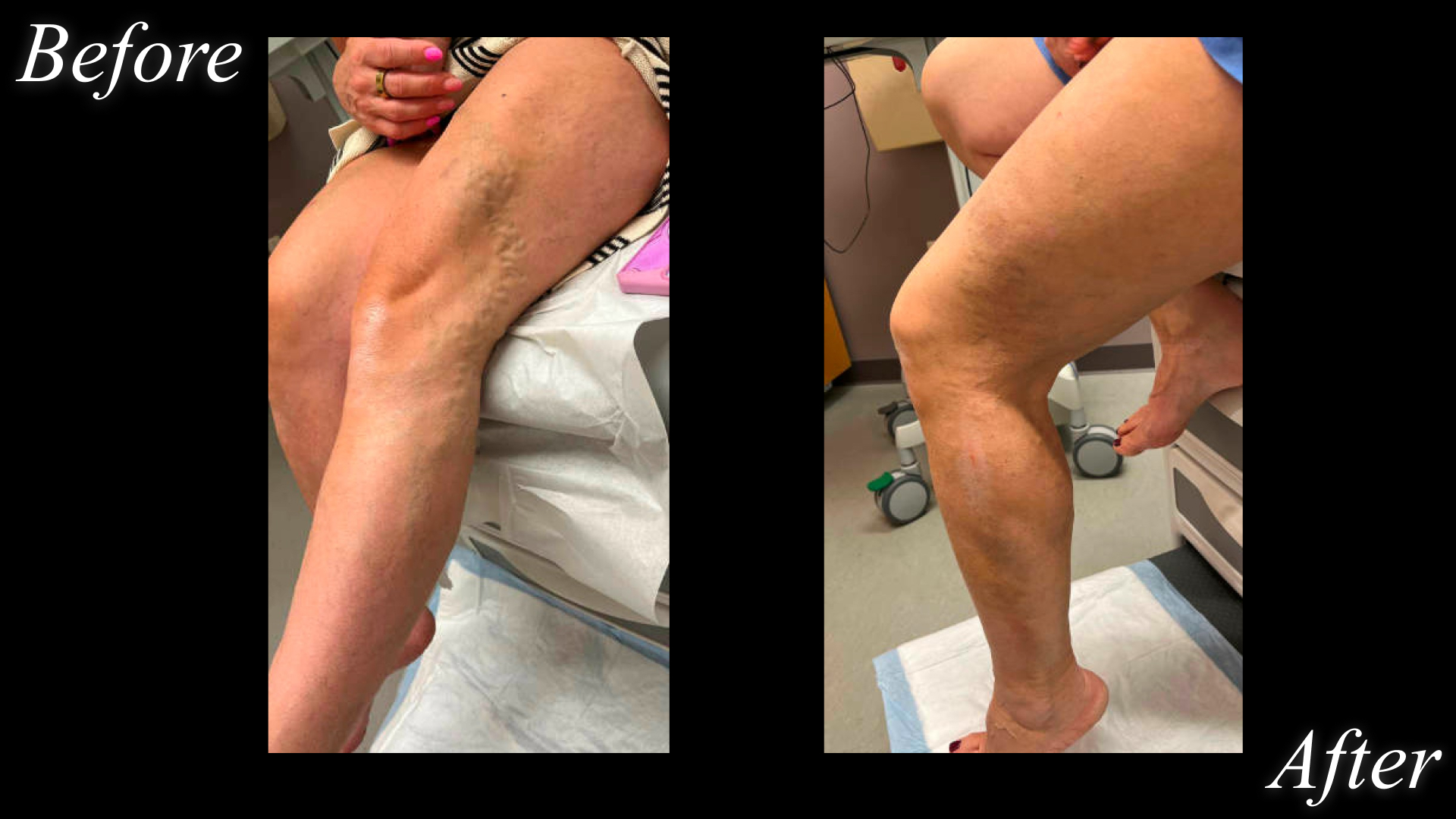
Surface lasers (which usually require several sessions and feel like a warm rubber-band snap) can do the trick for tiny spider veins, says Dr. Pabarue. Larger spider veins and smaller varicose veins (called reticular veins) often respond to sclerotherapy, whereby a chemical solution is injected causing the vein walls to stick together and eventually be absorbed by the body, says Dr. Parabue, adding that it feels like a series of small pinches. Post-treatment, patients can return to normal activities immediately.
To treat larger varicose veins, Dr. Chung suggests radiofrequency ablation (RFA) or endovenous laser therapy (EVLT) which both use ultrasound-guided heat (from radiofrequency or laser energy, respectively) and are performed under local anesthesia, addressing one vein per procedure. Patients often describe the pain more as pressure, says Dr. Chung, and they are able to return to regular activities in a few days. The most invasive option, a stab phlebectomy, has been refined to be infinitely more tolerated in the centuries since it was first introduced. The procedure still uses a small hook to remove the vein, but, says Chung, the incisions are tiny, require no stitches, and it’s performed with local anesthesia and sometimes sedation for maximum comfort. Any swelling or bruising usually resolves in a few days.
The Topical Route
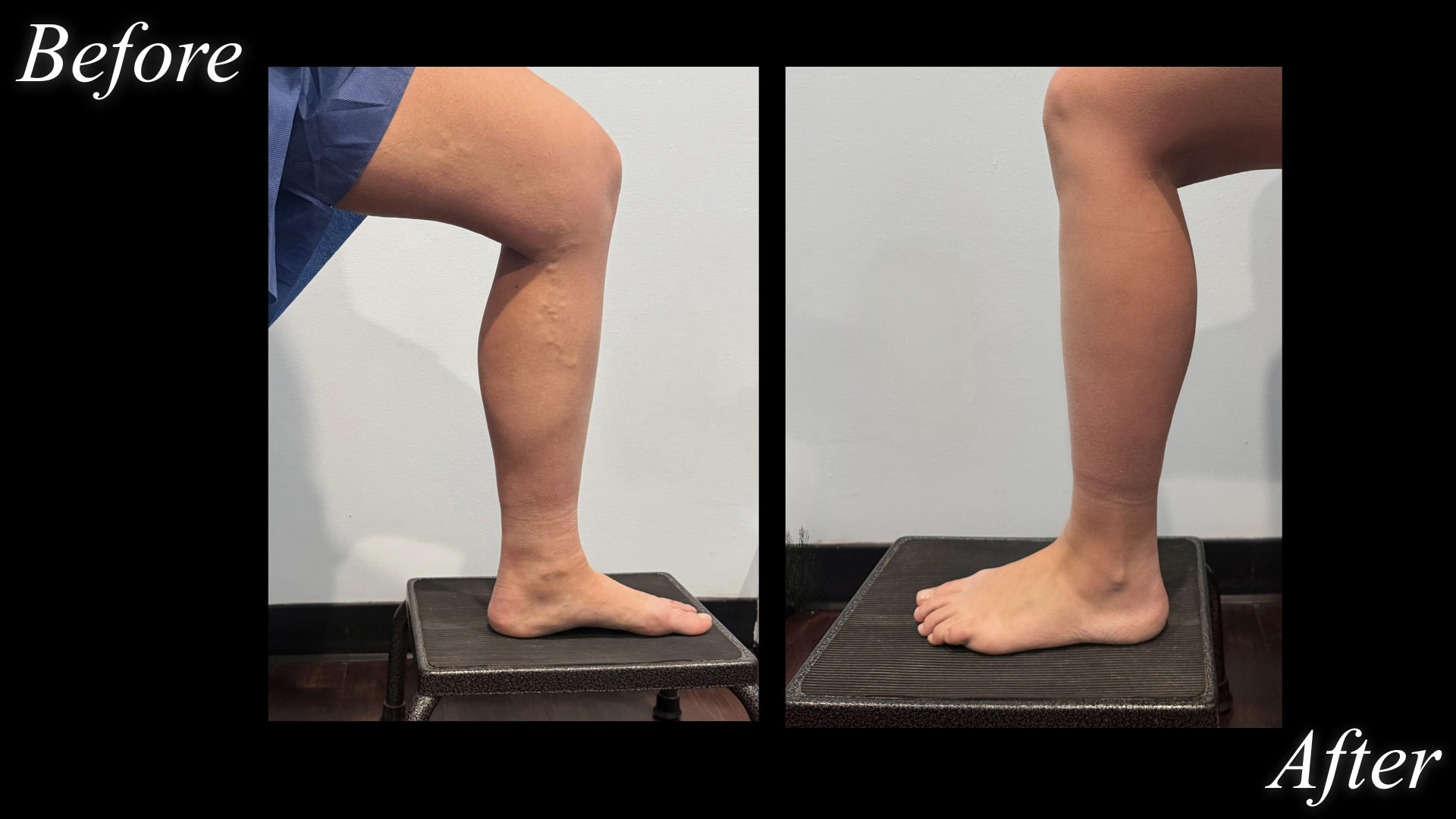
If the thought of vein treatments makes you squeamish, consider a camouflage approach instead. “One of the most underrated benefits of spray tanning is for veins,” says Erika Vasco, founder of The Tan Edit, adding that it works best on mild spider veins and flat surface veins. “A spray tan lays a unified veil of color over the skin that smooths and evens out the complexion.” Pain factor? Zero.
Are There Risks to Ignoring Leg Veins?
For those with mild to moderate leg veins there are no dangerous risks to ignoring them, says Chung. If patients have serious venous disease, such as venous ulcers, that’s another story, she adds, and ignoring them can lead to infections and other serious consequences. No matter what your level of leg vein symptoms, they tend to grow worse with age, says Pabarue. But if you’re diligent with compression sock use, weight management, exercise and leg elevation, you can manage vein symptoms and prevent them from getting worse—a routine that makes a visible difference.
Why Trust Marie Claire
For more than 30 years, Marie Claire has been an internationally recognized destination for news, fashion, and beauty trends, investigative packages, and more. When it comes to the products Marie Claire recommends, we take your faith in us seriously. Every product that we feature comes personally recommended by a Marie Claire writer or editor, or by an expert we’ve spoken to firsthand.
Meet the Experts
Want to read more?
Check out the full article on the original site