U.S Will Use Iranian Funds To Pay For Ship Damages In Strait Of Hormuz, Trump Announces
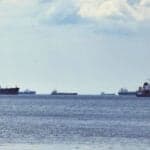


U.S. President Donald Trump said on Thursday the United States would use Iranian funds under its control to pay for damage to ships, cargo and related property.
“Please let this statement serve to represent, until further notice, that from this point forth, any and all damages done to Ships, Cargo, or anything related thereto, will be paid for by Iranian Money that the United States has in its possession, and controls,” Trump wrote on Truth Social.
“These damages may be very substantial but, nevertheless, this is the fair and equitable thing to do,” he added.
Trump did not say how the payments would work, which incidents would qualify or whether shipping companies would be compensated directly.
Billions of dollars in Iranian assets remain frozen under U.S. sanctions, although estimates of the total amount range from about $24 billion to $100 billion, with much of the money held outside the United States.
Trump made the remarks as U.S. forces continued strikes on Iranian targets and Washington warned it would hold Tehran responsible for any future Houthi attacks on commercial shipping.
The U.S. president said Iran and the Houthis would face “major military punishment” if the Yemen-based group carried out more attacks on ships, calling the Houthis an Iranian “surrogate and/or proxy.”
The warning followed the Houthis’ claim that they attacked two Saudi oil tankers, Encelia and Layla, using ballistic missiles, cruise missiles and drones. The group said the vessels had violated a naval blockade on Saudi-linked shipping.
Saudi state media later reported that the attack caused a fire on the bow of Encelia, while all crew members were reported safe. Maritime security reports said the tanker issued a distress call after being struck near Saudi Arabia’s Jizan port.
The Houthis also said they had closed the Bab el-Mandeb Strait to Saudi-linked shipping in response to Saudi Arabia’s blockade on Yemen and a recent attack on the international airport in the rebel-held capital, Sanaa.
The group has also warned shipowners not to send vessels to Saudi ports.
The attacks have increased concerns about shipping security in the Red Sea, adding to disruptions in the Strait of Hormuz.
The Strait of Hormuz, which links the Persian Gulf with the Gulf of Oman, is one of the world’s busiest energy shipping routes and carried about one-fifth of global energy supplies before the conflict. Traffic through the waterway has slowed sharply as fighting has intensified.
The Bab el-Mandeb Strait, connecting the Red Sea with the Gulf of Aden and the Indian Ocean, is another key maritime route that normally handles around 12% of global trade.
The growing security risks in both waterways have raised concerns over longer shipping routes, higher freight costs, rising war-risk insurance premiums and additional pressure on global energy markets.
War-risk insurance costs for ships transiting the southern Red Sea have increased sharply following the latest Houthi attacks, according to maritime insurance market data.
Brent crude rose above $100 a barrel on Thursday for the first time in almost two months as concerns over supply disruptions grew. Several tankers also changed course after Houthi warnings against vessels sailing to Saudi ports.
Trump also told Axios he was considering a “massive attack” on Iran and was “close to making a decision”. U.S. Central Command later said it had launched a 13th consecutive night of strikes targeting Iranian military capabilities and threats to commercial shipping.
CENTCOM said the strikes targeted Iranian military operations centres, maritime capabilities, aircraft hangars, drone storage facilities and military logistics infrastructure. It also said U.S. forces struck bridges that Washington says are used to resupply an Iranian naval base near the Strait of Hormuz.
The command said it had redirected 12 commercial vessels and disabled another ship since the United States reintroduced its blockade of Iranian ports. The U.S. military has also deployed additional aircraft, special operations forces and medical personnel to support its operations.
Iran warned it would retaliate against regional infrastructure, including energy facilities, if Washington expanded its attacks. Iranian Foreign Minister Abbas Araghchi also criticised Trump’s proposal to use frozen Iranian assets to compensate for shipping damage.
“Seizing another nation’s assets to pay for unrelated future claims is an incendiary precedent,” Araghchi wrote on Friday.
“Those who celebrate or profit from such funds should remember: once governments normalise confiscation, no one’s assets are safe. Ensuing chaos will not be pretty or peaceful,” he added.
References: Euronews, AA
Want to read more?
Check out the full article on the original site