1500 Ships Trapped In Hormuz Could Unleash Biggest Bioinvasion Event Once Trade Resumes


Around 1500 ships remain stranded in the Strait of Hormuz, after it was closed by Iran on February 28, 2026, following U.S and Israeli attacks on the Islamic Republic. While the economic impact of trade disruption has been widely discussed, the ecological crisis has been largely ignored.
A recent study published in the journal Biological Invasions has mentioned that the mass lay-up will trigger a marine bioinvasion “super-spreader” event once maritime trade resumes.
The research was conducted by an international team of 24 marine scientists led by the University of Maryland Center for Environmental Science (UMCES) and the Woods Hole Oceanographic Institution (WHOI).
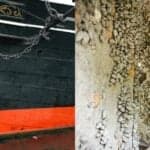
It warned that since ships have remained stationary for months, their hulls could become breeding grounds for invasive species, which can disperse to new locations once the ships start moving again.
This is called biofouling, and it involves the accumulation of marine organisms like algae, barnacles, mussels, etc on submerged surfaces. Though anti-fouling coatings protect ships which are in motion, they are not effective if a vessel remains at one place for days or months.
The International Maritime Organization (IMO) notes that idling beyond 10 to 30 days sparks aggressive biofouling; these ships have now been stranded for almost 4 months during the peak growth season.
The region’s warm and saline waters can reach 38°C in the summer, acting as the ideal incubator for reproduction of barnacles, which can release around 36 larvae daily.
This environment is perfect for breeding stress-tolerant, warm-water organisms which can adapt to climate change.
WHOI biologist Carolyn Tepolt explains that introducing these non-indigenous species to new regions can damage global coastlines by displacing local marine life, introducing pathogens, and destroying port infrastructure.
Additionally, a thin layer of slime increases a ship’s greenhouse gas emissions by 20–25%, while barnacle growth can increase fuel consumption by over 50%.
When the blockade ultimately lifts, these heavily fouled vessels will disperse globally. Scientists warn that ports with similar climates such as Mumbai, Jeddah, Colombo, Singapore, Alexandria, and Rotterdam face the highest risk of colonisation.
Researchers are urging ship operators and port authorities to take immediate action, such as mandatory hull cleaning before vessels exit the Gulf, biological monitoring at high-risk ports, and coordinated international tracking to prevent irreversible ecological damage.
Want to read more?
Check out the full article on the original site