Baltic Container Terminal Handles Largest & Longest Ship Ever To Call At Port Of Gdynia
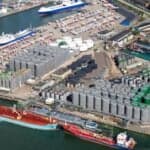


Baltic Container Terminal (BCT), International Container Terminal Services, Inc.’s (ICTSI) flagship operation at the Port of Gdynia, welcomed MSC Venice, the largest and longest ship ever to dock at the port.
The 399 m long ship with a 16,652 TEU capacity arrived at the facility on July 24, 2026, highlighting Gdynia’s ability to accommodate the biggest container ships. Sailing under the flag of Liberia, the MSC Venice was constructed in 2016. It is 54 m wide and has a deadweight capacity of 186,650 tonnes.
The milestone is the result of several key infrastructural enhancements across the port facility, such as port-side improvements, including deepening of the port basin through dredging, reconstruction of the Helskie Quay and expansion of Turning Basin No 2.
BCT has also bought new quay cranes and yard equipment to boost operational efficiency and increase handling capacity.
Piotr Gorzeński, President and CEO of the Port of Gdynia Authority, called it a historic moment and the result of the many investments made across the facility in the last few years.
Patrick Chan, CEO of BCT, said that it is a defining moment for the stakeholders and showcases BCT as a deep-water gateway port, actively supporting the growth of the Polish economy.
The call also reflects years of cooperation between BCT, the Port of Gdynia Authority, the Maritime Office in Gdynia, the Polish Navy and all partners.
Situated on the Baltic-Adriatic Corridor, one of the European Union’s core Trans-European Transport Network (TEN-T) routes, BCT offers an annual capacity exceeding 1 million TEUs.
The terminal has three 670-meter on-dock rail tracks capable of handling full-length intermodal freight trains, linking ocean cargo directly to industrial hubs across Poland, the Czech Republic, Slovakia, and broader Central and Eastern Europe.
Direct ULCV calls of this size streamline supply chains across the region by reducing the need for intermediate transshipments through Western European hub ports.
Want to read more?
Check out the full article on the original site