Iran Rejects Oman’s Plan To Share Strait Of Hormuz And Seeks Greater Control Over Strategic Waterway
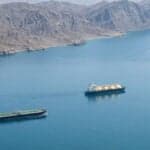


Iran has rejected Oman’s proposal to equally divide shipping routes through the Strait of Hormuz, instead proposing a temporary arrangement that would place one entire transit lane and part of the opposite lane within Iranian territorial waters, Deputy Foreign Minister Kazem Gharibabadi said on Tuesday.
The disagreement is a setback to efforts to reopen one of the world’s most important energy shipping routes after months of conflict involving Iran, the United States and Israel.
Before the crisis, about 100 ships passed through the Strait of Hormuz each day, including tankers carrying around 20 million barrels of oil and petroleum products daily, or roughly one-fifth of global oil consumption.
Speaking on Iranian state television, Gharibabadi said Oman had proposed splitting the shipping lanes equally, with one route running through Iranian waters and the other through Omani waters.
Iran rejected the proposal, saying it does not meet the country’s security concerns.
Instead, Tehran proposed that ships travelling in one direction use a route entirely within Iranian territorial waters, while part of the return route would also pass through Iranian waters. Oman would oversee only part of the opposite lane.
He added that Iran would move to the next stage of negotiations only if Oman accepted the proposal. If Muscat rejected it, the Strait of Hormuz would remain closed under Iran’s plan.
Gharibabadi also said Iran has never recognised the southern shipping route along Oman’s coast as the permanent transit route.
Oman had proposed a broader regional framework to manage shipping through the strait, including voluntary financial contributions from shipping companies for maritime services.
According to officials familiar with the proposal, the plan had support from Gulf states and aimed to prevent Iran from gaining sole control over the waterway.
The proposal also included creating a regional consortium to oversee maritime security, navigation and search-and-rescue operations, with funding coming from voluntary contributions by Gulf countries and the shipping and oil industries.
Iran, however, wants commercial vessels to pay mandatory fees for maritime services in the future, a proposal opposed by Gulf states and the United States.
Washington says international shipping should continue under the existing system of free navigation without compulsory transit fees.
The two sides also disagree over the Traffic Separation Scheme (TSS), the internationally recognised shipping route through the Strait of Hormuz.
Gharibabadi said Iran no longer recognises the TSS because most of it lies in Omani waters and no longer meets Iran’s security needs following U.S. and Israeli attacks in late February.
According to Iranian officials, the TSS has been unusable since February because of the risk of mines. Ships are currently using Iran’s northern route and Oman’s southern route instead.
“This is for national security and not bullying because when the TSS was for 60 years in Omani waters, we didn’t say anything,” Gharibabadi said.
He also said Iran would not allow any third country to carry out de-mining operations in the Strait of Hormuz, even if Oman requested such assistance.
The talks are taking place alongside diplomatic efforts to ease tensions in the region.
Iranian Foreign Minister Abbas Araghchi held separate calls on Monday with his Omani and Saudi counterparts to discuss regional stability, according to Reuters.
Gharibabadi also said the United States had contacted Iran through Oman over the past two weeks seeking negotiations and had assured Tehran it would not take military action.
U.S. President Donald Trump told reporters on Tuesday that talks with Iran were going well and that he preferred to avoid strikes on Iranian power plants and bridges.
Later on Tuesday, Trump met Israeli Prime Minister Benjamin Netanyahu at the White House, where the two agreed that Iran must not obtain a nuclear weapon, an Israeli source told Iran International.
Separately, U.S. Central Command (CENTCOM) said on Tuesday it had redirected 18 commercial vessels and disabled or boarded four others since July 28 while enforcing what it described as a “steel wall blockade” against Iran.
In another development, Iran launched a ballistic missile attack on U.S. forces in the Middle East on Tuesday evening, according to the source material, adding further uncertainty to mediation efforts that had included a proposed 10-day ceasefire plan.
Before the latest negotiations, Oman established a U.S.-backed shipping corridor close to its coastline without Iran’s approval, according to regional officials. Iran later resumed attacks on ships transiting the strait without its permission, prompting several rounds of U.S. strikes on Iranian military targets.
References: ndtvprofit, economictimes
Want to read more?
Check out the full article on the original site