One Billion Plastic Pellets Spill Into River Tyne After Offshore Vessel Collides With Container Ship
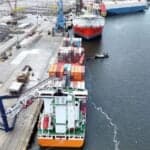


Around one billion plastic pellets used to make plastic products spilled into the River Tyne after a cargo vessel collided with a berthed container ship at the Port of Tyne.
The spill happened on Sunday when the Wind Orca struck the berthed container ship BG Orange.
The collision also caused a dockside gantry crane to collapse, and one person was taken to hospital with non-life-threatening injuries.
Environmental charity Fidra said up to 25 tonnes of plastic pellets, known as nurdles, entered the river. The pellets, usually between 1 mm and 5 mm in size, are the raw material used to manufacture most plastic products.
The Port of Tyne said it activated its response plan as soon as it became aware of the scale of the spill. Cleanup and salvage work is continuing alongside efforts to keep port operations running.
South Tyneside Council said nurdles have washed up on South Shields beach and urged people not to handle them. Dog owners have also been advised to keep their pets on leads in affected areas.

Although the pellets are not toxic, they can absorb pollutants in the water and are extremely difficult to remove once they enter the environment.
Per reports, the pollution has spread farther than first thought. Its global nurdle map has recorded sightings as far south as Sunderland, about 7 miles (11 km) from South Shields.
HM Coastguard said it is supporting local authorities responding to pollution along parts of the North Tyneside coastline, including Tynemouth Longsands, Cullercoats and King Edward’s Bay.
The spill occurred less than 3 miles (4.8 km) from Marsden Bay, one of England’s most important seabird breeding sites.
Wildlife experts say birds and marine animals often mistake nurdles for food. The pellets have previously been found in the stomachs and digestive tracts of seabirds in the North Sea and Australia, as well as green turtles and fish off the coast of Brazil.
Local resident Alistair Leadbetter told The Guardian he was “really shocked” by what he saw on South Shields beach, saying the pellets covered the shoreline and that children were playing among them.
Fidra said nurdles can travel long distances once released into the environment because they are easily carried by water, tides and wind. The charity said it found plastic pellets at 84% of UK Sites of Special Scientific Interest surveyed last year.
At the port, work is continuing to deal with both the collision and the environmental cleanup.

The Port of Tyne said the damaged area remained unsafe until specialists assessed and secured the site. The collapsed crane is lying across the BG Orange, with the ship’s boom tangled in the structure. Preparations are now underway to move the crane safely.
To limit further pollution, the port has placed a floating boom around the BG Orange, deployed several boats to collect pellets from the river, and said the vessel has secured its damaged containers.
“We are responding to a multi-faceted and complex salvage operation which cannot be hurried. Safety and the welfare of everyone working on the site remains our priority,” a Port of Tyne spokesperson said.
The spokesperson said the port activated its spill response plan immediately after learning about the incident and continues to work with local authorities and other agencies to contain the pellets and remove them from the river.
The Port of Tyne said it is coordinating its response through a multi-agency Recovery Coordinating Group involving South and North Tyneside Councils, Northumbria Police, the Marine Accident Investigation Branch, the Maritime and Coastguard Agency, and other organizations.
South Tyneside Council said it is assessing the extent of the contamination and supporting cleanup efforts where appropriate.
The Environment Agency said its officers are working with local authorities and partner organisations, providing expert advice during the early stages of the cleanup.
Heather McFarlane, senior project manager at Fidra, called the spill “devastating” and said stronger regulations were needed to prevent future plastic pellet pollution. She said many spills could be avoided through better packaging, safer storage and mandatory measures for transporting pellets by sea.
References: theguardian, portoftyne
Want to read more?
Check out the full article on the original site