Are We Still Ordering Fries For the Table in the GLP-1 Era?

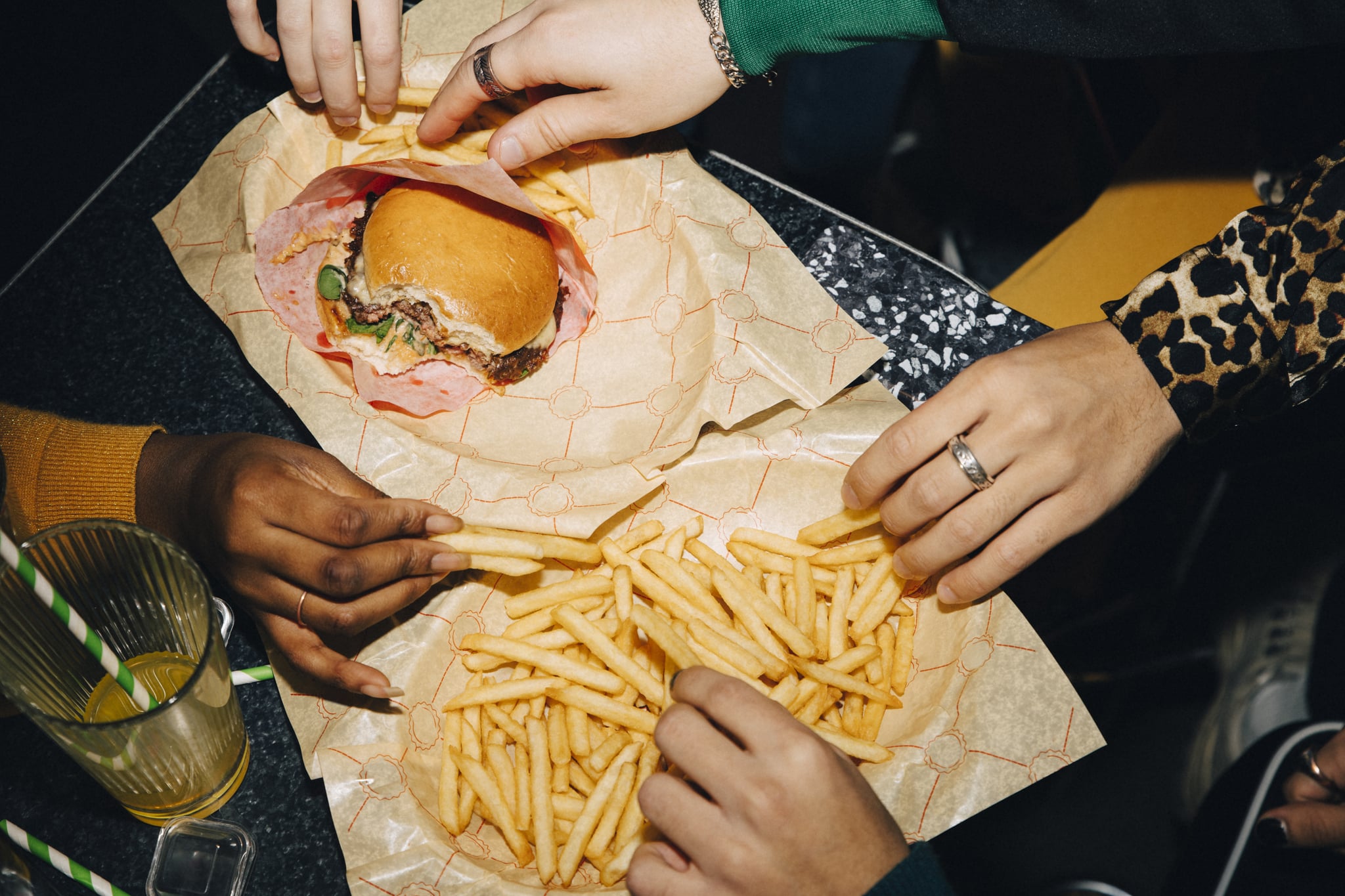 Food is my love language. I don't cook it much. But I consume it — often, and ideally in good company. When I invite my friends to meet up for dinner, I can always bet on a well-fed, emotionally cathartic experience. There's just something about gathering around a basket of fries or a bowl of pita and hummus that encourages deep conversation and vulnerability. But I'd be lying to you if I didn't acknowledge the shift in our circle.
It may be unspoken, but I've noticed a more pulled-back approach to ordering out. The same friends who once had a "let's order the menu" mentality are now asking, "Is this too many apps?" and "Should we just split an entree?" I've even caught myself second-guessing whether or not we need that extra side or dessert — a hesitation that's made me wonder whether we've just become older and our stomachs have shrunk or if we're all more conscious of what and how much we're eating in a culture where diet, size, and GLP-1s are all up for conversation.
Experts Featured in This Article: Melissa Karp, MS, RD, CDN, APRN, is the founder of MPM Nutrition. Lauren Manaker, RD, is a award-winning registered dietitian and freelance writer.According to the experts, the shift isn't specific to my friend group. Registered dietitian Melissa Karp, founder of MPM Nutrition, says that watching friends, coworkers, and even influencers rapidly lose weight in the era of GLP-1s has heightened our body awareness as a society, which often translates to greater awareness of food choices. "That doesn't necessarily mean people are making healthier decisions. Sometimes it simply means they're thinking about food and their bodies more," she explains.
In talking this out with her clients, there are a few themes that come up repeatedly in the food and diet-culture conversation. "The first is guilt, whether that's around not having control over the ingredients, not knowing the exact nutrition information, or simply eating foods that feel more indulgent than what they would prepare at home," Karp says. "The second is comparison. Because eating out is often a social experience, it's easy to start comparing what you're ordering, how much you're eating, or whether you're 'doing it right' compared to everyone else at the table."
"A tool itself is neutral; the culture around it is what shapes the experience.""Prior to this GLP-1 era, it felt like we were making meaningful progress in conversations around body diversity, body acceptance, and moving away from the idea that everyone should strive to be as thin as possible," Karp says. But "when you see everyone around you shrinking (even those who you might've deemed 'small' before), it is hard not to compare yourself."
That said, it's important not to villainize these medications either, as they can be life-changing for many people. In working with clients on GLP-1s, Lauren Manaker, RD, points out how starting the medication can quiet the food noise many patients complain of — allowing them to be present again while eating: "Tasting food, enjoying the conversation, not running calculations in their head," she says.
However, it also introduces new social dynamics for GLP-1 users, like navigating appetite changes, friends who notice that you're eating less, and dinners where everyone is sharing plates and you fill up after a few bites, as well as staying connected to the communal side of a meal when your body is responding differently than it used to. "The through-line I come back to is this: eating together is about connection, and that doesn't have to change just because your appetite has," Manaker says. "We work on ways to stay in the experience, which includes the company, the ritual, and the pleasure, rather than retreating from it."
In other words, the medications aren't to blame for the diet pressure you may be feeling in the GLP-1 era. And those who are and aren't taking the medications are struggling to navigate dining out right now. The reality is: "A tool itself is neutral; the culture around it is what shapes the experience," Manaker says. Karp agrees, noting that "when a medical treatment becomes intertwined with societal pressure to be thinner, it can reinforce the same ideals that have fueled diet culture for decades."
Her hope for her clients and everyone navigating dining out and today's diet culture is that we don't lose sight of the fact that food is about more than calories or weight. "It's nourishment, but it's also pleasure, culture, tradition, and connection," she says. "The goal should be to make intentional choices that support your health while still allowing room to enjoy the experience of eating."
The real challenge of dining out in the GLP-1 era shouldn't be whether or not to order fries for the table, it's remembering why we came here in the first place. Gathering around a meal was never just about the food. It was about the community, support, and validation we needed to experience. The fries were just a bonus.
Alexis Jones is the section lead of the health and fitness verticals at Popsugar, overseeing coverage across the website, social media, and newsletters. In her seven-plus years of editorial experience, Alexis has developed passions for and expertise in mental health, women's health and fitness, racial and ethnic disparities in healthcare, and chronic conditions. Prior to joining PS, she was the senior editor at Health magazine. Her other bylines can be found at Women's Health, Prevention, Marie Claire, and more.
Want to read more?
Check out the full article on the original site