Why Modern Terminals Are Replacing Legacy Software with AI?
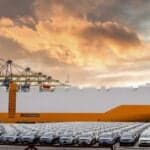


A fog bank rolls into the harbour channel. A 14,000-TEU mega-vessel misses its 04:00 berth window by ninety minutes.
If a port or terminal employs a traditional Terminal Operating System (TOS) to meet the requirements of today’s maritime trade, even a small schedule shift could affect the entire operation and lead to chaos. A lot of time gets wasted in doing things manually, while yard equipment sits idle for a long time and then suddenly everything is needed at once.
Gate queues become longer, berth planners lose their minds manually calculating and filling spreadsheets by hand, and by noon a 90-minute delay cascades into thousands of dollars wasted in demurrage fees, wasted fuel and a bottlenecked supply chain.
For years, terminal operators accepted this as normal and the cost of doing business; however, the view is changing fast with the rollout of modern terminal operating systems, which streamline operations and boost productivity and efficiency.
As ships become bigger and more complex, and the volume of global trade is increasing, port directors are understanding that legacy software is not convenient anymore.
Functioning Of Traditional TOS
The older TOS platforms were designed for an era where maritime trade was limited and much simpler than it is today. They were also passive in the sense that they recorded what happened rather than optimising what would happen next.
• Manual data entry silos: Yard managers and gate operators spent many hours manually typing in container numbers, EDI feeds, and customs clearances.
• Reactive vessel and berth planning: When an ETA shifts, planners react after the fact. Reshuffling berth assignments by spreadsheet leads to suboptimal crane allocation, longer vessel idle times, and frustrated shipping lines.
• Gate congestion: By using the traditional terminal operating system, which does not have predictive scheduling, trucks can be processed one at a time, which leads to long queues, more harmful emissions and lower daily throughput.
“A system that only tells you what happened yesterday can’t help you optimise for tomorrow.”

Era of Agentic AI in Maritime Logistics
To solve these pressing issues, the maritime industry is shifting towards agentic AI in its operations, which is an active platform helping professionals make decisions by providing real-time updates on port or vessel operations. Agentic AI operates continuously on live data streams by analysing, predicting and executing.
Operational Paradigm Shift
| Legacy TOS (Passive) | Agentic AI TOS (Active) |
|---|---|
| Data Input — Manual database logs | Live Data Streams — Continuous system telemetry |
| Manual Record — Slow retrospective logging | Predicts & Executes — Automated resource adjustment |
| Human Analysis — Evaluating static spreadsheets | Autonomous AI Agents — Real-time system evaluation |
| Delayed Action — Hours or days later | Real-Time Optimisation — Instant operational refinement |
Infyz, a maritime technology company, is building this shift into its cloud-native AI Terminal Operating System, iTOMS.
Infyz has incorporated specialised AI Agents throughout the platform to help ports and terminals transform to proactive management, boosting productivity and performance through secure infrastructure like Microsoft Azure and AWS, and backed by CMMI Level 3 and ISO 27001 certifications.
Legacy TOS vs. Infyz Agentic AI
| Operational Area | Legacy Monolithic TOS | Infyz iTOMS | Business Impact |
|---|---|---|---|
| Vessel & Berth Planning | Manual spreadsheet updates take hours during ETA shifts | Vessel-tracking and berth agents recalculate schedules in milliseconds | Fewer berth conflicts; 10-15% less vessel idle time |
| Yard & Equipment Allocation | Static maps; high reshuffling and wasted crane moves | Live yard intelligence predicts optimal container/RoRo placement | Up to 25% more yard capacity |
| Gate Operations | Linear processing; manual keying; heavy congestion | OCR, ANPR, and Vehicle Booking Systems automate slot allocation | Up to 40% faster gate throughput |
| Reporting & Insights | Multi-day wait for IT to write custom queries | Natural-language AI chat answers instant queries | Real-time decisions, no IT backlog |
Environmental Benefits Of AI-Driven TOS
AI-driven TOS helps ports and terminals handle all ongoing operations simultaneously and smoothly. It is not only quick but also sustainable.
As ports face growing decarbonization mandates, AI automation delivers measurable environmental wins alongside operational ones:
• Lower vessel emissions: AI-driven TOS helps cut vessel turnaround times by 10-15%, which reduces emissions from the ship’s auxiliary engines while the ship is at berth.
• Less gate idling: AI-driven Vehicle Booking Systems cut down truck queues outside port gates, reducing localised emissions.
• Fewer wasted equipment miles: Predictive yard planning reduces unnecessary tractor moves and crane lifts, lowering overall energy use across the terminal.
Modernising Without Operational Downtime
The biggest hesitation terminal leaders have about replacing a legacy TOS is the fear of migration downtime. Infyz’s modular, cloud-native architecture is built to address that directly, whether a terminal deploys the full iTOMS platform or integrates standalone agents (like VBS or OCR document intelligence) alongside its existing systems.
Measurable Outcomes Terminals Can Expect
| 70-85% Efficiency | 99% Accuracy | 40% Throughput |
|---|---|---|
| Reduction in manual processing through automated workflows. | Data accuracy, virtually eliminating manual entry errors. | Faster gate turnaround times. |
Adapt or Fall Behind
In a hyper-competitive global supply chain, terminals can’t afford to run at the speed of manual data entry. Legacy software was built for yesterday’s trade volumes; it wasn’t built for the velocity and complexity of maritime trade today.
The future of port logistics belongs to operators who embrace agentic AI. By partnering with Infyz, port directors and yard managers aren’t just updating software; they’re giving their operations the intelligence to predict, adapt, and execute with precision.
The shift to AI-powered port operations is already underway. The question is whether your terminal leads it, or catches up later.
Ready to modernise your port operations?
See how Infyz’s platform — from iTOMS to AI-powered Vehicle Booking Systems — can transform your terminal’s performance.
Visit Infyz.com to schedule a live demonstration.
Want to read more?
Check out the full article on the original site