Thailand Evaluates India’s BrahMos Supersonic Anti-Ship Missiles To Strengthen Maritime Defence
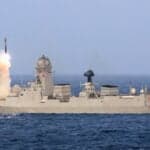


Thailand is examining the possibility of buying India’s BrahMos supersonic anti-ship cruise missile system as the country looks to strengthen its coastal defence capabilities, according to defence media reports.
The discussions are still in the early stages, and there has been no official confirmation of a deal from Thailand or BrahMos Aerospace. No contract, delivery timeline, missile configuration or deployment plan has been announced.
Thailand’s interest in BrahMos reportedly emerged after the 10th India-Thailand Defence Dialogue held in Bangkok in June 2026. Defence officials from both countries discussed areas including maritime security, military cooperation, defence manufacturing, research and capability development.
Thailand’s Deputy Permanent Secretary for Defence Admiral Nuttapol Diewvanich and India’s Joint Secretary Satyajit Mohanty took part in the discussions, which came after India and Thailand upgraded their relationship to a strategic partnership in 2025.
However, official statements from the defence dialogue did not specifically mention BrahMos procurement, and there has been no confirmation that Thailand has decided to buy the missile system.
Thailand currently does not have land-based coastal anti-ship missile systems. Its existing anti-ship weapons include the US-made Harpoon and China-made C-802A missiles, which are deployed on frigates, corvettes and offshore patrol vessels.
The Royal Thai Navy also operates Sweden’s RBS 15 air-launched anti-ship missiles, which can be carried by JAS 39 Gripen fighter aircraft. A ground-based version of the RBS 15 missile is also operated by the Ukrainian Navy.
If Thailand moves forward with BrahMos, the system could provide the country with mobile coastal missile batteries capable of engaging surface vessels.
The missile is also available in ship-launched and air-launched versions, meaning Thailand would need to decide how it would integrate the system into its existing military structure.
Thailand continues to modernise its defence capabilities while maintaining ties with multiple major powers.
Bangkok has strong economic relations with China and continues to acquire Chinese military equipment, while also maintaining security partnerships with the United States, India and other countries.
Analysts said Thailand’s interest in BrahMos is linked mainly to operational requirements, including coastal security, protecting maritime routes and expanding its choice of defence suppliers. There has been no official indication that the potential acquisition is aimed at any specific country.
BrahMos Missile System
The BrahMos missile was jointly developed by India’s Defence Research and Development Organisation (DRDO) and Russia’s NPO Mashinostroyeniya.
The missile entered service in the early 2000s and has since been developed into different versions for land, naval and air operations.
It uses a two-stage propulsion system and can reach speeds of around Mach 3. The export version has a range of about 300 kilometres due to international export control restrictions. The missile has a launch weight of around 3,000 kg and carries a warhead weighing approximately 300 kg.
The newer BrahMos NG version is smaller than the original missile, measuring about 6 metres in length, with a diameter of 50 centimetres and a weight of up to 1,500 kg.
References: The Defence Post, defencesecurityasia
Want to read more?
Check out the full article on the original site