US Navy Reclassifies 19 Virginia-Class Submarines To Expand Guided Missile Strike Capability
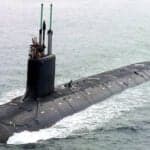


The U.S. Navy is redesignating 19 planned Virginia-class nuclear-powered submarines equipped with the Virginia Payload Module (VPM) as guided missile submarines (SSGNs).
The reclassified submarines will include Virginia Block V and Block VI variants fitted with the 70-foot-long VPM, a hull extension that adds four large vertical launch tubes.
The upgrade will allow each submarine to carry 28 additional missiles, increasing their total Tomahawk cruise missile capacity to up to 40.
The Navy said the change shows the increased strike capability of the VPM-equipped submarines and their growing role in long-range precision strike missions, deterrence and future maritime operations.
The first VPM-equipped submarine, designated SSGN 803, is expected to enter service in fiscal year 2029. Deliveries of the 19 planned Virginia SSGNs are scheduled to continue through fiscal year 2038.
More missile capacity for Virginia-class submarines
The Virginia Payload Module is designed to increase the weapons capacity of Virginia-class submarines by adding four large-diameter launch tubes to the hull.
Each tube can carry seven Tomahawk cruise missiles, providing 28 additional missiles compared with standard Virginia-class attack submarines.
The submarines will also be capable of carrying future weapons, including the Intermediate-Range Conventional Prompt Strike hypersonic missile and other emerging payloads.
The Navy said the redesignation applies to 10 Block V Virginia-class submarines and nine planned Block VI submarines equipped with the VPM.
Although they will receive the SSGN designation, the submarines will remain part of the Virginia-class programme and will continue carrying out multiple missions, including anti-submarine warfare, anti-surface warfare, intelligence collection, mine warfare, irregular warfare and special operations support.
Replacing retiring Ohio-class SSGNs
The U.S. Navy begins retiring its four Ohio-class guided missile submarines, which have served as major conventional strike platforms.
The Ohio-class SSGNs can carry up to 154 Tomahawk cruise missiles and have also been used for special operations support, intelligence missions and underwater command functions.
The new Virginia SSGNs will offer improved stealth, survivability and flexibility, but they will not match the missile capacity of the Ohio-class submarines individually.
A single Ohio-class SSGN carries roughly four times more cruise missiles than a VPM-equipped Virginia submarine.
As a result, the Navy will need to deliver most of the planned Virginia SSGN fleet before reaching a similar level of overall undersea strike capacity.
Impact on US submarine fleet
The U.S. Navy works to expand its submarine fleet while managing several major construction programmes, including Virginia-class submarines, Columbia-class ballistic missile submarines and commitments under the AUKUS security partnership.
Because the Ohio-class SSGNs will retire before all 19 Virginia SSGNs enter service, the Navy expects a temporary reduction in undersea missile capacity during the transition period.
Vice Adm. Rick Seif, Commander of Submarine Forces, said the addition of high-volume precision strike capability to stealth submarines would support Distributed Maritime Operations and provide commanders with more flexible strike options.
The Navy said the new Virginia SSGNs will provide forward presence, strengthen deterrence and support conventional strike missions once they become operational.
References: navalnews, navytimes
Want to read more?
Check out the full article on the original site