Video: Record-Low Danube Levels Expose 20 World War II-Era Nazi Warship Wrecks
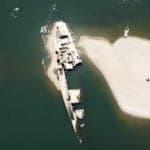


Low water levels on the Danube River have exposed dozens of World War Two-era German warships in Serbia, while drought conditions across Europe’s second-longest river have disrupted shipping, tourism and put pressure on power plants in parts of Central and Eastern Europe.
The wrecks have appeared near the Serbian port of Prahovo, where the Danube separates Serbia and Romania.
The vessels belonged to Nazi Germany’s Black Sea fleet and were deliberately sunk in 1944 as German forces retreated from Romania and Soviet troops advanced through Europe.
Historians estimate that up to 200 German ships were scuttled near Prahovo in September 1944.
At least 20 wrecks are now visible from the riverbanks as water levels have fallen sharply, revealing rusty hulls and damaged structures, including a broken mast where the Nazi flag once flew.
The falling water levels have affected one of Europe’s most important inland waterways.
The Danube flows through 10 countries and supports cargo transport, fuel shipments and tourism activity. In recent weeks, ferry services, tourist boats and commercial shipping have been reduced because of difficult navigation conditions.
Residents near Prahovo said ship traffic in the area has almost stopped as larger vessels struggle to pass through sections of the river with reduced depth.
“As you can see, the big ships can’t pass anymore,” Prahovo resident Krsta Brandic said.
The exposed wrecks have brought renewed attention to removing the abandoned ships from the river.
Some ships were removed during the period of communist Yugoslavia, but many remain because they are believed to contain weapons and explosives left from the war.
Serbia has previously sought support from the European Union to clear the wrecks. In 2024, Serbia and the European Investment Bank launched a project to remove 21 ships from the Danube.
Authorities said modern technology has improved the ability to carry out such operations, but the presence of remaining ammunition requires careful handling.
The drought has also affected energy infrastructure that depends on the Danube. In Hungary, falling water levels at the Paks nuclear power plant brought the facility close to a complete shutdown because the plant uses river water for cooling.
Three of the plant’s four reactors were shut down, leaving it operating at just over 10% of capacity. Hungarian Prime Minister Peter Magyar said the water level stopped falling after reaching a point just a few millimetres away from a full shutdown.
In Romania, engineers began building a temporary dyke to redirect more water toward the Cernavoda nuclear power plant. The country’s state-owned nuclear operator Nuclearelectrica shut down one of the plant’s two reactors as river levels declined.
Both Hungary and Romania increased electricity imports and encouraged households and businesses to reduce power consumption. More than 300 companies voluntarily cut electricity use to help reduce pressure on national grids.
The drought has also affected river tourism. A cruise ship ran aground in Bulgaria because of low water levels, leading authorities to evacuate passengers.
In addition to wartime wrecks, the low water levels revealed ancient remains in Bulgaria. Near the northeastern city of Ruse, falling river levels exposed bones believed to belong to a woolly mammoth from the Ice Age.
Museum specialists identified a jawbone, fragments of tusks, part of a shoulder blade and a femur among the remains.
Nikolay Nenov, director of the Regional Historical Museum in Ruse, said the discovery was important because the bones appeared to have been concentrated in one location and likely belonged to the same animal.
Authorities across the region are continuing to monitor Danube water levels as drought conditions continue to affect shipping.
References: CBS News, dw
Want to read more?
Check out the full article on the original site