MSC Ship Operator Fined $6 Million Over 2024 Charleston Runaway Incident
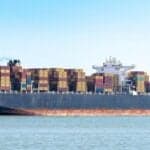


MSC Shipmanagement Limited has been fined $6 million after pleading guilty to failing to report a hazardous condition aboard the containership MSC Michigan VII and obstructing a federal investigation into a June 2024 incident in Charleston, South Carolina.
The company was also given four years of probation and must carry out a root-cause analysis of the conditions that led to the incident.
The MSC Michigan VII lost control of its engine speed while leaving Charleston Harbor on June 5, 2024.
The 997-foot, 74,000-ton container ship was travelling at about 14-17 knots, forcing authorities to evacuate the Arthur Ravenel Jr. Bridge and clear nearby beaches.
The ship was eventually guided safely under the bridge and out to sea. Its wake injured two people and damaged ships and piers in the harbor.
The company’s chief engineer, Fernando San Diego San Juan, was separately fined $2,000 after pleading guilty to failing to report the hazardous condition and obstructing the investigation. He has 14 days to appeal and will return to the Philippines.
What happened aboard the ship
The MSC Michigan VII left North Charleston at about 11:45 a.m. on June 5. It was supposed to travel up the Cooper River to a turning basin, turn around and then head back down the river, pass under the Arthur Ravenel Jr. Bridge and leave Charleston Harbor.
During the voyage out, a linkage rod connected to the ship’s engine governor came loose after the crew manually adjusted it.
The governor controls the engine speed. Once the linkage rod disconnected, the main engine could not be slowed and the ship continued at around 16-17 knots.
The bridge was evacuated because of concerns that the vessel could hit it. Beaches in the area were also cleared because of concerns over the ship’s wake.
The vessel was safely taken under the bridge and out of the harbor. The wake later injured two people and damaged ships and piers.
The crew eventually regained control of the engines.
Crew had been manually adjusting the linkage rod
According to court documents, the engine did not always reach the exact revolutions per minute ordered by the bridge telegraph.
To correct this, engineering crew members sometimes manually changed the length of the linkage rod connecting the governor and fuel rack.
During port manoeuvres, engineers watched the bridge telegraph from the engine control room. If needed, they went to the governor and adjusted the rod until the engine reached the requested speed.
Bridge crew members would also sometimes call the engine control room and ask engineers to increase or reduce the engine revolutions to match the telegraph order.
Only trained technicians were supposed to make these adjustments. None of the engineering crew on the MSC Michigan VII were qualified to do so.
San Diego San Juan admitted that he knew the practice was dangerous because the linkage rod could fail when it was manually adjusted. Despite this, he allowed it to continue.
The nuts at both ends of the rod had been loosened so the rod could be turned more easily. The system had locking washers designed to stop the nuts from coming loose, but both the upper and lower washers had been removed.
The Coast Guard later found one of the washers on the deck below the governor.
The engine’s failure to reach the revolutions ordered by the bridge telegraph, along with the manual adjustment of the linkage rod during manoeuvring, were considered hazardous conditions that should have been reported to the Coast Guard.
They were not reported.
Chief engineer gave investigators false information
During the investigation, the Coast Guard and National Transportation Safety Board asked San Diego San Juan whether the linkage rod had ever been adjusted.
He said the crew had never adjusted it and that only a qualified technician would do so.
Investigators later asked whether there had been delays between the bridge telegraph command and the engine response in the past. He said there had not been.
However, he knew that the linkage rod had previously been manually adjusted to match the engine telegraph orders. Those adjustments caused a delay before the engine reached the requested speed.
Investigators again asked whether anyone had adjusted the rod. He answered no and said crew members should never make such adjustments.
He also said he did not know that crew members had been making the adjustments.
During a Coast Guard inspection after the incident, San Diego San Juan told another crew member that he had told investigators he had not seen anyone adjust the linkage rod.
He then told that crew member and two others to give investigators the same account so they would be on “the same page.”
After hiring a lawyer, San Diego San Juan began cooperating with investigators. In his plea agreement, he admitted that he had lied to the NTSB and obstructed its investigation.
Other problems were found before the incident
San Diego San Juan joined the MSC Michigan VII as chief engineer in April 2024. He was given five hours to complete a mandatory handover inspection that should have taken more than 24 hours, according to court documents.
Soon after joining the ship, he found oil and air leaks from one of the main air compressors. A reconditioned air valve was installed but later failed. The ship did not have spare parts for another repair.
On June 4, one day before the incident, a second main air compressor was malfunctioning. It was serviced but was operating at only 60% of its rated capacity.
Neither compressor had been fully repaired before the incident. This left the main engine at risk of insufficient air during manoeuvring.
San Diego San Juan was also aware that most of the ship’s generators could not maintain 75% power. This sometimes meant the bow thruster could not be used while the vessel was in port and created a risk of blackout.
He had also learned about practices aboard the vessel that could cause the linkage rod to fail but allowed them to continue.
Charleston Harbor has an economic impact of about $88 billion on South Carolina each year, according to Stirling. He also praised local law enforcement for evacuating the bridge and beaches and credited the harbor pilot who guided the vessel safely out to sea.
The incident took place about two months after the Francis Scott Key Bridge collapsed in Baltimore.
Reference: US Department of Justice
Want to read more?
Check out the full article on the original site