Trump Demands Compensation From Iran For Deaths And Injuries As New Condition To Reopen Hormuz
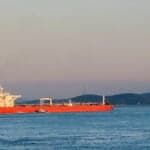


U.S. President Donald Trump on Monday demanded that Iran pay compensation for people killed in wars, attacks and protests, adding a new obstacle to efforts to reach an agreement on reopening the Strait of Hormuz.
Trump’s demand came after Iran said it was close to a deal with Oman on new shipping lanes through the strait. Tehran has said the United States must first agree to conditions including compensation, an end to sanctions and an end to military threats.
The uncertainty sent oil prices higher. Oil prices ended about 5% higher on Monday after Trump’s comments reduced hopes of an agreement that could restore shipping through the waterway.
About one-fifth of global oil and liquefied natural gas shipments passed through the Strait of Hormuz before the conflict. The waterway has been effectively blocked since U.S. and Israeli attacks on Iran began on Feb. 28.
Trump adds new demand
Trump said Iran should pay for damage caused over the past 50 years.
“We’re going to ask for money for the damage they’ve done over a 50-year period,” Trump said at the White House.
He said the payments would cover people killed among civilian protesters and U.S. forces in the region.
Trump also said Iran should compensate the families of the 17 U.S. sailors killed in the October 2000 attack on the USS Cole in Yemen. The attack has been blamed on al Qaeda, not Iran.
In a post on Truth Social, Trump also said Iran should be responsible for damages and deaths involving people in Lebanon, Syria, Yemen and Gaza.
Trump said the compensation demand, which had not been raised in earlier talks, would be part of future negotiations with Iran.
Iran-Oman Hormuz Agreement
Iranian Foreign Ministry spokesman Esmaeil Baghaei said talks with Oman were moving forward “smoothly and constructively”.
The two sides have agreed on a map for a proposed shipping route through the Strait of Hormuz, although some technical issues are still unresolved.
Their discussions include safe navigation, environmental protection, maritime services and efforts to combat crime. Iran said these services would normally involve payments.
The United States has repeatedly rejected any agreement that would allow Iran to charge fees for ships using the strait.
Iran has also said Washington must provide compensation and end sanctions and military threats before the waterway can reopen.
The Iranian conditions were broadly in line with the terms of a preliminary peace deal agreed in June. That agreement has since broken down.
Oil and gas prices rise
Oil prices initially rose about 3% after Baghaei’s comments, as hopes for a Hormuz deal were weakened by Iran’s conditions.
Brent crude later rose 4.25% at 1720 GMT and ended the day about 5% higher.
Dutch and British front-month gas prices also rose by more than 10%.
The Strait of Hormuz is an important route for global energy shipments. Before the conflict, about one-fifth of global oil and LNG flows passed through it. Its disruption has contributed to higher oil prices and inflation.
U.S.-Iran ceasefire has broken down
Washington and Tehran agreed to a ceasefire in June. The United States, however, reimposed a blockade on Iranian shipping in the Gulf in July.
Iran said the move violated the ceasefire, which had already broken down.
Iran has since carried out missile and drone attacks against U.S. allies in the region. It has also targeted commercial ships trying to pass through the Strait of Hormuz without its permission.
Trump has moved between threats of further escalation and claims that a peace agreement is close since the war began in February.
He has said the U.S. attacks were aimed at preventing Iran from developing nuclear weapons and reducing its ability to threaten the region.
Trump is also facing pressure to end a war that is unpopular in the United States ahead of November’s midterm elections. High fuel prices are a major concern in rural areas that have supported him.
Democratic U.S. Representative Bill Keating said on CNN that the situation was “the beginning of a capitulation”.
Dispute over control of Hormuz
The United States has carried out months of military operations against Iran, including a two-week campaign of strikes in July.
Despite those efforts, the source material says Iran has maintained its grip over the Strait of Hormuz.
Trump repeated on Monday that the strait was open and said, “The only one that has control of the Strait of Hormuz right now is the United States Navy.”
The proposed agreement with Oman could give Iran more leverage over the waterway than it had before the war, according to the source material.
Control of the strait and the conditions under which commercial ships can use it remain key issues in the negotiations.
Red Sea attacks continue
The shipping security situation also extends to the Red Sea and Gulf of Aden.
The Houthis, who are based in Yemen and are allies of Iran, have increased attacks on shipping in the region.
Last month, the Houthis declared a naval blockade against Saudi Arabia in the Red Sea. Fighting between the Houthis and government forces has also intensified.
Yemen’s military said seven people, including military personnel and civilians, were killed on Monday in a Houthi attack on the Red Sea port city of Mocha.
The military said air defences shot down 11 Houthi drones involved in the attack.
References: Reuters, The Guardian
Want to read more?
Check out the full article on the original site