1252 Kg Cocaine Worth Over $ 2 Million Found In Cardboard Boxes At Ecuador’s Port of Guayaquil
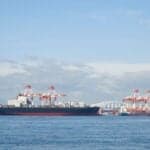


Approximately 1252.8 kilograms of cocaine have been seized by the Ecuadorian National Police during an inspection at a port in Guayaquil.
The illegal shipment destined for Spain was found after risk analysis and profiling methods were carried out, which is a usual procedure for export cargo under Operation Fénix – 0414.
The initiative is a part of the police’s ongoing surveillance across ports and harbours to stop drug trafficking to European countries
During the process, officers got suspicious of a container with 1080 cardboard boxes, and after inspection involving a trained police dog, which issued a positive alert on many boxes, the officials decided to examine the packaging material closely.
They found that the drug was impregnated between the inner layers of the cardboard to evade detection. Lab tests confirmed it was cocaine, sufficient for around 12,528,000 individual doses.
Authorities said that the seized narcotics were worth approximately $2,850,120 USD in the national Ecuadorian market, $37,584,000 USD in the United States, and $58,568,400 USD in Europe.
The operation prevented more than a ton of drugs from reaching international markets and inflicted a huge blow to the trafficking networks.
The National Police also said that they will continue to remain vigilant and enhance profiling, inspection, and specialised detection measures at maritime ports to find more such shipments and cartels behind them.
The Port of Guayaquil is Ecuador’s primary shipping hub, located in the province of Guayas along the Estero Salado inlet and the Guayas River.
It is 275 kilometres southwest of the capital city of Quito and about 50 to 60 nautical miles inland from the Pacific Ocean.
The port complex has multiple terminals, including Puerto Nuevo with 16 to 20 active berths to handle containerised freight, dry bulk, liquids, and general breakbulk cargo.
It is Ecuador’s main trade gateway and processes approximately 90% of its total imports and more than 50% of its exports.
Want to read more?
Check out the full article on the original site