US Navy To Build World’s First Robot Refuelling Plane For Jets Without A Pilot Onboard
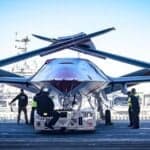


The U.S. Navy has cleared Boeing’s MQ-25A Stingray for low-rate production, moving the unmanned aircraft closer to becoming a carrier-based tanker that can refuel fighter jets without a pilot onboard.
The MQ-25A is designed to operate from U.S. aircraft carriers and refuel aircraft while they are in the air. The Navy plans to buy 76 aircraft in total, including nine test aircraft and 67 production aircraft.
Secretary of the Navy Hung Cao said the MQ-25 had passed Milestone C, a key stage that allows the programme to move from development into Low-Rate Initial Production and later full-rate production.
The Navy sees the aircraft as a way to free F/A-18E/F Super Hornets from refuelling duties. These fighter jets are currently sometimes used as “buddy tankers” to refuel other aircraft from the carrier air wing.
Using the MQ-25 for that role would allow more Super Hornets to be available for missions such as strikes and combat air patrols.
The Navy bought three MQ-25 aircraft in fiscal 2026. Its fiscal 2027 budget includes funding for three more aircraft and additional production capacity, with a total allocation of $771.177 million. This would bring the number of aircraft purchased to six.
The first MQ-25 built for the Navy by Boeing completed its first test flight outside the company’s construction facility on April 25, 2026. The flight lasted more than two hours and tested the aircraft’s flight controls, navigation and autonomous systems.
The aircraft can handle navigation, propulsion and flight management on its own while remaining under human supervision. Remote operators can take control when needed.
The MQ-25 is powered by a Rolls-Royce AE 3007N turbofan engine. It uses the Cobham Aerial Refueling Store, a probe-and-drogue system also fitted to the Super Hornet.
The system allows the MQ-25 to refuel several carrier-based aircraft, including the F/A-18 Super Hornet, F-35C Joint Strike Fighter and E-2D Advanced Hawkeye.
The Stingray is expected to carry about 15,000 pounds of fuel for transfer to other Navy aircraft. During testing, it demonstrated that it could refuel more than one type of aircraft.
Boeing is building the MQ-25 at a new 300,000-square-foot facility at MidAmerica St. Louis Airport in Mascoutah, Illinois. Rolls-Royce is supplying the AE 3007N engines, while BAE is also involved in the programme.
The MQ-25 programme began with a different goal. The Navy initially wanted an unmanned carrier aircraft for surveillance and strike missions under its Unmanned Carrier-Launched Airborne Surveillance and Strike programme.
The Navy later shifted its focus to aerial refuelling because of concerns over carrier range and the availability of aircraft. Boeing was selected to build the MQ-25 in 2018.
Boeing’s company-owned T-1 aircraft first flew in 2019 and completed an air-to-air refuelling test in 2021. Ground testing for the programme began in July 2025.
The programme is running behind its original schedule. The Navy had initially planned to achieve Initial Operational Capability in 2024, but the current target is the second quarter of fiscal 2029, or early 2029.
The first Navy-owned MQ-25 is due to move to Naval Air Station Patuxent River in Maryland for further integration testing as the Navy continues testing and prepares the aircraft for production and eventual carrier operations.
Want to read more?
Check out the full article on the original site