Trump Says U.S. Has ‘100%’ Control Of Strait Of Hormuz As Iran Demands War Reparations
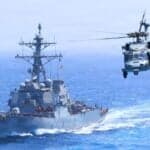


U.S. President Donald Trump said on Wednesday that the United States had “total control” of the Strait of Hormuz, claiming the U.S. Navy had cleared mines from the key shipping route.
“The U.S.A. has total control over the Strait of Hormuz. I THINK WE WILL KEEP IT!” Trump wrote on his Truth Social platform on Wednesday.
He added that the U.S. naval blockade was being described as a “WALL OF STEEL” and said there was “nothing Iran can do about it.”
Speaking to reporters in the Oval Office on Monday, Trump said the U.S. Navy had cleared mines from the waterway and that the strait was now open.
“It’s open now,” Trump said, adding that the United States was “the only one that has control of the Strait of Hormuz right now.”
He said Iran had occasionally attempted to place mines in the waterway but that the U.S. military had been able to locate them.
“They will, on occasion, drop a mine, and we find the mine,” Trump said.
The United States has maintained a naval blockade of Iranian ports since mid-April. Iran, however, has repeatedly said the strait will not be fully reopened unless Washington agrees to several conditions.
On Aug. 8, Mohammad Bagher Zolghadr, secretary of Iran’s Supreme National Security Council, outlined Tehran’s demands.
Iran wants the United States to lift its naval blockade and sanctions, withdraw American forces from the region, pay compensation for war-related damage and release frozen Iranian assets.
The council also called for an end to U.S. attacks on Iran’s regional allies.
Trump rejected Iran’s demand for compensation and said Tehran should instead compensate the United States.
In a Truth Social post published on Tuesday, Trump said Iran’s demand for war reparations had given him “an interesting idea.”
He said Iran should pay compensation for Americans killed or injured in attacks that Washington has linked to Tehran. He also said compensation should cover Iranian protesters who, according to him, had been killed by the Iranian government over the past five decades.
“We’re going to ask for money for the damage they’ve done over a 50-year period,” Trump said.
“So if there’s damages to be paid, I think Iran should pay those damages,” he added.
In Wednesday’s post, Trump also claimed that Iran’s military had been severely weakened.
He said Iran “has no Navy” and “no Air Force” and claimed that soldiers were not being paid. He described the Islamic Revolutionary Guard Corps as “decimated and fleeing” and said Iran’s leadership was “uncertain, at best.”
Trump also claimed that Iran was experiencing 300% inflation.
However, official Iranian figures put annual inflation at 88.6%, while the International Monetary Fund estimated that the country’s economy had contracted by 5.4% since the war began.
On Aug. 9, Iranian Foreign Minister Abbas Araghchi said there was “no possibility of restarting negotiations” while the United States continued to violate the June memorandum of understanding. He also renewed Tehran’s demand for compensation.
A day earlier, Iran’s parliament speaker and the country’s top negotiator accused Trump of pursuing “theater diplomacy” as both sides gave conflicting accounts of whether direct talks over the strait were taking place.
Iran has also rejected U.S. claims that sanctions are severely damaging its economy.
Iranian Foreign Ministry spokesman Esmaeil Baqaei responded on Tuesday to comments by U.S. Treasury Secretary Scott Bessent, who said American sanctions were “suffocating” Iran.
Baqaei said Washington turns to sanctions when diplomacy fails and then increases them when those measures do not produce the desired results.
He described the approach as less of a policy and more of a “compulsive addiction.”
The Strait of Hormuz has been at the center of the conflict since fighting began on Feb. 28, 2026.
Iran closed the waterway to foreign shipping in the early days of the war, and the Islamic Revolutionary Guard Corps later claimed it had taken complete control of the passage.
The United States formally reimposed its naval blockade of Iranian ports on April 13 after talks in Islamabad collapsed. Washington said the move was aimed at restricting Iran’s oil exports and pressuring Tehran to return to negotiations.
Since then, both countries have repeatedly claimed control over the strait.
According to U.S. Central Command, dozens of commercial vessels have been redirected, and several tankers have been boarded or disabled while attempting to breach the blockade.
On Tuesday, the U.S. military said it had fired on a vessel in the Gulf of Oman while enforcing the blockade.
References: Business Standard, Reuters
Want to read more?
Check out the full article on the original site