U.S Prepared To Maintain Iranian Naval Blockade “Indefinitely,” Pentagon Chief Says
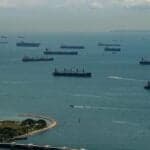


The U.S has sufficient naval resources to continue the naval blockade of Iranian Ports, indefinitely, Defence Secretary Pete Hegseth said.
He added that Washington can just rotate warships as needed, suggesting that the operation does not face constraints due to the limited number of vessels.
He made the statement while speaking to a few reporters in Panama, signalling that the U.S is prepared to sustain military and economic pressure on Iran as direct negotiations remain halted.
He also spoke to the crew members of a USS Gridley, a naval destroyer which had earlier served in the Middle East.
His comments came a day after President Trump said that the U.S has complete control over the Strait of Hormuz, saying that everyone called the blockade built by U.S forces a wall of steel and there is nothing Iran could do about it.
Washington has sent thousands of naval officers and troops to the Middle East since the war with Iran began in February 28, 2026, after the US and Israel launched attacks on the Islamic Republic.
More than 20 naval ships were deployed to the region, with USS Lincoln carrier exceeding 250 days of continuous deployment as the conflict drags on without resolution, with the point of contention being the waterway which handles one-fifth of the world’s oil and gas trade.
Since the imposition of the U.S blockade around Iran, forces have redirected over 55 ships trying to reach Iran. A few were also boarded by the navy, and atleast two were also disabled, after the U.S claimed to have given them repeated warnings.
Recently, a U.S Navy MH-60 helicopter fired two Hellfire Missiles into a Panama-flagged ship’s engine room after it did not pay heed to any warnings from U.S. forces.
However, months of strikes and attacks from both sides have still not broken Iran’s hold on the Strait of Hormuz.
Iran hit back with missiles, drones and targeted U.S bases in neighbouring countries, which it believed aided the U.S in carrying out its attacks against the Islamic Republic. It also struck ships which tried to cross the Hormuz without taking prior permission from its authorities and took the route along the Omani coast, approved by the U.S.
In the past few months, U.S President Trump has warned Iran and then made claims that an agreement was near; however, no permanent deal to end the war has been signed, nor remains in sight.
Trump faces pressure from his party members to end the war quickly, as the mid-term elections in November are approaching and the increasing prices of fertilisers and oil have led to discontent among people, especially from rural areas who once supported him in the past.
Want to read more?
Check out the full article on the original site