Australia Investigates Damage To 2 Critical Undersea Communication Cables Off Perth
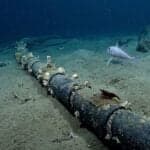


Australia’s Federal Police is assessing a report of crime after two subsea communication cables developed faults close to each other and one after another off Perth.
The cables are owned by Subco. Its founder and chief executive, Bevan Slattery, said the Indigo-West and Indigo-Central cables suffered “shunt faults” inside the Submarine Cable Protection Zone off Perth.
Slattery also said a vessel was operating near the location around the time the faults occurred. He described the activity as “suspicious/coincidental” but did not say the vessel had caused the damage.
The Australian Federal Police (AFP) confirmed it had received a report of crime and is currently assessing the information. Authorities have not confirmed that the cables were deliberately damaged.
What happened to the cables?
Slattery said the two cables developed faults “straight after each other and in close proximity to each other”.
The Indigo-West cable connects Perth with Indonesia and Singapore. The Indigo-Central cable connects Victoria, Tasmania and New South Wales.
Both cables are located within the Submarine Cable Protection Zone off Perth.
The protected area extends 60 nautical miles from City Beach, reaches a depth of 2,000 metres and covers one nautical mile on either side of the cables.
Slattery called the incident concerning and asked the AFP to investigate it urgently. He said it could become the second incident involving possible sabotage inside a federally declared cable protection zone if deliberate damage is eventually confirmed.
There is currently no official confirmation of sabotage.
What is a shunt fault?
A shunt fault happens when the insulation around a cable conductor is damaged. This can allow unwanted contact with another conductor or the ground, effectively creating a short circuit.
A shunt fault does not by itself show what caused the damage.
Undersea communication cables sit on the seabed and are about the width of a garden hose. They can be damaged accidentally, including by ships’ anchors, but they can also be cut deliberately.
David Brewster, a senior research fellow at the National Security College at the Australian National University, said there have been several cable-cutting incidents in Europe and around Taiwan in recent years.
He said it can be difficult to determine the cause of some incidents, although he believes state actors including Russia and China were responsible in a number of cases.
He did not link those incidents to the faults reported off Perth.
Why the cables matter to Australia?
Subsea cables are important to Australia’s connection with the rest of the world.
Brewster said Australia has 16 subsea cables carrying 99% of the country’s international communications. He said these connections support the Australian economy and everyday activities.
“Just about every app, every cloud-based application, every Google search” depends on international communications in some way, he said.
A major disruption could therefore affect businesses, digital services and people’s daily lives.
Australia needs more cables, expert says
Brewster said cable protection zones can provide some protection but cannot completely prevent a determined person or group from damaging a cable.
He also said cyber attacks against cable infrastructure are difficult to prevent.
According to Brewster, having more cables would reduce Australia’s dependence on individual connections.
“The more cables you have, the less vulnerable you are,” he said.
He argued that Australia needs more subsea cables to reduce the risk of disruption.
Most cables are privately owned
Brewster also raised questions about who owns and operates Australia’s subsea cables.
He said the cables are privately owned, with an increasing number owned by U.S. technology companies such as Meta, Google and Amazon.
This means some important communications infrastructure is owned by private companies based outside Australia.
Brewster said the Australian government has limited influence over how these privately owned cables are operated and repaired.
He also pointed to another issue: there is no single government department or agency responsible for all aspects of the subsea cable sector.
Several government departments have responsibility for different parts of the industry.
“We need to nominate an agency to take responsibility for protecting the cables and any response,” Brewster said.
He said it was not always clear to private cable operators who they should contact within the government when a cable is damaged or disrupted.
References: ABC News, TOI
Want to read more?
Check out the full article on the original site