U.S Army’s New Military Boat Can Transport 82-Ton Battle Tanks & Armour Vehicles Across Rough Waters
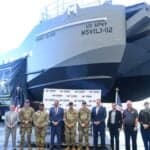


Vigor Marine Group has built a support vessel, called USAV Craney Island, to modernise the watercraft fleet of the U.S Army. The vessel is built to enhance payload capacity and offers greater flexibility in missions and manoeuvrability.
It can carry 82 tons of cargo, including main battle tanks, armoured vehicles, and military equipment, at a speed of 21 knots.
The vessel can easily operate in anti-access and area-denial or hostile environments, given its superior seakeeping, survivability and no constraints related to height on the payload.
The company claims that the support vessel enhances crew comfort and reduces the strain on the payload, given its innovative tribow monohull design which optimises seakeeping and allows the vessel to even exceed speeds of 20 knots when it is fully loaded.
CEO of Vigor Marine Group said, “This is a critical milestone for both the U.S. Army and for our skilled Vigor Marine Fabrication workforce in Vancouver, where this journey began years ago.
Today reflects the dedication of our employees, suppliers and Army partners who have worked together to refine this next-generation vessel. Our goal is to support our customer’s mission by completing quality work safely, and today we celebrate achieving that on behalf of the U.S. Army.”
The vessel also shows the capabilities of the company to design and build aluminium vessels, especially for the country’s defence forces, boosting national security.
According to Vigor Marine, its facility in Vancouver is working at maximum capacity to produce hulls for the MSV (L), while continuing fabrication of the Combatant Craft Medium (CCM), which the company has already manufactured around 30.
300 skilled workers contributed to the production of Craney Island, along with over 40 companies based in Washington and supplies across the Pacific Northwest and other parts of the country.
Vigor Marine said that the design for the MSV (L) was developed along with BMT after a study was conducted to ascertain the requirements of the U.S Army. It also looked at the previous design options available to see if any matched the armed forces’ unique requirements.
The company refined the design of LCM-8 and added features to enhance performance, reduce maintenance costs and boost flexibility while maintaining reliability and versatility.
Want to read more?
Check out the full article on the original site