•7 min read•from POPSUGAR
Elite Tennis Is Officially For the Aunties

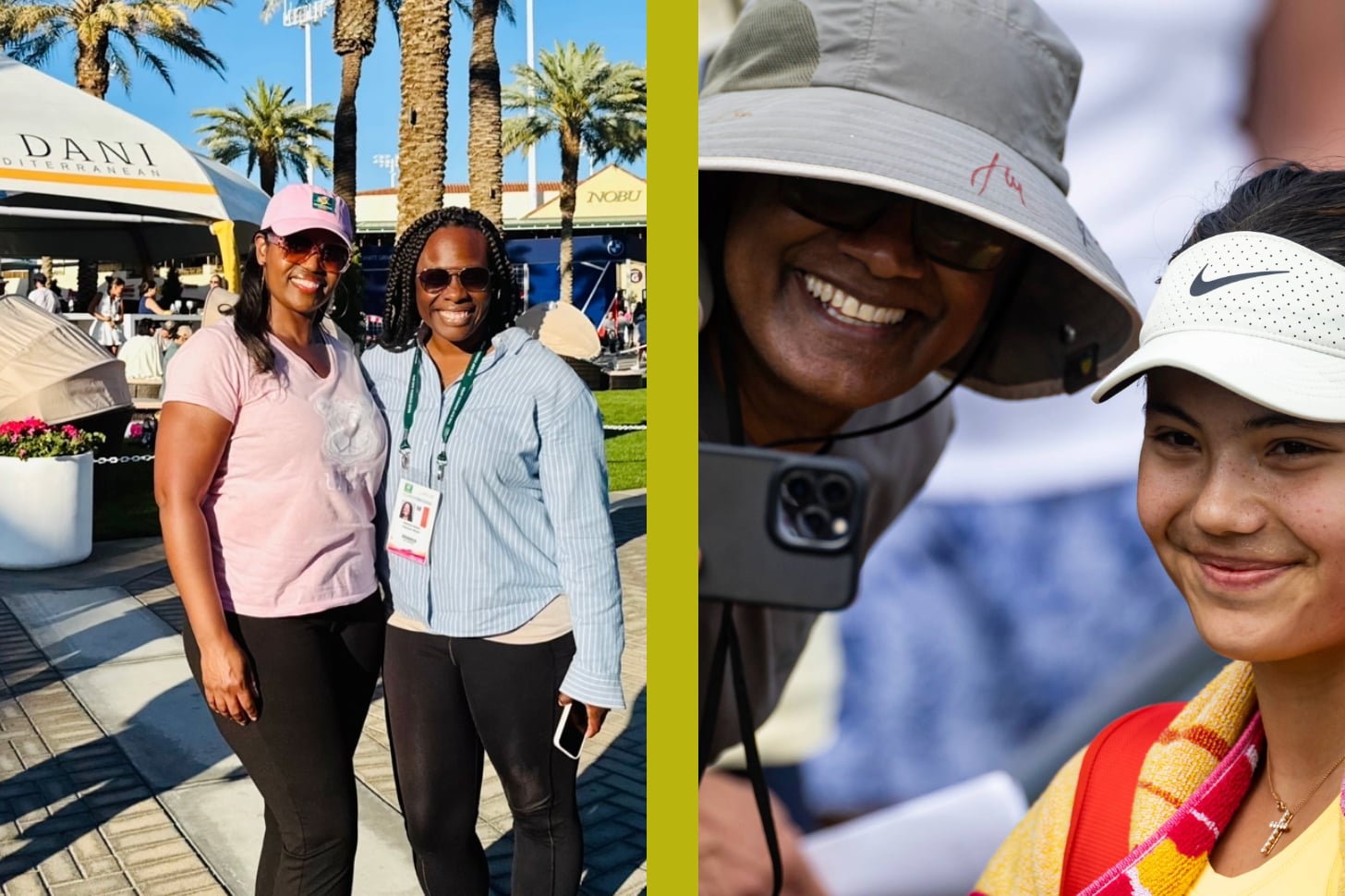 Image Source: Getty / Mike Frey; Ralinda Watts
Over time, the word "auntie" has evolved from term used to describe a biological relative to a powerful representation of cultural identity: a Black woman with a presence, who's full of wisdom, and knows how to have fun. While initially a term of endearment referencing age and maturity, Black culture in the age of Gen Z has redefined the word "auntie" as a badge of honor. The term isn't about age, but rather about influence, realness, and taking up space authentically.
From the women in our families to political aunties like Maxine Waters, in the world of social media, "auntie behavior" or "aunties" can be witnessed at social and sporting events — on full display in all of their "aura," as the kids say.
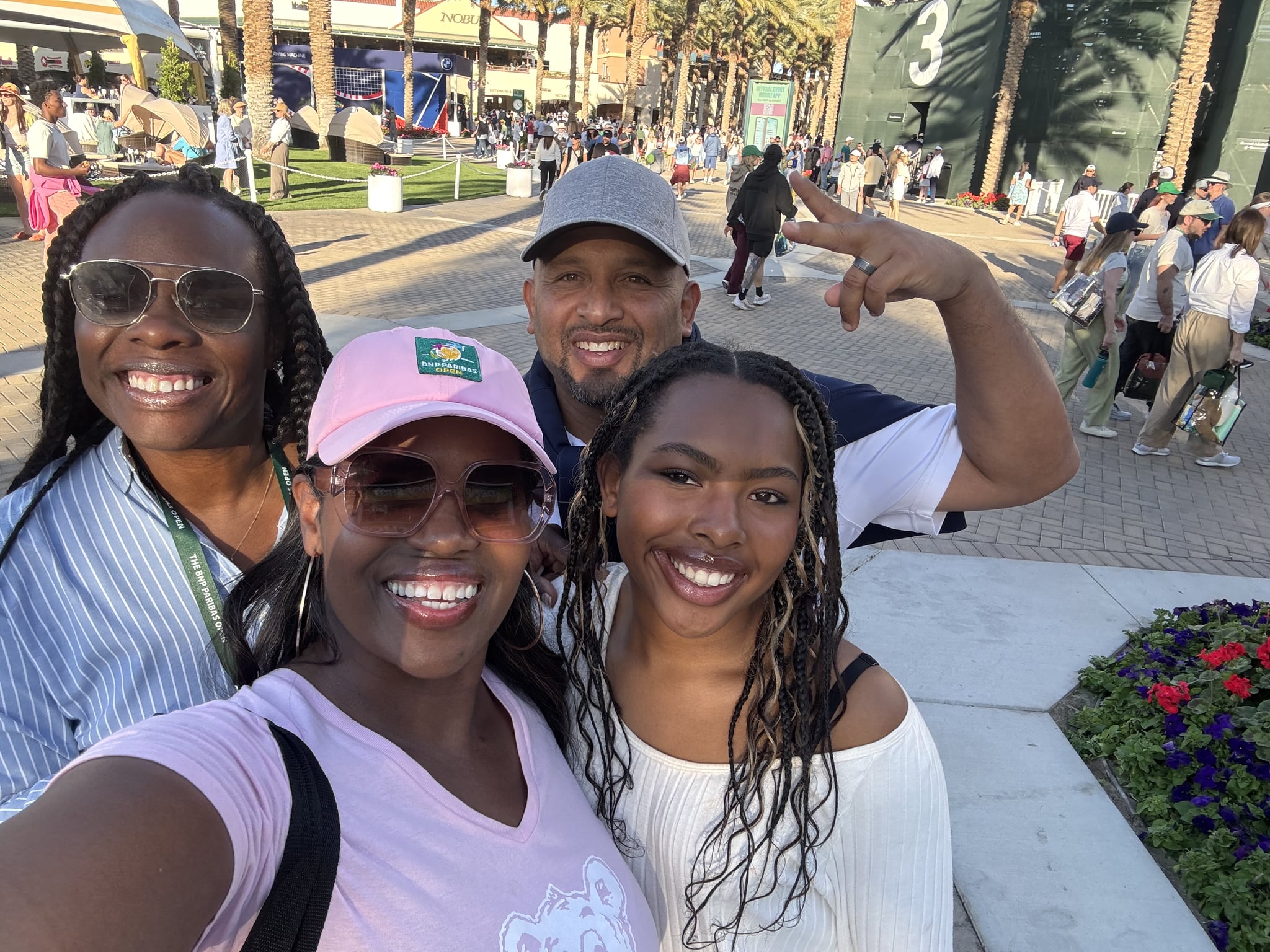
At last year's BNP Paribas Open, affectionately known as Tennis Paradise, the aunties were present, taking in the tennis action, building community together, and enjoying the softness of a sport that has often excluded our identity and experience.
Whether it be hopping from stadium to stadium, watching the players practice, or enjoying a match together on the big screen while sitting on the pristine grassy lawn, the BNP is where the aunties are living their best life, enjoying every serve while they serve looks, energy, and joy.
There, in Indian Wells, CA, I witnessed this firsthand and caught up with certified aunties on how they're bringing a sense of community to Black women in sport.
Audrey Owens, an avid tennis fan who resides in Inglewood, CA, shared what it means to have the aunties so visible at BNP Paribas Open. She said, "It's important to be represented in the athletic realm to inspire and encourage Black girls to participate in this historically white space."
Image Source: Getty / Mike Frey; Ralinda Watts
Over time, the word "auntie" has evolved from term used to describe a biological relative to a powerful representation of cultural identity: a Black woman with a presence, who's full of wisdom, and knows how to have fun. While initially a term of endearment referencing age and maturity, Black culture in the age of Gen Z has redefined the word "auntie" as a badge of honor. The term isn't about age, but rather about influence, realness, and taking up space authentically.
From the women in our families to political aunties like Maxine Waters, in the world of social media, "auntie behavior" or "aunties" can be witnessed at social and sporting events — on full display in all of their "aura," as the kids say.
At last year's BNP Paribas Open, affectionately known as Tennis Paradise, the aunties were present, taking in the tennis action, building community together, and enjoying the softness of a sport that has often excluded our identity and experience.
Whether it be hopping from stadium to stadium, watching the players practice, or enjoying a match together on the big screen while sitting on the pristine grassy lawn, the BNP is where the aunties are living their best life, enjoying every serve while they serve looks, energy, and joy.
There, in Indian Wells, CA, I witnessed this firsthand and caught up with certified aunties on how they're bringing a sense of community to Black women in sport.
Audrey Owens, an avid tennis fan who resides in Inglewood, CA, shared what it means to have the aunties so visible at BNP Paribas Open. She said, "It's important to be represented in the athletic realm to inspire and encourage Black girls to participate in this historically white space."
 PS Photography / Ralinda Watts
In recent years, tennis has seen an explosion in Black female players, leading aunties, like myself, wanting to come out and support. At this particular BNP, there were several Black women in the draw: US Open Champion Coco Gauff; four-time Grand Slam champion Naomi Osaka; two-time Grand Slam doubles champion Taylor Townsend; as well as rising stars like Alycia Parks, Hailey Baptiste, Robin Montgomery, Clervie Ngounoue, and Whitney Osuigwe.
"Black women have always had a presence in tennis, but now we're seeing more of us actively taking up space and connecting through the sport," said Erika Bond, the founder of All-Love Racquet Club. "Serena and Venus didn't just inspire a generation of players — they inspired a generation of fans who see tennis as a place where we belong."
Bond also touched on how social media has helped make tennis fandom more accessible, "making it easier to find like-minded people who love the game and want to experience it in a way that reflects our culture." Bond added, "At the same time, the tennis world still has barriers when it comes to real inclusivity. While the fan base is evolving, the industry — sponsorships, media coverage, leadership — still skews heavily white. That's why so many of us rally around Black players; we know firsthand how hard it is to thrive in a space that wasn't built with us in mind."
Bond's club seeks to not only diversify tennis culture, but bring an authentic experience to the courts through community, music, food vendors, and an overall welcoming atmosphere. For example, the club previously hosted a cookout event for Black History Month, sponsored by the United States Tennis Association Southern California, and held on the legendary Los Angeles courts where the Williams sisters played as kids.
"All-Love was built for everyone who has ever felt like there wasn't a place for them in tennis," Bond said. She hopes that by giving Black women a space like All-Love to find respite and representation, that bigger forums won't feel so isolating.
Owens also notes that the importance of "showing up" for the athletes that look like us. "Our attendance in great numbers demonstrates that these athletes can draw large crowds and are worthy of being showcased," she said.
Bond shares a similar sentiment, adding that there's a positive trickle-down effect: "When you see more Black women excelling in tennis, it naturally brings more of us into the sport, whether as fans, players, or industry professionals."
"The future of the sport should reflect all of the people who love it."
That said, representation alone isn't enough. There are still real challenges when it comes to access, sponsorship, and overall visibility beyond the handful of players we see on TV. "The tennis establishment still favors a particular image when it comes to marketing and branding, and that doesn't always reflect the diversity of the people who actually love this sport," Bond said. "That's why so many Black fans gravitate toward the Black players coming up now — we know they're not just competing on the court, they're pushing against a system that still has limitations."
Over the last year, I've noticed a marked difference in more Black women in attendance at BNP, and it's been so refreshing to see — especially in light of the historic discrimination within the tournament (take, for example, the racist mistreatment Serena Williams faced by the fans at the Australian Open in 2001, which led to her 14-year boycott of the tournament).
But gradually, spaces like BNP are becoming more welcoming for Black women spectators. Even intentional choices on food vendors send a message of belonging that I hope remains for years to come. "I love seeing so many of us here to enjoy the high-end athletic experience, from the DJ spinning more popular and soulful music to the inclusion of the Black-owned, Los Angeles-based Post & Beam restaurant featured," Owens said.
PS Photography / Ralinda Watts
In recent years, tennis has seen an explosion in Black female players, leading aunties, like myself, wanting to come out and support. At this particular BNP, there were several Black women in the draw: US Open Champion Coco Gauff; four-time Grand Slam champion Naomi Osaka; two-time Grand Slam doubles champion Taylor Townsend; as well as rising stars like Alycia Parks, Hailey Baptiste, Robin Montgomery, Clervie Ngounoue, and Whitney Osuigwe.
"Black women have always had a presence in tennis, but now we're seeing more of us actively taking up space and connecting through the sport," said Erika Bond, the founder of All-Love Racquet Club. "Serena and Venus didn't just inspire a generation of players — they inspired a generation of fans who see tennis as a place where we belong."
Bond also touched on how social media has helped make tennis fandom more accessible, "making it easier to find like-minded people who love the game and want to experience it in a way that reflects our culture." Bond added, "At the same time, the tennis world still has barriers when it comes to real inclusivity. While the fan base is evolving, the industry — sponsorships, media coverage, leadership — still skews heavily white. That's why so many of us rally around Black players; we know firsthand how hard it is to thrive in a space that wasn't built with us in mind."
Bond's club seeks to not only diversify tennis culture, but bring an authentic experience to the courts through community, music, food vendors, and an overall welcoming atmosphere. For example, the club previously hosted a cookout event for Black History Month, sponsored by the United States Tennis Association Southern California, and held on the legendary Los Angeles courts where the Williams sisters played as kids.
"All-Love was built for everyone who has ever felt like there wasn't a place for them in tennis," Bond said. She hopes that by giving Black women a space like All-Love to find respite and representation, that bigger forums won't feel so isolating.
Owens also notes that the importance of "showing up" for the athletes that look like us. "Our attendance in great numbers demonstrates that these athletes can draw large crowds and are worthy of being showcased," she said.
Bond shares a similar sentiment, adding that there's a positive trickle-down effect: "When you see more Black women excelling in tennis, it naturally brings more of us into the sport, whether as fans, players, or industry professionals."
"The future of the sport should reflect all of the people who love it."
That said, representation alone isn't enough. There are still real challenges when it comes to access, sponsorship, and overall visibility beyond the handful of players we see on TV. "The tennis establishment still favors a particular image when it comes to marketing and branding, and that doesn't always reflect the diversity of the people who actually love this sport," Bond said. "That's why so many Black fans gravitate toward the Black players coming up now — we know they're not just competing on the court, they're pushing against a system that still has limitations."
Over the last year, I've noticed a marked difference in more Black women in attendance at BNP, and it's been so refreshing to see — especially in light of the historic discrimination within the tournament (take, for example, the racist mistreatment Serena Williams faced by the fans at the Australian Open in 2001, which led to her 14-year boycott of the tournament).
But gradually, spaces like BNP are becoming more welcoming for Black women spectators. Even intentional choices on food vendors send a message of belonging that I hope remains for years to come. "I love seeing so many of us here to enjoy the high-end athletic experience, from the DJ spinning more popular and soulful music to the inclusion of the Black-owned, Los Angeles-based Post & Beam restaurant featured," Owens said.
 PS Photography / Ralinda Watts
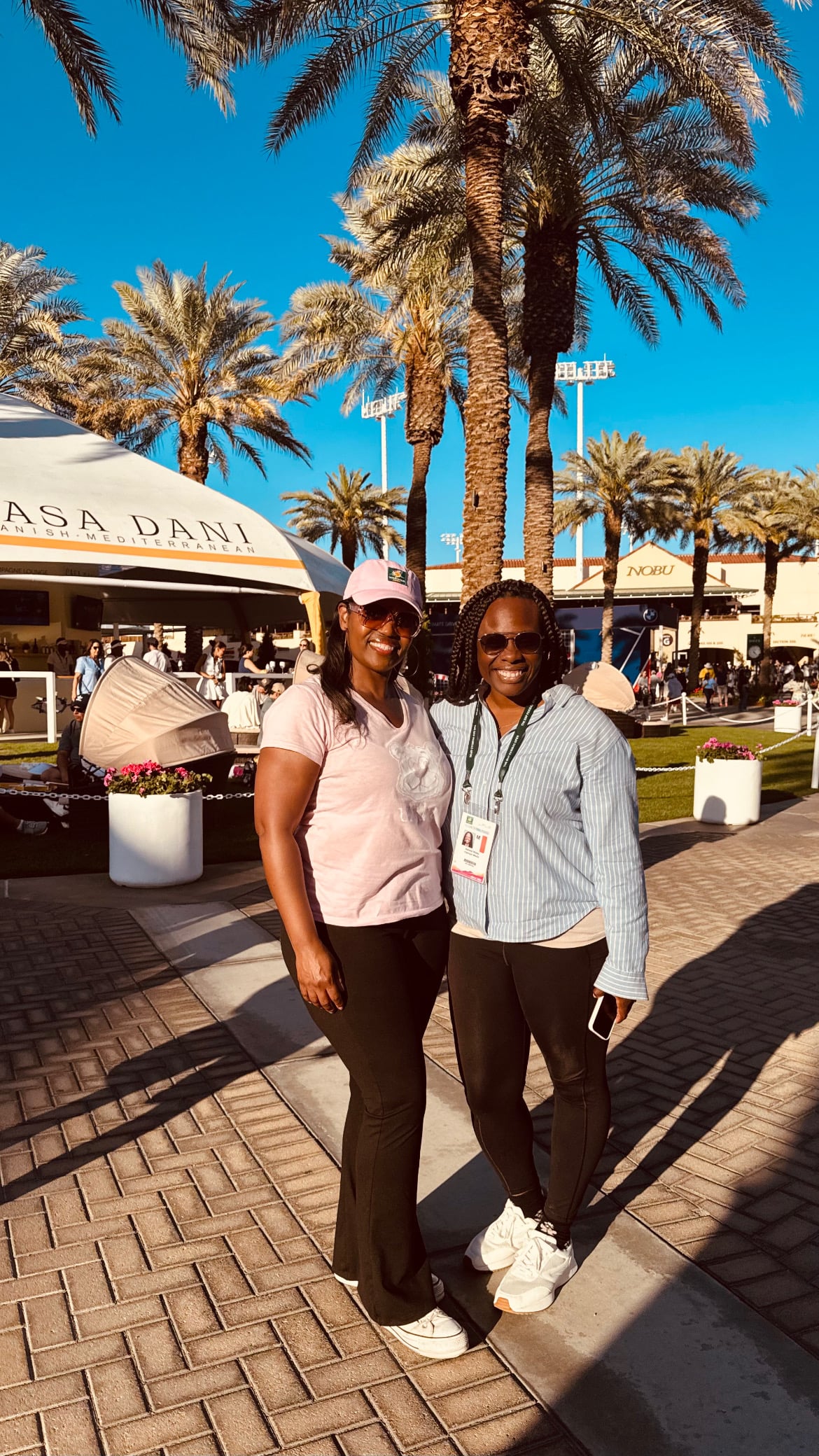
Aside from the tennis action and entertainment, what's even more fun is just seeing all the other aunties come together. Some may not even know each other, but we leave as best friends; some get together and make it a yearly event.
Regardless of how or why, the aunties are enjoying their time together, expanding the notion of what a tennis fan should look like — and, more so, how a tennis fan should take up space. At a time when there are so many attacks on Black women, from the policing of our hair in schools or the workplace to combatting the "angry Black woman" stereotype, it's refreshing to see the softness of Black women come alive at BNP. "We're proving that tennis doesn't have to fit into a narrow box, and that the future of the sport should reflect all of the people who love it," Bond said.
From a nod as we pass each other on the grounds to the high fives when Gauff delivers a precise shot on the court, the shared understanding and collective celebration for each other makes it all worth it. "BNP is my favorite because for a relatively short 2-hour drive to the desert, I can see all of my favorite tennis stars in-person and up close," Owens said, "as well be with all of my sistahs, us aunties are here."
Not only are the aunties here, but we're here to stay. And every time we show up and show out in the tennis space, we prove that it's more than a sport. "It can be a cultural moment, a celebration, a place to build real connections — and for us there's a deep sense of connection," Bond said. "It's a reminder that even in spaces where we're not the majority, we bring community with us."
49481413
Ralinda Watts is an author, diversity expert, consultant, practitioner, speaker, and proven thought leader who works at the intersection of race, identity, culture, and justice. She has contributed to numerous publications such as PS, CBS Media, Medium, YahooLifestyle, and the Los Angeles Times.
PS Photography / Ralinda Watts
Aside from the tennis action and entertainment, what's even more fun is just seeing all the other aunties come together. Some may not even know each other, but we leave as best friends; some get together and make it a yearly event.
Regardless of how or why, the aunties are enjoying their time together, expanding the notion of what a tennis fan should look like — and, more so, how a tennis fan should take up space. At a time when there are so many attacks on Black women, from the policing of our hair in schools or the workplace to combatting the "angry Black woman" stereotype, it's refreshing to see the softness of Black women come alive at BNP. "We're proving that tennis doesn't have to fit into a narrow box, and that the future of the sport should reflect all of the people who love it," Bond said.
From a nod as we pass each other on the grounds to the high fives when Gauff delivers a precise shot on the court, the shared understanding and collective celebration for each other makes it all worth it. "BNP is my favorite because for a relatively short 2-hour drive to the desert, I can see all of my favorite tennis stars in-person and up close," Owens said, "as well be with all of my sistahs, us aunties are here."
Not only are the aunties here, but we're here to stay. And every time we show up and show out in the tennis space, we prove that it's more than a sport. "It can be a cultural moment, a celebration, a place to build real connections — and for us there's a deep sense of connection," Bond said. "It's a reminder that even in spaces where we're not the majority, we bring community with us."
49481413
Ralinda Watts is an author, diversity expert, consultant, practitioner, speaker, and proven thought leader who works at the intersection of race, identity, culture, and justice. She has contributed to numerous publications such as PS, CBS Media, Medium, YahooLifestyle, and the Los Angeles Times.Want to read more?
Check out the full article on the original site
Tagged with
#Instagram marketing
#auntie
#Black women
#tennis
#BNP Paribas Open
#Indian Wells
#cultural identity
#Gen Z
#Serena Williams
#Venus Williams
#Coco Gauff
#Naomi Osaka
#Taylor Townsend
#Alycia Parks
#Hailey Baptiste
#Robin Montgomery
#Whitney Osuigwe
#Black female athletes
#racquet club
#sport