Multi-Purpose Vessel That Can Power 32,000 Homes & Supply Clean Water To 150,000 People Unveiled
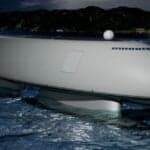


A U.S company called Optimal Transit has built a vessel which can act as a floating AI data centre, supply clean electricity to coastal grids, and also produce clean drinking water for thousands of people.
The Blue Economy VITAL 100 MW Kraaken generates no harmful emissions, and can power 32,000 homes, produce water for 150,000 people, and host 60 MW of AI compute capacity.
It utilises a small waterplane area twin hull, or SWATH, along with an advanced mooring system to provide greater stability while operating offshore.
The vessel could be advantageous in areas which rely on diesel or fuel to generate electricity, like the Pacific Islands, South and Southeast Asia and Sub-Saharan Africa.
The vessel’s developers are shifting its payload just 5 weeks after unveiling the multi-purpose vessel. The new configuration redirects part of its energy away from raw compute to export electricity and fresh water to the local grids.
It uses a Digital Ocean Thermal (DOT) engine and retains 60 MW of onboard power for its AI and sovereign data requirements.
The vessel continuously exports 40 MW of clean electricity, which can power 32,000 homes, and also produces 7.9 gallons of fresh water daily for 150,000 people through vacuum-flash desalination.
The vessel uses a special umbilical system that can help to deliver power, water and data to the shore. It can quickly disconnect so the vessel can relocate in a few hours if weather conditions deteriorate or if operational needs change. It can similarly reconnect within minutes once the situation normalises.
The Kraaken can also function to provide disaster relief to supply emergency power and water to the grids and local tanks.
Additionally, the architecture could be scaled according to the requirement. For example, clustering 5 ships into an offshore park could produce 200 MW of power, produce 40 million gallons of water and 300 MW of compute capacity.
The ship can support a large area without depending on land infrastructure. Building such a system onshore would mean 3 different projects costing between $ 750 million and around $ 1 billion.
It would also take many years to build, while the multipurpose vessel cuts the development costs by over 50%, according to the company.
Its appeal remains strong in developing regions and disaster-prone areas across Africa, Asia and the Pacific where local grids are not reliable and depend on diesel, which can cost $0.40 to $0.55 per kilowatt-hour.
Want to read more?
Check out the full article on the original site