India Plans First Cargo Ship On Northern Sea Route By 2027
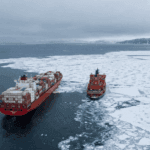


India is planning to send its first cargo vessel along Russia’s Northern Sea Route in 2027, while New Delhi looks to expand trade with Moscow amidst Western sanctions and disruption on the Suez Canal route.
5,600 km of Arctic coastline carry the Northern Sea Route, making it the shortest shipping lane between East Asia and Europe.
The joint secretary at India’s Ministry of Ports, Shipping and Waterways, said that officials are planning the first pilot vessel on the Northern Sea Route for 2027.
He added that the announcement came at the Arctic-Regions Forum in Arkhangelsk on 13 August, and he called the growing dialogue between India and Russia on Arctic shipping a shift toward practical cooperation.
Russian President Vladimir Putin said on 12 August that Moscow is seeing growing interest from countries in the Arctic route, and he named India and China among the nations in talks with Russia.
Per Russian officials, the Northern Sea Route can save India up to 40% in distance and about two weeks in travel time compared with the Suez Canal.
He added that the Chennai-Vladivostok corridor, known as the Eastern Maritime Corridor, has recorded a 70% jump in cargo movement. The prospect of extending that growth to the Northern Sea Route was a ‘humongous possibility’.
He also added that India is interested in the multi-modal Trans-Arctic Transport Corridor, and two memoranda of understanding on developing the routes were signed last year.
Russia has invested in developing the Northern Sea Route’s infrastructure, and Moscow struck a deal with Dubai-based DP World, one of the world’s largest port operators, in 2023 to develop container shipping along the route.
23 voyages were completed on the Northern Sea Route last year, with 30 more scheduled for 2026, since Chinese companies have increasingly used the route.
Azamat Khochuev, Rosatom’s Arctic development director, said that cargo movement between Russia and China along the route has passed 5 million tonnes this year.
Rosatom operates a fleet of nuclear-powered icebreakers and is Russia’s designated operator and coordinator for the Northern Sea Route.
China’s Sea Legend Shipping will launch its first regular service to Europe via the Northern Sea Route this month, and the company plans to sail seven vessels along the route between August and October.
South Korea is also developing cargo traffic through the Northern Sea Route, and Seoul treats Arctic shipping as a strategic state priority.
However, the Northern Sea Route remains open only seasonally, and vessels need specialised icebreaker support, as Arctic sea ice recedes for only part of the year.
The vessel type, operator, or cargo the pilot voyage will carry has not yet been decided.
India and Russia have set a bilateral trade target of $100 billion by 2030, and Russian oil now accounts for more than half of India’s crude imports.
Additionally, Russian energy reliance makes Arctic shipping capacity an increasingly important part of the wider trade relationship.
Reference: RT / TASS
Want to read more?
Check out the full article on the original site