China Launches Regular Arctic Shipping Route To Europe Amid Hormuz Crisis
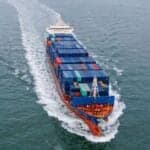


China has launched its first regular container shipping service through Russia’s Northern Sea Route (NSR), creating a shorter seasonal trade link between China and Europe as concerns over disruptions in the Strait of Hormuz and the Suez Canal encourage shipping companies to explore alternative routes.
Chinese shipping company Sea Legend began operating the weekly China-Europe Arctic Express, known as the “Ice Silk Road“, on Aug. 15.
The service connects Ningbo-Zhoushan in eastern China with Felixstowe in the United Kingdom through the Arctic shipping route that runs along Russia’s northern coast.
According to the company, the journey can take as little as 18 days, compared with more than 40 days through the Suez Canal.
However, the route remains limited because it depends on seasonal weather, Russian approvals and icebreaker support.
Sea Legend’s first scheduled voyage is being carried out by the 1,740-TEU container ship Dubai Tower. The company plans to operate eight weekly sailings between August and October during the Arctic navigation season.
The Northern Sea Route extends about 5,500 km along Russia’s Arctic coastline and is usually open only between July 1 and Oct. 1.
The new service follows a pilot voyage completed by Sea Legend in 2025.
Li Xiaobin, Sea Legend’s chief operating officer, said recent tensions in West Asia had exposed the risks facing major shipping routes such as the Suez Canal and the Strait of Hormuz, increasing interest in alternative routes between China and Europe.
The shorter route could be particularly useful for temperature-sensitive cargo, including electric vehicles, lithium batteries and solar products, sectors in which China is a major exporter.
In 2017, Chinese President Xi Jinping called for China and Russia to jointly develop Arctic shipping routes and create a “Polar Silk Road.” Access to the route, however, remains largely under Russian control.
Russia’s state-owned nuclear company Rosatom issues navigation permits, manages shipping operations along the route and provides the nuclear-powered icebreakers that accompany most commercial vessels.
According to the information provided, Rosatom has approved seven Chinese ships to use the route.
Russia’s relationship with China in the Arctic has also changed in recent years. Moscow was initially cautious about China’s growing presence in the region, but Russia’s increasing dependence on Beijing after the invasion of Ukraine has expanded China’s access to Arctic shipping.
India, Japan and South Korea have also expressed interest in using the Northern Sea Route.
Despite the growing attention, Arctic shipping remains small compared with traditional trade routes.
Last summer, a record 23 cargo ships used the Northern Sea Route, while more than 30 ships passed through the Suez Canal every day.
The route also presents significant operational challenges.
Ships navigating the Arctic must deal with changing weather conditions, ice and the need for icebreaker assistance. Insurance costs are also higher, with premiums reported to be about 40% higher than those for ships travelling around the Cape of Good Hope.
Environmental concerns remain another major obstacle.
Although heavy fuel oil was banned in the Arctic in 2024, experts have warned that any spill would be particularly difficult to contain because oil breaks down more slowly in cold conditions and can become trapped in sea ice.
A 2025 report by the Bellona Environmental Foundation warned that Russia was not adequately prepared to respond to a major spill in the region because of the route’s remoteness.
The report also raised concerns about black carbon emissions, which can increase Arctic warming by causing the region to absorb more heat from the sun.
The Northern Sea Route is also increasingly being used by Russian oil shipments.
According to Bellona, around 100 internationally sanctioned ships used the route in 2025, accounting for nearly one-third of the cargo vessels operating there.
Reports in 2026 suggest that traffic involving Russia’s shadow fleet has increased as milder summer conditions have improved navigation.
A Russian liquefied natural gas transporter completed an early transit through the route in May, while ship-watchers recently identified a convoy of Russian tankers carrying about 8 million barrels of oil that passed within 500 miles of the North Pole.
Sanctions remain another source of uncertainty.
Allianz Commercial said in its 2026 safety and shipping review that international sanctions against Russia could complicate rescue operations if vessels require assistance.
Experts cited in the source material said the Northern Sea Route still faces major limitations because of its short operating season, higher costs, safety concerns and sanctions-related risks.
References: The Guardian, Business Standard
Want to read more?
Check out the full article on the original site