Iran’s Grip On Strait Of Hormuz Weakens As Over 80% Of Ships Use Omani Route
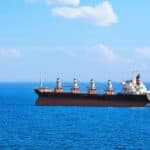


Iran appears to be losing some control over shipping in the Strait of Hormuz as more vessels choose a route along Oman’s northern coast.
More than 80% of vessel transits through the strait over the past two weeks have used the Omani route, according to shipping data from Kpler. The route is authorised under international arrangements but is opposed by Iran.
The change is significant because Kpler recorded almost no commercial traffic using the Omani route a month ago.
Ships are now increasingly using it despite Iranian warnings and attacks, with US naval forces offering protection to vessels making the crossing.
“It increasingly looks like Iran has at least partially lost control of the strait,” Homayoun Falakshahi, Kpler’s head of crude oil analysis, told CNN.
The Strait of Hormuz links the Persian Gulf with the Gulf of Oman and is a major route for global oil shipments. Any change in how ships move through the waterway can affect oil trade and commercial shipping.
Ships move away from Iran’s preferred route
Iran has said it controls the Strait of Hormuz and has opposed vessels using the Omani side of the waterway. According to the source material, Iranian forces have attacked dozens of ships that attempted to use the route.
Despite this, most ships have recently chosen the Omani route, relying on US naval forces for protection.
The change has also affected Iran’s ability to collect tolls from ships passing through the strait.
Iran collected tolls on shipping earlier in the year. But with fewer vessels using its preferred route, it now appears to have less ability to collect those payments.
A Memorandum of Understanding between the United States and Iran expired this week. Its expiration theoretically allows Iran to resume collecting tolls, but Kpler said there is little evidence that Tehran has been able to do so.
“Iran’s request to collect tolls is something that most Middle East folks don’t want to do and haven’t been doing,” said Dan Pickering, founder and chief investment officer of Pickering Energy Partners.
“So the Oman route absolutely makes the most sense,” he added.
Gulf states find ways to keep oil moving
Oil shipments through the region have continued, although tracking the full volume is difficult.
Kuwait, Saudi Arabia and the United Arab Emirates have chartered Very Large Crude Carriers, or VLCCs, to move oil from the Persian Gulf through the Strait of Hormuz, according to Andy Lipow, president of Lipow Oil Associates.
The oil is then transferred to customers’ tankers outside the danger zone in the Gulf of Oman.
Some of these tankers switch off their transponders to avoid detection by Iran. They can remain without transmitting their location for weeks.
This type of movement is known as dark traffic. It can be difficult for conventional shipping-tracking services to detect, although some vessels can still be identified through satellite data.
US Energy Secretary Chris Wright said last week that oil moving through the Strait of Hormuz, together with oil rerouted around the waterway, amounted to about 15 million barrels per day over one week.
That is closer to the roughly 20 million barrels per day that moved through the route before the war.
US and Iran both claim influence
The shipping data has added to the competing claims from Washington and Tehran over control of the strait.
US President Donald Trump said on Monday that the United States has “total control over the strait”. He has made similar claims during the conflict.
However, continued Iranian attacks and oil flows that remain below pre-war levels suggest that the United States does not have complete control of the waterway.
At the same time, Iran does not appear to have full control either.
The growing number of vessels using the Omani route nevertheless suggests that Iran’s ability to deter shipping has weakened compared with one or two months ago.
References: CNN, Livemint
Want to read more?
Check out the full article on the original site