Panama Canal Marks 112 Years As Global Trade Lifeline Amid New Risks
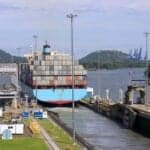


The Panama Canal marked 112 years since it opened on Aug. 15, with vessel traffic recovering after the severe drought that disrupted operations in 2023 and 2024. But the waterway is again facing pressure on its freshwater supply as El Niño strengthens.
The canal recorded 10,623 deep-draft vessel transits in the first 10 months of fiscal year 2026, according to the Panama Canal Authority (ACP). That was 6.1% higher than the 10,010 transits recorded during the same period a year earlier.
The increase means 613 more vessels used the canal between October 2025 and July 2026, showing stronger demand for the route after drought-related restrictions affected shipping in the previous two years.
At the same time, the ACP has started reducing the maximum draft allowed for Neopanamax vessels as water levels in Gatun Lake fall.
The maximum authorised draft was 49.5 feet in early July. It was reduced to 49 feet on July 24 and 48.5 feet on Aug. 15. The limit is scheduled to fall to 48 feet on Aug. 26 and 47.5 feet from Sept. 3.
So far, the restrictions have not forced the canal to reduce its daily number of transit slots. They are also less severe than the measures imposed during the 2023-24 drought.
A Major Route for Global Trade
The Panama Canal opened on Aug. 15, 1914. The 77-km waterway connects the Atlantic and Pacific oceans and serves 170 countries.
It links 180 shipping routes with about 1,920 ports around the world. Depending on the estimate provided, the canal handles about 3% to 5% of global maritime trade.
The canal allows ships to avoid much longer voyages around South America. It saves about 15,000 km on U.S. coast-to-coast routes and around 3,700 km between Europe and East Asia.
The ACP estimates that cargo moving through the canal represents about $444 billion in annual trade value.
In fiscal year 2025, vessels passing through the canal accounted for about 489.2 million PC/UMS tons. Average daily traffic was 34 vessels in January and increased to 37 in March, with more than 40 vessels recorded on some peak days.
The canal generated about $5.7 billion in revenue in 2025 and contributed an estimated $4.2 billion to Panama’s economy, equal to around 3.4% of the country’s GDP.
More than 9,000 employees support its operations.
Expanded Locks Reach 10-Year Milestone
The anniversary also comes shortly after the canal marked 10 years since its expanded locks opened in June 2016.
More than 31,000 vessels had used the expanded locks by May. Neopanamax operations now account for more than half of the canal’s total revenue.
During the first 10 months of fiscal 2026, 2,990 of the 10,623 deep-draft vessels used the Neopanamax locks, while 7,633 used the Panamax locks.
The canal’s lock system raises ships about 26 metres above sea level before they enter Gatun Lake. Ships are then lowered back to sea level through locks on the other side.
A complete passage normally takes about eight to 10 hours.
The Panama Canal Authority, an autonomous public entity, manages the waterway and uses dynamic pricing based on demand and seasonal water levels.
Panama Plans To Expand Canal’s Role
The ACP is also looking to expand the canal’s role beyond moving ships.
Under its 2025-2035 strategic vision, the authority plans to develop Panama as a logistics, energy and maritime services hub.
Two container transshipment terminals are being developed at Corozal on the Pacific side and Telfers on the Atlantic side. The projects are intended to increase Panama’s container-handling capacity and improve connections with global shipping networks.
The canal is also pursuing an Energy Corridor based on a proposed 76-km pipeline connecting terminals on Panama’s Atlantic and Pacific coasts.
The pipeline would transport propane, butane and ethane across the country. This would allow energy cargoes to cross the isthmus without ships having to pass through the canal’s locks.
The projects are expected to provide new sources of revenue and increase the economic value of cargo moving through Panama.
Water Remains the Main Challenge
The canal began taking water-saving measures in late 2025 in preparation for another period of pressure on its freshwater resources.
It has increased the use of water-saving basins at the Neopanamax locks, used simultaneous lockages for smaller vessels and deployed interior lock gates to reduce water consumption.
The authority has also limited hydroelectric generation at Gatun Dam to conserve freshwater.
During this year’s dry season, relatively favorable conditions allowed the canal to build reserves in the Gatun and Alhajuela reservoirs.
These measures follow the experience of the 2023-24 drought, when historically low Gatun Lake levels forced the canal to reduce daily transits and impose stricter draft limits. The resulting backlog increased shipping costs and led some carriers to use alternative routes.
The ACP is also considering the proposed Rio Indio reservoir, which it sees as important for securing enough water for both canal operations and Panama’s population.
The canal continues to monitor lake levels and climate forecasts and said it will make further operational changes if needed.
The waterway also has a special legal status under the 1977 Neutrality Treaty. Article 3 allows warships from all nations to pass through the canal without inspection, search or surveillance requirements as a condition of transit.
References: yenisafak, oceancrew
Want to read more?
Check out the full article on the original site