Global Ship Orderbook Expands 27% Year-on-Year, Marking Fastest Growth Since 2008
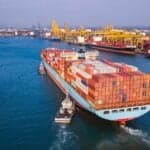


The global shipbuilding orderbook is increasing at a 27% year-on-year rate, which is the fastest growth since the 2008 financial crisis.
Data from Clarksons Research shows that while the active merchant fleet grew by 4% to reach 117,022 vessels totalling 1.8 billion gross tonnes by early August, the backlog of new vessels on order expanded at nearly 7 times that speed.
The global orderbook currently stands at 9,012 ships totalling 405.9 million gt, creating a backlog that is 70% to 75% larger than the decade-to-date average of 230 million to 240 million gt.
Through the first seven months of 2026, shipowners contracted 1,947 new vessels totalling 105.7 million gt across all major maritime sectors.
This puts the current ordering trajectory in line with the record 173.7 million gt logged in 2007. Most buyers of new ships are Greek, followed by Chinese and Singaporean.
Though the ship ordering frenzy today resembles the conditions in 2008, there are certain differences as well.
Today’s fleet is larger, and banks have stricter lending rules than before. A large part of current contracting is driven by fleet renewals, ageing vessels and uncertainty regarding rules on future low-emissions fuels.
However, the demand is not solely driven simply because vessels need to be replaced due to them being old, obsolete or non-compliant with upcoming regulations regarding use of alternative fuels.
The availability of cash reserves fueling this ordering boom was a central focus at the Posidonia maritime gathering in Athens.
According to the ClarkSea Index, daily ship earnings averaged around $40,000, the highest start to a year on record, which pushed the combined value of the world fleet and orderbook to $2.4 trillion.
Industry leaders and analysts cautioned against ordering overpriced new vessels or overexpanding shipyard capacity, saying that the current high-earning phase could eventually end.
High rates are due to the current geopolitical conflicts, which have led to costly detours around Africa as navigation in the Red Sea and Strait of Hormuz has become dangerous.
Want to read more?
Check out the full article on the original site