Norway Signs NOK 5.6 Billion Contract To Build World’s First Ship Tunnel
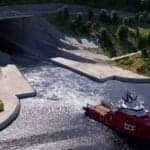


After decades of planning and debate, the Norwegian Coastal Administration (Kystverket) has finally signed a NOK 5.6 billion agreement with the contractor AF Gruppen to construct the world’s first full-scale ship tunnel in the world.
According to sources, preparations at the site will begin after the New Year and excavation work will commence in the first months of 2027. Authorities plan to complete the project by 2031.
The 1700 m long, 50 m high, and 36 m wide tunnel will be carved through the Stadlandet peninsula in Vestland county, Norway, which connects Moldefjorden directly to Kjødepollen.
The world’s largest ship tunnel would bypass the dangerous Stadhavet Sea, which witnesses almost 100 violent North Atlantic storms annually.
The storms occur as the waters in the region are the meeting point of the North Sea and the Norwegian Sea, where complex currents have taken atleast 33 lives since the end of WWII.
Historical accounts also suggest that Vikings used to drag their longships over the peninsula’s narrow neck to avoid the deadly coastline where the currents could be most powerful.
The project is quite challenging and requires excavating around 3 million m3 of solid rock, which would yield 5.4 m3 of blasted material, equal to 750,000 truckloads.
Once completed, the tunnel will have a depth of 12 m, enabling commercial vessels and passenger ships of up to 16,000 gross tonnes to navigate the region, year-round even in bad weather, without waiting days for the storms to pass.
The idea of the Stad Ship Tunnel is not new; it was first published in a local newspaper in 1874; however, it took a long time to become a reality due to cost-benefit assessments and regulatory debate before it could get national backing.
AF Gruppen’s contract covers detailed engineering and construction, which is valued at NOK 5.6 billion excluding VAT; the total approved budget stands at NOK 8.6 billion.
The tunnel is likely to improve coastal safety, decrease shipping downtime and establish a milestone in global maritime engineering.
Want to read more?
Check out the full article on the original site