South Korea to Test Arctic Shipping Route to Europe, Sparking Western Concerns Over Russian Cooperation
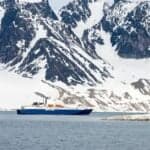


South Korea is sending its first ship to Europe via the Arctic route to see if it is commercially viable, though the plan has brought backlash from Western allies since Seoul would need Russian cooperation and permits for this voyage.
If successful, South Korea would become one of the few countries apart from China and Russia whose shipping companies have transported cargo along the treacherous route, which opens up for navigation for only 3 summer months when the ice melts.
PanStar purchased a 2700 TEU container vessel from HMM, which it is currently modifying to face the tough polar conditions and the thick ice, and also training 20 Koreans and Indonesians for the voyage.
The company is also planning to transport at least 1,300 TEUs of cargo, including automobile parts, food, cosmetics and shipments from Japan and China.
The PanStar Acro will sail from the Port of Busan and make port calls at Felixstowe in Britain, Port of Rotterdam in the Netherlands and Poland’s Gdansk Port before making its return, which would take 45-50 days.
The voyage will commence in September when the Arctic sea ice is at its lowest point of the year, making shipping possible.
South Korean President Lee Jae Myung and other top officials said that the Arctic route could transform Port of Busan into a global maritime hub and position the Arctic as a regular trade route by the end of this decade.
Western countries are not very pleased with this plan, since it requires cooperation with Russia, which they seek to isolate over its invasion and war with Ukraine since 2022.
South Korea could also breach Western sanctions against Russia if it seeks any help from Moscow during this voyage, such as its ship getting stuck in ice and requiring a Russian icebreaker to break free.
The Arctic route has become lucrative as global warming is quickly melting thick sea ice and opening up the path for ships, which would shorten trips by 35% compared to the Suez Canal route and also lead to less fuel consumption.
According to a tracking foundation called Centre for High North Logistics, which is based in Norway, 88 ships made 103 crossings through the Northern Sea Route in 2025, an increase from 97 in 2024 and 43 in 2022, with the ships mainly being from China and Russia.
However, there are hurdles, and the commercial viability of the route needs to be assessed, given that transport costs for the Arctic voyages remain high due to ship size limitations, high insurance costs due to the risk of accidents or vessels getting stuck in ice, or the fact that the route remains open for only 3 summer months.
Want to read more?
Check out the full article on the original site