Iran Threatens ‘Devastating’ Response As New US Sanctions Raise Risks For Hormuz Shipping
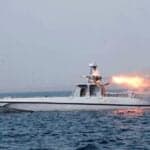


Iran warned on Friday that it would respond with a “devastating” reaction to any new U.S. threats, as Washington prepared to announce tougher sanctions aimed at putting more pressure on Tehran’s leadership.
U.S. Treasury Secretary Scott Bessent said details of the new sanctions would be announced on Aug. 24. His comments came after President Donald Trump warned that countries providing “any type of lifeline to Iran” could face economic consequences.
Shipping through the Strait of Hormuz remains far below pre-war levels. Only seven commodity ships passed through the waterway on Aug. 20, compared with half that number the previous day and more than 130 a day before the war, according to ship-tracking firm Kpler.
The Strait of Hormuz carried about one-fifth of all traded oil before February. Any continued disruption to shipping through the waterway therefore remains important for global oil markets and countries that rely on Gulf energy supplies.
Iran’s military chief of staff, Major General Ali Abdollahi, said the country’s response to new threats would be broad and decisive.
“With preparedness across land, sea, air, air defence and cyberspace, Iran’s armed forces will respond to the enemy’s new threats with crushing, punishing and devastating responses,” Iranian media quoted him as saying.
The United States and Iran have announced ceasefire agreements twice, in April and June, with both aimed at restoring shipping through Hormuz and helping end the nearly six-month-old conflict. Both agreements later broke down.
Thousands of people have been killed in the war, which has involved Gulf nations and pushed global fuel prices higher.
US prepares tougher sanctions
Bessent said Washington would explain the new measures at a news conference on Aug. 24.
“We are going to collapse this regime. It is time for our allies and the rest of the world to make a decision,” he told CNBC.
He described the naval blockade reimposed on Iran in July and the planned sanctions as a “one-two punch”.
Bessent also said the new economic pressure was not expected to lead automatically to a major military escalation.
“If we are doing the maximum economic pressure, then that means that likely there will not be a large-scale kinetic restart,” he said, referring to military action.
Oil prices steadied on Aug. 21 but were still heading for a second weekly gain. Prices had risen on Aug. 20 after the U.S. sanctions threat and reached a more than three-week high.
The measures are intended to pressure Iran to agree to an end to the conflict, which has already stranded millions of barrels of Middle Eastern oil.
China and Iranian oil trade
The new U.S. sanctions could also affect Iran’s oil sales to China.
China bought more than 80% of Iran’s shipped oil in 2025, according to Kpler data. Trade sources told Reuters that offers of Iranian crude to Chinese buyers have already fallen since the United States reimposed its blockade on Iranian ports in mid-July.
Bessent said China gets half of its energy from the Gulf and should therefore cooperate with the U.S. pressure campaign.
When asked whether US could target China for doing business with Iran, Bessent said some discussions were better held privately.
Further U.S. pressure on China could lead to retaliation. Beijing has already eased earlier restrictions on exports of key rare-earth minerals.
China’s embassy in US said sanctions and pressure would not solve the dispute and called for diplomacy.
Iran faces economic pressure
Iran’s parliament speaker, Mohammad Baqer Qalibaf, who is also the country’s main negotiator in mediated talks with the United States, said Washington appeared to believe it could not win through direct military confrontation.
“We must make plans to deal with the unjust sanctions so that we can overcome them,” Qalibaf said during a visit to neighbouring Iraq.
He accused the United States and Israel of using economic and “cognitive” warfare against Iran. Qalibaf also acknowledged the pressure on Iran’s economy.
Iran has faced almost continuous economic sanctions since the 1979 Islamic Revolution. The country is now dealing with high inflation, a weakening currency, energy shortages and damaged infrastructure.
Iran’s Foreign Ministry condemned the latest U.S. sanctions as “economic terrorism”. It said the measures would not weaken Iran’s determination to protect its independence, dignity and national sovereignty.
Foreign Minister Abbas Araqchi also criticised previous U.S. sanctions campaigns in a post on X, saying earlier efforts described as the “most crippling sanctions in history” and “maximum pressure” had failed.
Pezeshkian says war should end
Iranian President Masoud Pezeshkian said it was time to end the months-long war, arguing that Iran was in a position of “power and dignity”.
He said the world recognised what he described as Iran’s victory and accused the United States of attacking schools, hospitals and infrastructure in violation of international rules.
Pezeshkian also defended a memorandum of understanding reached with the United States in June. He said the agreement, which was intended to help end the war, did not mean Iran had surrendered.
References: Reuters, Korea Times
Want to read more?
Check out the full article on the original site