4,100-km Fibre Cable Across Drake Passage Could End Antarctica’s Hard-Drive Data Runs
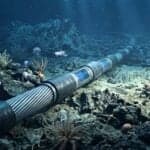


A fibre-optic cable across the Drake Passage could eventually connect Antarctica to the global internet network and allow research stations to send scientific data in real time.
A feasibility study by Chile’s telecommunications regulator Subtel found that such a connection is technically possible. But the project still needs funding and international approval, and construction would be difficult because of the weather and conditions around Antarctica.
The larger proposal would cover about 4,100 km, cost around $620 million (about Rs 5,933 crore) and connect nine Antarctic landing points. It could serve research bases operated by Chile, Argentina, Brazil, the United States and the United Kingdom.
Antarctica still depends on satellites and hard drives
Antarctica currently has no undersea fibre-optic connection to the global network. Research stations rely heavily on satellites, while some data is still physically taken out of the continent by ship and aircraft.
Juan Pablo, a team leader in the pre-feasibility study, said Antarctic research data still leaves the continent in “suitcases full of hard drives”.
A fibre connection would allow researchers to transfer data directly and in real time instead of waiting for hard drives to be transported elsewhere.
The study was carried out by Salience Consulting and Pioneer Consulting for Subtel. It was financed by the Development Bank of Latin America and the Caribbean (CAF), with partial support from the Multilateral Cooperation Center for Development Finance (MCDF).
Researchers assessed 55 Antarctic facilities and looked at two possible cable configurations.
Two routes are being considered
The smaller option would serve three facility groups around King George Island and the northern Antarctic Peninsula. It would be about 1,600 km long and cost an estimated $370 million.
The larger option would run for about 4,100 km and have nine Antarctic landing points. It could connect research bases operated by Chile, Argentina, Brazil, the United States and the United Kingdom.
The cable would connect the Antarctic landing points with Punta Arenas and Puerto Williams in southern Chile, crossing the Drake Passage.
Each Antarctic landing point would receive a dedicated fibre pair with a capacity of between 15 and 30 Tbit/s using space-division multiplexing. Research bases would be able to choose their own transmission equipment.
The cable could also collect scientific data
The proposed cable would not only carry internet traffic.
The study recommends fitting SMART sensors along the seabed. These sensors could measure temperature, pressure and seismic acceleration on the ocean floor, generating information that could be used for climate and tsunami monitoring.
The project would differ from a normal commercial subsea cable because of the weather in the Drake Passage, ice scour near Antarctic landing sites, specialised installation requirements and the use of seabed sensors.
Ice and weather could make construction difficult
One of the main challenges would be protecting the cable from icebergs.
Ice can scour the seabed near Antarctic landing sites and damage cables. The study recommends horizontal directional drilling at the Antarctic landfalls and double-armoured cable to reduce that risk.
The weather also limits when installation can take place.
The work would have to be carried out during the short Antarctic summer and is expected to be spread across three austral summer seasons within the December-to-January window.
Chinese companies and financing add geopolitical concerns
Subtel asked six companies for information during the study: Alcatel Submarine Networks of France, Japan’s NEC, U.S.-based SubCom, Britain’s Xtera and China’s HMN Technologies and FibreHome.
HMN Technologies was formerly known as Huawei Marine Networks. It was sold to Hengtong after U.S. sanctions and was placed on the U.S. Commerce Department’s Entity List in 2020.
The study lists project financing and procurement restrictions linked to geopolitics among its key risks.
The project also has a Chinese financing connection through the MCDF Finance Facility, a Beijing-based development finance mechanism tied to the Belt and Road Initiative.
Western governments have raised security concerns about Chinese involvement in subsea communications infrastructure.
The study recommends a “neutrality by design” approach. This includes dark fibre and user-controlled transmission equipment, which would prevent one operator from being able to read another user’s traffic.
Approval and funding could take eight years
The feasibility study does not mean that construction has been approved.
Chile has submitted the reports to its Ministry of Foreign Affairs, which is expected to take them to the country’s Antarctic Policy Council.
The project would also require agreements with other Antarctic states whose research bases could be connected.
Funding would have to be secured before construction contracts could be signed. The study estimates that obtaining permissions and financing could take around eight years.
References: WIONews, Tom’s Hardware
Want to read more?
Check out the full article on the original site