Shipping Oil Through Strait Of Hormuz Costs $20 Million, TotalEnergies CEO Says
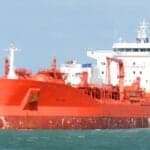


The cost of sending a very large crude carrier through the Strait of Hormuz and back is now about $20 million, but the trade remains profitable because Middle Eastern producers are selling crude at steep discounts, TotalEnergies Chief Executive Patrick Pouyanne said on Monday.
Pouyanne said producers inside the Persian Gulf were selling crude at around $50 to $60 a barrel as they were keen to get their supplies to the market after six months of conflict. Brent futures, by comparison, were trading above $90 a barrel on Monday.
A VLCC can carry about 2 million barrels of oil, meaning the additional freight cost of moving through the Strait of Hormuz works out to roughly $10 a barrel, Pouyanne said.
TotalEnergies is one of the largest traders of oil from Iraq and Qatar, two countries that have continued moving crude through the Strait of Hormuz in recent weeks, according to Pouyanne.
The waterway carried about a fifth of global oil flows before the Iran war and was also a major route for LNG shipments. The route has been disrupted during the six months of conflict because of threats of bombing and mines, although a growing number of producers have continued moving cargoes through it.
The continued movement of crude through the strait has helped prevent oil prices from rising sharply beyond $100 a barrel, while also creating profitable opportunities for traders and shipowners willing to take on the higher transport costs.
Some cargoes are shipped directly to refineries, while others are first moved to ships in the Gulf of Oman before continuing to their final destinations.
Difference Between Crude And Fuel Markets
Pouyanne said the situation is different for refined petroleum products such as gasoline and diesel.
Smaller product tankers carry less cargo, increasing the transport cost through Hormuz to as much as $50 a barrel, he said. At that level, moving refined products through the waterway is not commercially viable.
This has created a difference between the crude and fuel markets. Crude prices have remained bearish, partly because oil is still moving through Hormuz, while refined fuel markets remain tight.
Gasoline and diesel prices have also risen following Ukrainian attacks on Russian refineries, Pouyanne said. The limited movement of refined products through Hormuz has added to the shortage of oil products.
Iran Blacklists 45 Tankers
Iranian authorities have blacklisted 45 tankers that they said had broken its rules for crossing the Strait of Hormuz. The vessels could face fines, detention and cargo confiscation.
The announcement was made in an X post by the Persian Gulf Strait Authority, a new Iranian body established to manage the waterway.
Iran also said it would take action against vessels transferring cargoes with the blacklisted ships.
The list includes VLCCs, LNG tankers, LPG tankers and clean product vessels, among others.
TotalEnergies Looks at Alternative Export Routes
Despite the profitability of moving discounted crude through the Strait of Hormuz, TotalEnergies is continuing to invest in alternative export routes.
Pouyanne said the company plans to become a partner in a proposed pipeline linking Baghdad to Syria. It also plans to invest in doubling the capacity of the Fujairah pipeline in the United Arab Emirates.
The existing Abu Dhabi Crude Oil Pipeline, also known as the Habshan-Fujairah pipeline, can carry up to 1.8 million barrels of oil per day from Abu Dhabi’s oil fields to Fujairah on the UAE’s eastern coast, allowing exports through the Gulf of Oman without passing through the Strait of Hormuz.
References: Bloomberg, Reuters
Want to read more?
Check out the full article on the original site