India Plans 100 More Merchant Ships Over Next 5 Years To Cut Reliance On Foreign Shipping Lines

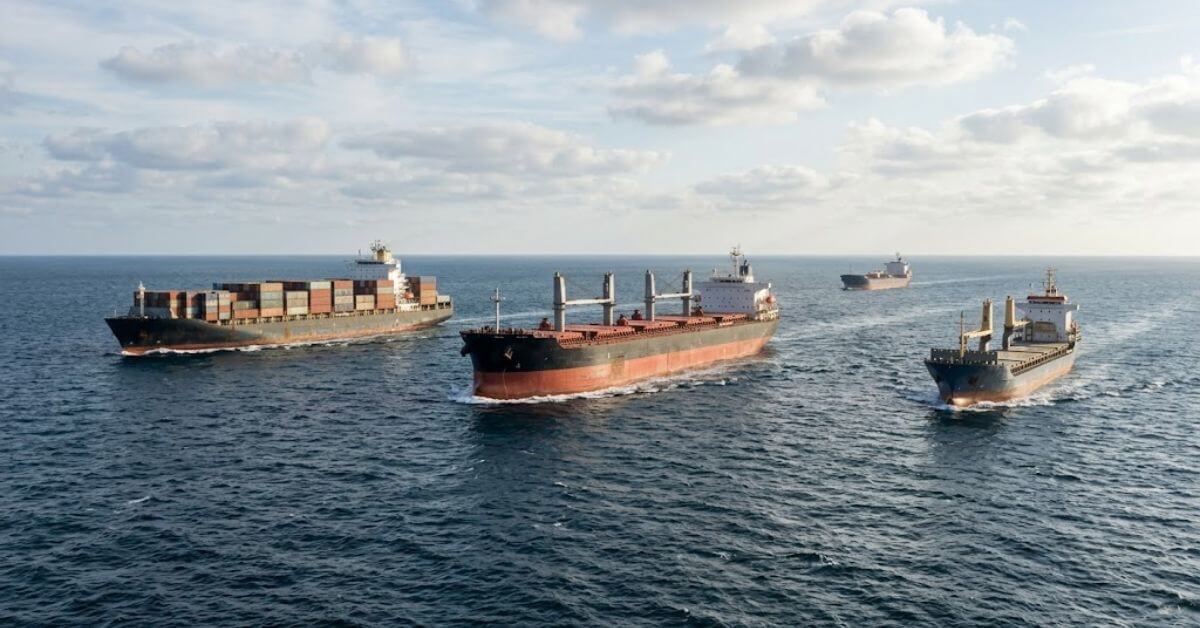
India is planning to expand its merchant fleet by 100 ships over the next five years, as part of its efforts to reduce dependence on foreign shipping companies.
Speaking at the first Sagar Samvad, Union Minister of State for Ports, Shipping and Waterways Shantanu Thakur revealed that India currently spends around $75 billion a year on foreign shipping firms just to transport essential cargoes like crude oil, coal, urea, and natural gas.
The event was organised by the National Shipping Board, a statutory body set up back in 1958 to advise the government on everything from shipping policy and tonnage to seafarer welfare and port development.
Thakur said the main issue was about competitiveness and demand, and the nation needs to have more control over its shipping capabilities.
The NSB has put forward a five-point plan aimed at making Indian shipping companies more competitive. The proposals cover tax reforms, guaranteed cargo allocations, simplified regulations, more affordable financing, and an easier overall business environment.
Indian vessels have higher operational costs
Indian ship owners say it’s currently 16-20% more expensive to operate under the Indian flag than under a foreign one.
This higher cost is due to taxes on ship imports and maintenance, deductions from seafarers’ salaries, freight taxes and higher financing costs in India.
The cost gap is also a problem under India’s Right of First Refusal system, which requires Indian shipping companies to match foreign freight rates to get cargo.
Industry representatives say these factors make it more difficult for Indian shipping firms to compete with foreign operators and expand their fleets.
According to Anil Devli, CEO of the Indian National Shipowners’ Association, several of these issues remain unaddressed.
The NSB panel said the plan could help India add 100 ships in the next five years and move closer to its goal of becoming one of the world’s top five ship-owning countries by 2047.
India has more than 1,500 vessels
According to government officials, India currently has about 1,600 ships under its flag.
A separate figure shared at the event said India has 1,544 vessels, including 492 overseas and 1,052 coastal vessels.
India’s fleet capacity crossed 14.2 million gross tonnes for the first time in March this year. In fiscal 2026, 92 new ships have been added to the Indian registry, together contributing 1.584 million gross tonnes.
Earlier Sonowal said that India may have 62 ships added in its register in fiscal 2027 which will be adding another 2.85 million gross tonnes of capacity.
Besides, the Indian government is encouraging foreign ship owners to register their ships under the Indian flag. Regflagging is the process of registering a ship in a different national flag country.
As per officials, shipping firms like France’s CMA CGM, Denmark’s AP Moller Maersk and Japan’s Mitsui O.S.K Lines have already done reflagging of their ships in India.
Officials said Hapag-Lloyd of Germany and Japan’s NYK are also expected to register vessels under the Indian flag.
Shipbuilding and ports also part of the plan
The fleet expansion is part of India’s Maritime Amrit Kaal Vision 2047 and Maritime India Vision 2030.
According to Sonowal, India will quadruple its port capacity to 10,000 million tonnes per annum by 2047.
The government offers financial assistance in building ships and also subsidies for establishing and developing shipyards.
Apart from this, the government has also introduced the ₹10,000 crore Container Manufacturing Assistance Scheme. Sonowal said Maersk has started ordering containers made in India.
Focus on seafarer jobs
The government is also focusing on creating more jobs for young Indians.
Labour and Employment Minister Mansukh Mandaviya said India’s large pool of seafarers could help the country become a major supplier of skilled maritime workers.
He called for more training, job opportunities, and industry-led skills programmes. He also said the sector needs to reduce the gender gap in maritime jobs and develop skills for areas such as cruise shipping and advanced shipbuilding.
References: business-standard, Livemint
Want to read more?
Check out the full article on the original site