Mysterious 18th-Century Shipwreck Off Mexico Points To Possible Involvement In Caribbean Smuggling
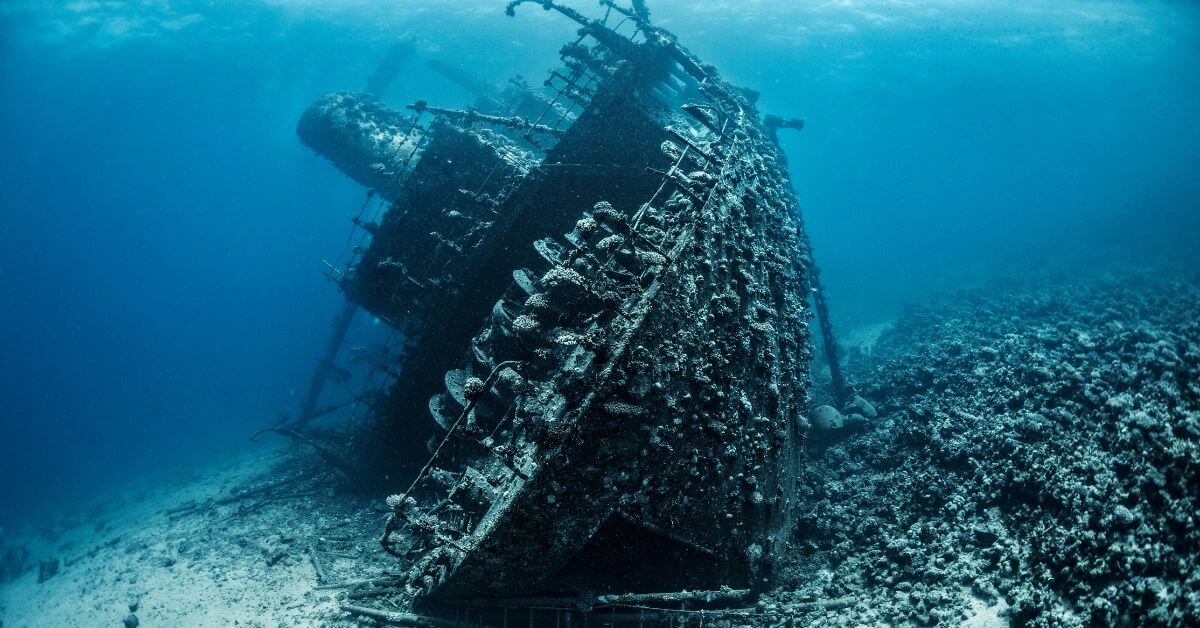
Archaeologists have traced the final movements of a ship that sank more than 250 years ago off Mexico’s Yucatán Peninsula.
The shipwreck, called the Ánimas de la Victoria, is in Espíritu Santo Bay in Quintana Roo. The site has 19 cast-iron cannons and four anchors on the seabed.
The wreck is inside the Sian Ka’an Biosphere Reserve, about 4.25 kilometres from the coast near the fishing camp of La Victoria.
The area is remote and has no roads. It is the only documented 18th-century shipwreck found in the bay so far.
Wreckage Covers 200 Metres
The wreckage is spread over about 200 metres. It runs from east to west, in the same direction as the waves that break over the reef. The site is between about 7 metres and 1.5 metres deep.
The way the objects are spread out may show what the crew tried to do before the ship sank. The four anchors are important to the study.
Anchor 1 is the smallest. It has straight, V-shaped arms and looks similar to British and French anchors. Its size and shape are closer to a French design from 1731.
Researchers think it may have been a small kedge anchor. Such an anchor could have been used to move the ship around the bay.
Anchor 2 was found below Anchor 1. It has curved arms and is linked to the Early Modern period. It was probably used in calmer waters.
Anchor 3 is the largest. Its shank is 4.70 metres long. Its shape is more common in anchors from the 16th and 17th centuries.
Researchers think it may have been made decades before the ship sank and used for many years.
British naval tables from the period suggest that the anchor would have weighed about 1,650 kg.
This suggests that the ship had a gross tonnage of between 650 and 700 tons. Its size fits a merchant frigate or, more likely, an armed merchant vessel.
Anchor 4 was found farther west. Its shank is bent. Researchers say it may have been damaged after getting stuck while the crew was pulling it back onto the ship.
19 Cannons Found at the Site
The site has 19 cast-iron cannons. Thick coral covered much of them. Researchers cleaned the cannons by hand with a hammer, chisel and wire brush.
A raised letter “C” was found on the trunnions of two cannons, C8 and C10.
The letter could be linked to the Le Creusot foundry in Burgundy, France, or the Conster foundry in Sussex, England.
Conster made cannons between 1700 and 1760. It was also known to supply weapons to British ships.
Researchers also looked at a four-pound cannon that local fishermen had taken from the wreck earlier. It is now privately owned.
The cannon appears to match British casting standards from the middle of the 18th century.
Why Researchers Suspect Smuggling?
The ship’s location is one reason researchers believe it may have been involved in smuggling.
Spanish ships generally did not use these reef-filled waters. The area was far from the Crown’s usual routes through the Yucatán Channel.
Spain also had little presence along the eastern coast of Yucatán. There were no large ports or settlements there. Bacalar was the main Spanish outpost nearby.
Navigation records also show how isolated the area was.
Even in 1810, the Practical Guide to the Antilles Islands did not give navigation instructions for waters north of the Belize River. It also warned ships about the reefs.
Researchers say smuggling is therefore the main explanation for the ship being in Espíritu Santo Bay.
The study was published in the Journal of Maritime Archaeology and was led by researcher Helena Barba-Meinicke.
References: clickpetroleoegas, dailygalaxy
Want to read more?
Check out the full article on the original site