Dubai’s Jebel Ali Port Falls Out Of Global Top 30 As Strait Of Hormuz Disruption Cuts Gulf Traffic
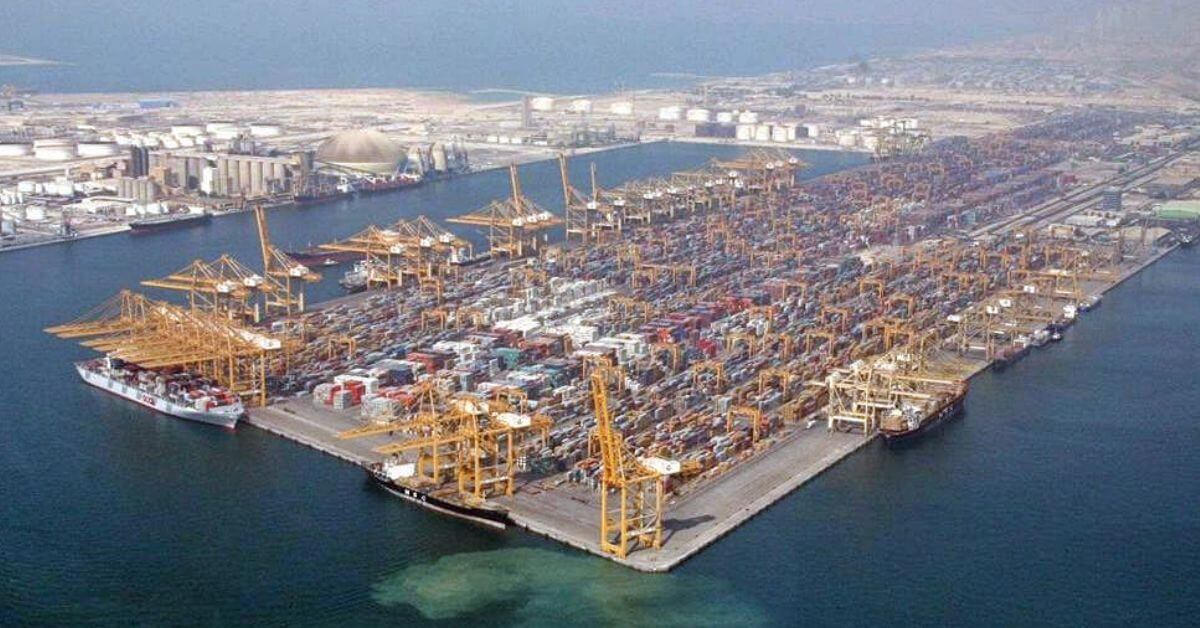
Dubai’s Jebel Ali port has fallen from 10th to 32nd place in the global container port rankings after a sharp drop in container traffic linked to disruption around the Strait of Hormuz.
Jebel Ali handled 3.14 million TEU in the first half of 2026, down from 7.77 million TEU a year earlier, a fall of almost 60%.
The drop was even sharper in the second quarter, when the port handled just 374,000 TEU, down more than 90% from a year earlier. Volumes in the first quarter had fallen 23%.
Jebel Ali has traditionally been one of the world’s 10 largest container ports. Alphaliner said its fall in the rankings was due to geopolitical disruption in the Middle East, especially restrictions affecting shipping through the Strait of Hormuz.
Jebel Ali is inside the Persian Gulf, so most vessels calling at the port have to pass through the Strait of Hormuz.
Gulf shipping hit by Hormuz disruption
The Strait of Hormuz was close to shutting down from March before partially and unevenly reopening in June.
Shipping companies changed some Gulf services, which sent more container traffic to other transshipment hubs.
Meanwhile, Colombo was one of the ports that benefited from the change. It handled 4.44 million TEU in the first half of 2026, up 11.9% from a year earlier, and moved from 26th to 20th place in the rankings.
The Sri Lanka Ports Authority said transshipment made up almost 85% of Colombo’s container business.
India’s Jawaharlal Nehru Port, also known as Nhava Sheva, also moved up the rankings, from 28th to 21st.
Abu Dhabi’s Khalifa Port saw the opposite. Alphaliner estimates that its container volumes fell by at least 50%. The port dropped out of the global top 50 after ranking 32nd last year.
UAE expands routes around the strait
The disruption has also led the UAE to expand transport options that do not depend on the Strait of Hormuz.
Since March, DP World has moved 500,000 TEU through road and rail corridors across the Gulf Cooperation Council. The network can handle about 3,000 truck movements a day.
DP World has also set up bonded routes between Jebel Ali and the Gulf of Oman ports of Fujairah and Khorfakkan. It added 700 trucks and increased inland container capacity.
In July, DP World signed a 50-year deal to develop two terminals on the UAE’s east coast.
One of the terminals will be at Al Rugaylat in Fujairah. It is expected to eventually have annual container capacity of 2.5 million TEU. The terminal would give ships access to a UAE gateway without having to enter the Strait of Hormuz.
The UAE is also developing a second oil pipeline to Fujairah. The pipeline could double the emirate’s crude export capacity there to 3.6 million barrels per day.
Shanghai remains at the top
Shanghai remained the world’s busiest container port in the first half of 2026. It handled 28.74 million TEU, up 6.2% from a year earlier.
Ningbo-Zhoushan moved into second place with 22.9 million TEU, up 8.8%. It overtook Singapore, which handled 22.74 million TEU, up 4.7%.
It was the first time Ningbo-Zhoushan had ranked above Singapore over a six-month period.
Chinese ports took six of the top 10 positions. Shenzhen ranked fourth with 18.56 million TEU, followed by Qingdao with 17.56 million, Guangzhou with 14.03 million and Tianjin with 13 million.
Busan ranked eighth with 12.6 million TEU, slightly down from the previous year.
The combined Los Angeles-Long Beach gateway ranked ninth with just under 10 million TEU, up 2.8%. Alphaliner said part of the increase came from importers bringing Asian cargo forward before changes to U.S. tariffs.
Port Klang moved into 10th place after Jebel Ali dropped out of the top 10.
European ports
Rotterdam ranked 12th with about 7.02 million TEU, down 0.1%.
Antwerp-Bruges ranked 13th after its container volumes fell 1.5%. It moved up one place mainly because Jebel Ali dropped in the rankings.
Hamburg handled about 4 million TEU, down 3.8%. It fell four places to 27th.
Overall, container volumes at the world’s leading ports grew by an estimated 5.2% in the first half of 2026.
References: Transinfo, India Global News
Want to read more?
Check out the full article on the original site