Iran Claims It Captured U.S. Navy Submarine Near Hormuz That Can Autonomously Conduct Missions For 10 Days


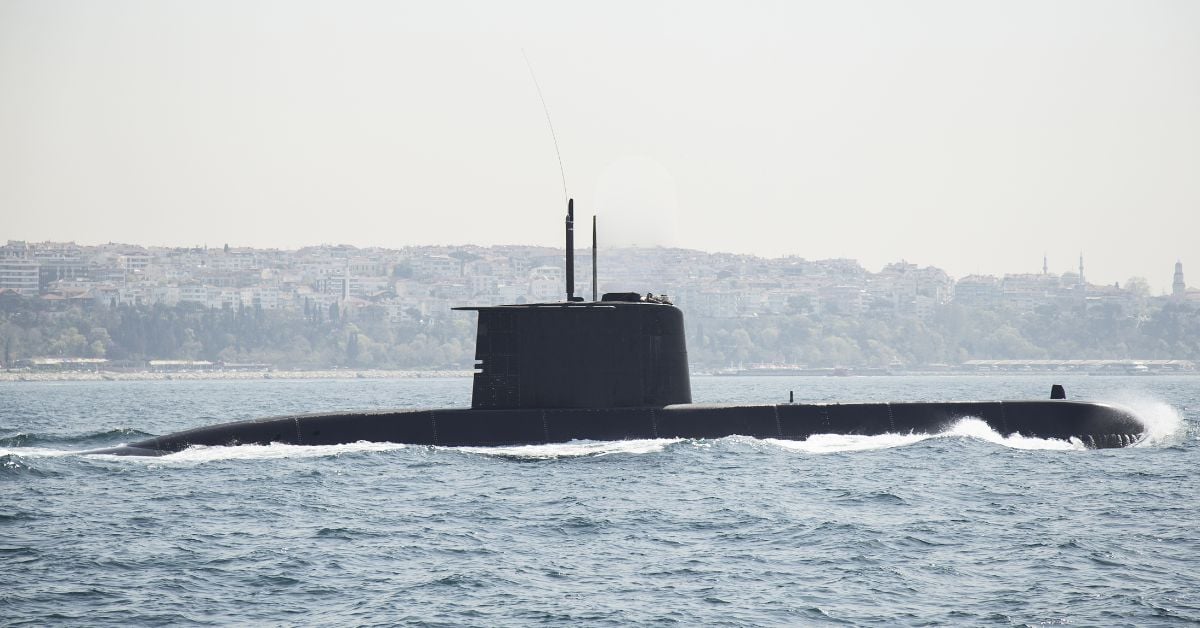
A U.S Navy’s unmanned submarine has been captured by Iran’s Islamic Revolutionary Guard Corps, near the Strait of Hormuz, according to Iranian sources, which have also released images of the same. The submarine can perform autonomous missions for 10 days at a depth of 6000 metres underwater.
The underwater drone is likely the Dive-D of Anduril, an American company that builds autonomous weapon systems, robotics and AI-powered defence systems. It can perform surveillance, intelligence, and reconnaissance operations along with mine warfare and other missions.
It has a high-tech interface and AI-driven mechanisms which enable integration and swift configuration of different payloads and sensors.
The submarine delivers high efficiency at a low price and enables integration of several types of weapons. It can be configured for both naval and commercial operations, which makes it quite flexible.
The incident has not been confirmed by the U.S.; however, it is important because of the growing importance and participation of unmanned aircraft and underwater drones in naval operations.
Autonomous underwater vehicles are different from traditional submarines as they can be deployed on longer missions without risking the lives of the crew members. They are low-cost, highly effective and precise.
The Anduril submarine, which Iran claims to have captured, is 5.8 m long and weighs 3 tonnes. It can be configured with different kinds of sensors, equipment and weapons depending on the mission or the target and works equally well within all integrations, making it a preferred choice of the U.S. Navy.
These unmanned, remotely operated submarines can be sent into dangerous waters for gathering information or even conducting underwater surveys and mine search operations without risking the lives of sailors.
The U.S. and many other countries are investing heavily in drone technology along with AI-powered hypersonic weapons.
Want to read more?
Check out the full article on the original site