Japan Plans Drone-Mounted Quantum Sensors To Track Chinese Submarines
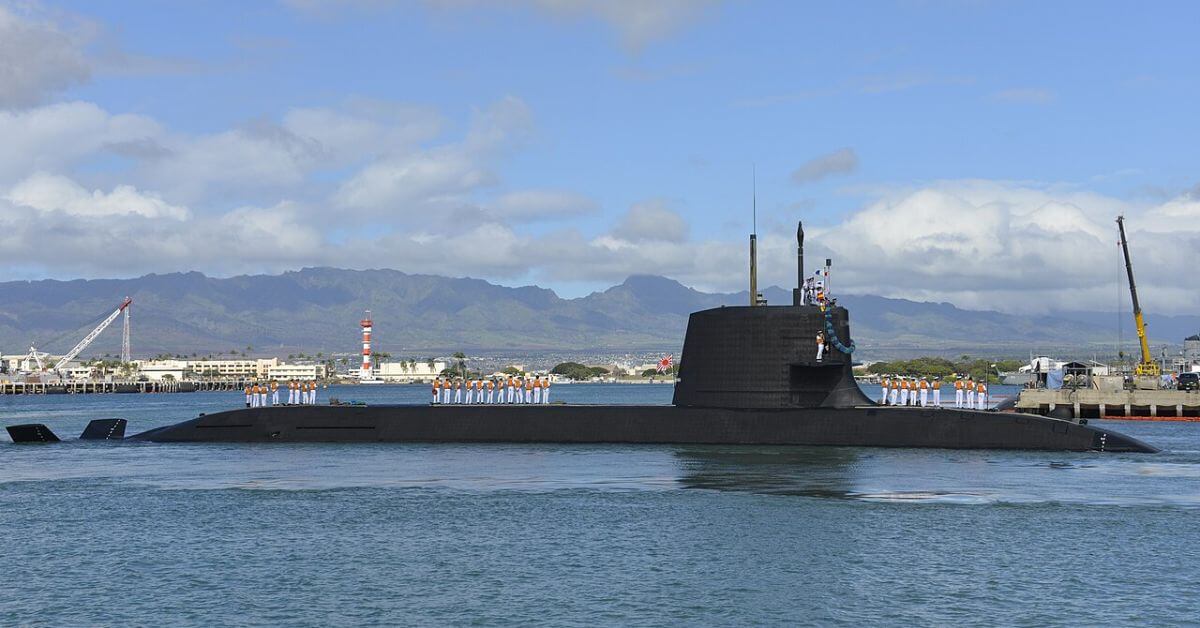
Japan plans to develop small quantum magnetic sensors that can be carried by drones to help find submarines at sea.
The project is part of Japan’s fiscal 2027 defence budget request. The Defence Ministry wants to complete development by fiscal 2031, according to the Nikkei newspaper.
The sensors would be fitted to low-cost drones flying close to the sea surface. The drones would operate from warships.
Quantum magnetic sensors use the properties of atoms to measure very small changes in magnetic fields. A submarine can change the magnetic field around it, which may allow the sensor to detect it.
The sensors could be used with existing systems such as sonar and sonobuoys. Drones could also carry out searches without putting aircrews at risk.
The technology has one major limitation. Magnetic sensors can only detect changes over a limited range.
Masashi Murano, a defence specialist with the Washington-based Hudson Institute, said they are not suitable for searching very large areas of ocean.
But he said they could be useful around chokepoints.
Chinese submarines heading towards the Pacific have to pass through several narrow waterways. Japan could place large numbers of low-cost drones around these routes and use them to watch for submarines.
Murano said crewed anti-submarine operations were “extraordinarily expensive per unit of ocean searched”. He said unmanned systems could reduce the cost of keeping watch over an area.
Japan already uses P-1 maritime patrol aircraft for anti-submarine operations. The drones would provide another way to monitor selected areas.
China has tested a similar system
China is also developing quantum magnetic sensors for submarine detection.
Chinese researchers reported last year that they had tested a drone-mounted quantum magnetic sensor system at sea.
Beijing has also added other anti-submarine systems to its military.
These include the Y-9Q maritime patrol aircraft and the shipborne Z-20F naval helicopter.
China has also developed a Wing Loong X drone variant that can drop sonobuoys. The devices can form temporary underwater listening networks.
China is also working on an ocean surveillance system. It includes satellites, buoys, underwater gliders and seabed listening arrays.
Some analysts have called parts of this system an “Underwater Great Wall”.
The Pentagon expects China could operate around 80 submarines by 2035 as its shipbuilding capacity increases.
US and allies are also developing unmanned systems
The United States and its allies are working on new unmanned systems for anti-submarine warfare.
General Atomics has tested its MQ-9B SeaGuardian with a larger sonobuoy payload.
The U.S. Navy has also asked industry for input on Silent Anvil, a compact air-launched torpedo.
The weapon could eventually allow both crewed and uncrewed aircraft to attack submarines.
Australia, Britain and the United States are developing payloads for autonomous underwater vehicles under AUKUS.
Japan has also joined the three countries in testing underwater acoustic communications for maritime autonomous systems.
References: interestingengineering, scmp
Want to read more?
Check out the full article on the original site