I'll Never "Heal" From Clinical Depression. And I'll Never Give Up the Career That Triggers It
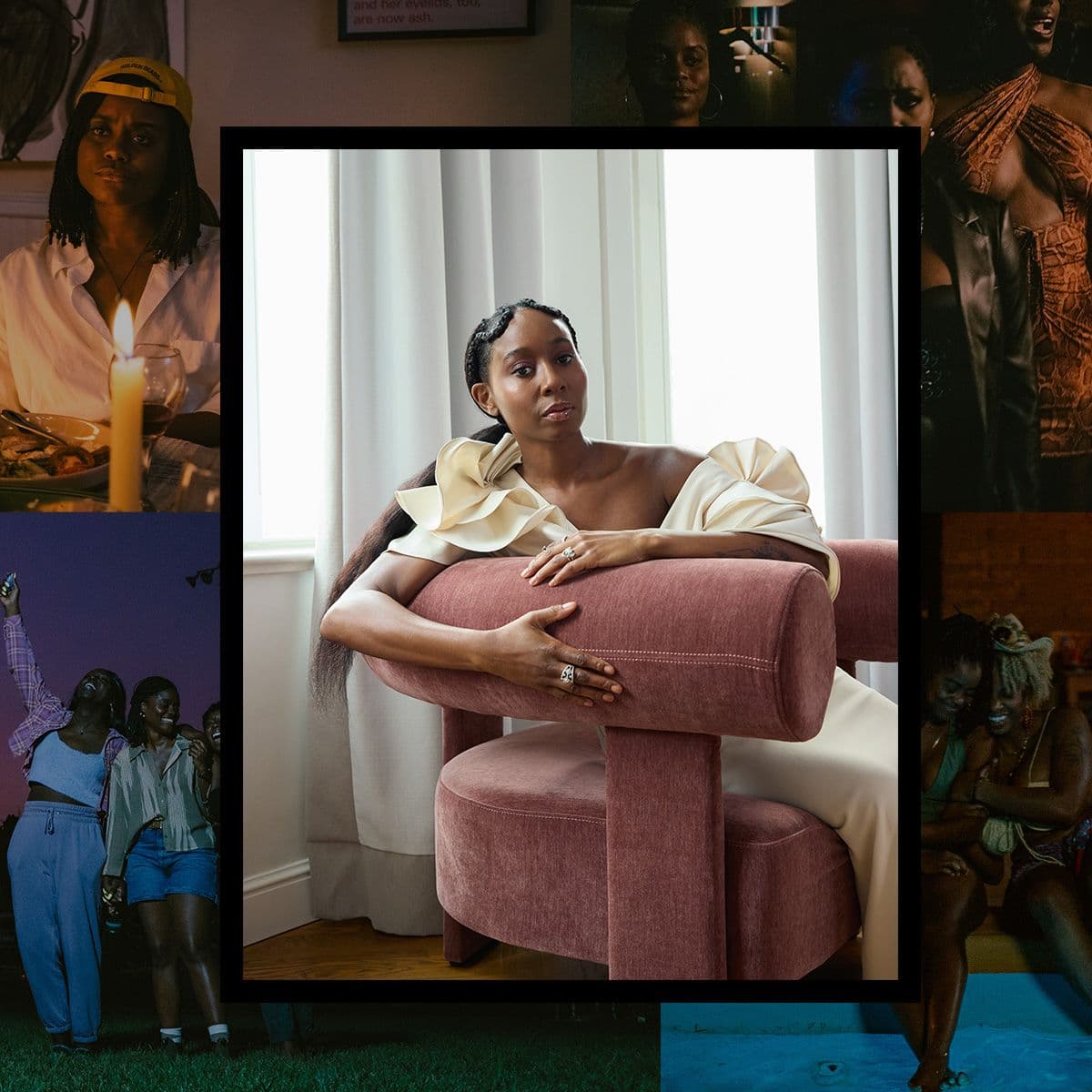
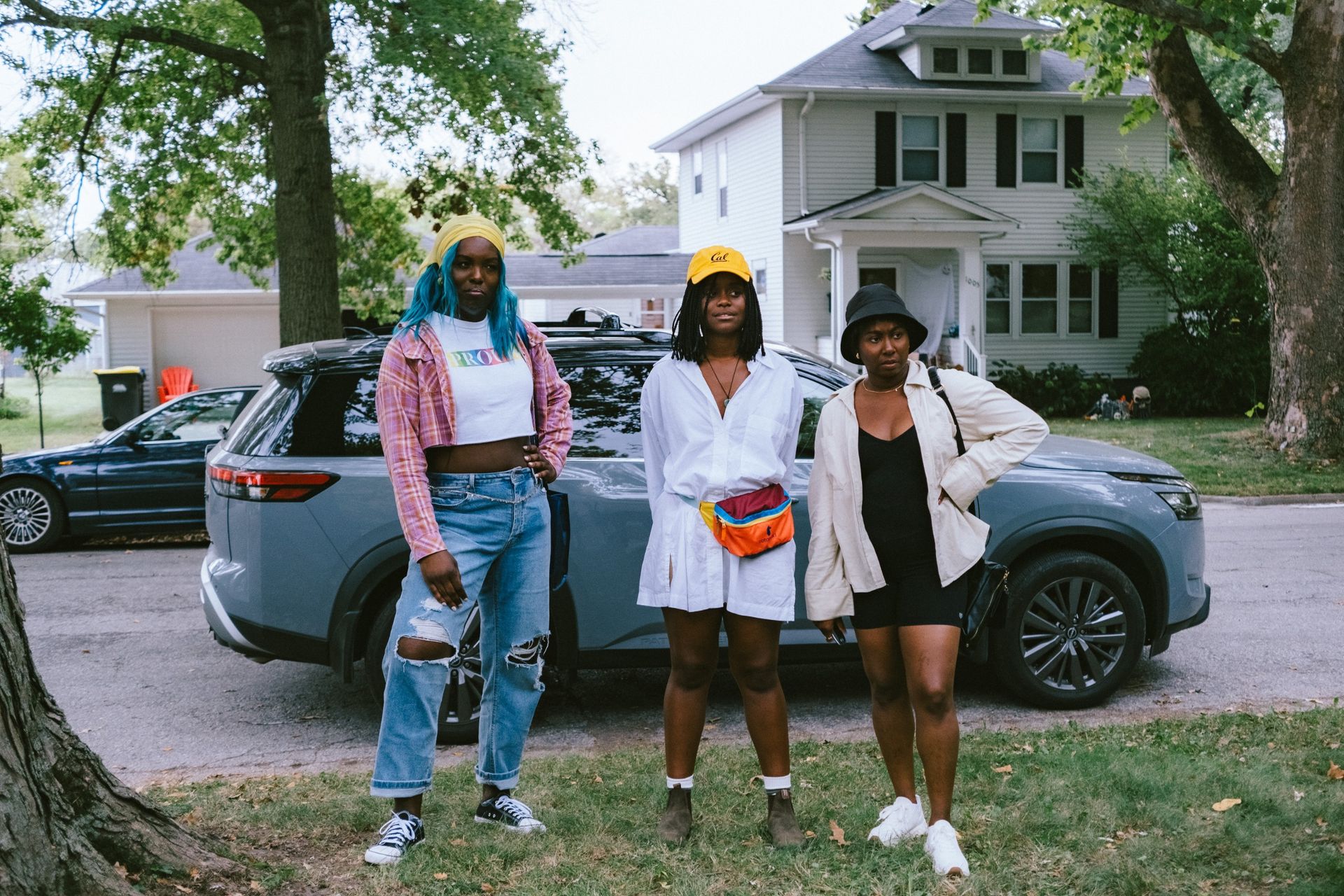
Dreams in Nightmares—a road movie about a trio of queer besties venturing cross-country to find their friend who seems to have disappeared—is one of the year's most acclaimed word-of-mouth successes. The dramedy from auteur Shatara Michelle Ford hit the festival circuit in 2024 before releasing in theaters this August, and has since won over cinephiles with its visionary direction and heartfelt story about found family and freedom.
It stars Denée Benton, Dezi Bing, and Sasha Compère—whose character, Tasha, has a path that parallels one she nearly took herself. The resident no-nonsense member of the central group, Tasha decided to forgo her acting aspirations to pursue a more stable, corporate career. Compère considered doing the same—but felt in her heart that she needed to pursue the arts, especially innovative projects like Dreams in Nightmares.
As Dreams in Nightmares continues to expand to theaters nationwide, Compère shared an exclusive essay with Marie Claire about how her life as a creative has affected her mental health, and vice versa.
I recently found an old journal entry I wrote in 2009. I had just seen The Curious Case of Benjamin Button and journaled about the moments that resonated with my loneliness and feeling like a misfit. In my tattered journal, I wrote: “I cried almost every five to 10 minutes, because every scene exerted a new form of beauty and thought that I’ve either never considered or never vocally expressed for fear that no one would understand or handle my thoughts…[A] movie quote: ‘Our lives are defined by our opportunities, even the ones we miss.’ The story of my life—and all of our lives. Love lost, scars, ups and downs; [they] all bring us to where we are. Sometimes I wish I could change one event from the past…but who knows where it would have left me.”
I’m not sure the movie would hold up, or that I’d see it the same way today—but I still think about my life journey, and how my creative path has affected my mental health. I often wonder what effects a different career might’ve had. Much like my character Tasha in Dreams in Nightmares, I have actually tried other paths.
I grew up in Detroit. Around age 6, we moved to Oak Park, a small suburb in Michigan about a mile north of Eight Mile. As a kid, I’d film short skits on a camcorder with my sister and whoever was around to take direction. My parents once drove me all the way to Buffalo, New York for a modeling/acting competition—one of those “agent search” things (that I’m still not sure wasn’t a pyramid scheme). I was selected to move on after the first round, elated. But in the next round, as I walked the “catwalk,” a sharp pain struck my stomach, and I ended up doubled over, walking hobbit-like down the runway.
Heartbreakingly, I was let go. As it turns out, I had a gas bubble the size of a fist in my stomach. However, I—ever the drama queen—thought my appendix was bursting, and sobbed uncontrollably until a huge fart of relief stopped my tears on the car ride back to Michigan.
After that experience, and recognizing the financial toll it took on my family to drive cross-state for a dream I couldn’t actualize, I vowed not to waste their time and to focus on my education. As a child of two Haitian immigrants who endured so much strife, and who each worked overtime at multiple jobs for my sister and me to attend private school, following the arts felt selfish. Despite having a treasure trove of emotions fit for an actor’s toolbox, I ended up attending the University of Michigan’s Ross School of Business while taking drama classes for a theatre minor. My imposter syndrome and intense fear of disappointing my hardworking parents kept me from fully expressing my true wants and desires.
After college, I hustled for two years doing “real jobs” in New York, first at a magazine, then at various music television companies (VH1, MTV, Fuse Networks), all while working weekends at restaurants in order to pay my share of our insane Brooklyn rent (basically a shoebox, split with roommates). Working in the music business felt like a solid compromise, satisfying my passion for art and my desire to please my parents. I figured stable work over time would equal success and, eventually, happiness. It was a stable paycheck…but the happiness never came. I was overworked and still taking weekend jobs at restaurants to pay rent. While I still pursued acting, dance, and underground theatre at night, I didn’t feel creatively fulfilled; I knew that acting was where I fully wanted to be.
I would go to work every day, looking towards the future, preemptively excited for that 'one day' when I wouldn’t be at the office anymore and could finally be 'happy.'
I flew out to L.A. on a one-way ticket and never looked back. But this path hasn’t been easy, and I spent years suppressing a constant feeling of unhappiness that I couldn’t quite describe. I was always smiling, and on the outside, I seemed to have a positive attitude & strong work ethic. I hustled, working multiple jobs, performing theatre, and wrote myself a SAG-eligible new-media short so I could get an agent and auditions. My friends were impressed, but I burned out fast.
After four years of waitressing and booking bit parts on various TV shows, I craved stability again. I had left my agents and gone back to corporate work, this time for companies like NBC and OWN. Truthfully, I wasn’t sure if I’d return to acting until a casting director reached out on C-mail (thank goodness I hadn’t canceled Actors Access!) and asked me to audition for a new gig. I booked it, and that hit of creativity reignited my hustle. I would go to work every day, looking towards the future, preemptively excited for that “one day” when I wouldn’t be at the office anymore and could finally be “happy.”

I remember subtle signs that something was wrong during the peak of a good year. After booking my second series regular on an HBO show, I noticed I was struggling with depth perception while driving, feeling as though the car would slam into a wall while parking, or that I might topple over when riding my bike. But I was moving to New York with only a few weeks' notice, and figured it would all work itself out.
It was an amazing blessing, but I didn’t feel like myself. One wintry morning on a jog across a bridge in Harlem, I found myself sobbing while experiencing intense vertigo, shaking to the point of having to crawl to cross the bridge. I found a therapist and learned I had high-functioning depression and had been having panic attacks. I was in shock: My entire life had changed just how I wanted, yet I was going through the motions, constantly scared about how long it would last. That fear was prohibiting me from being present enough to appreciate what would soon be a great period in my career.
My therapist warned me that healing from clinical depression is a lifelong journey; my understanding is that you learn to “cope” more than to “heal.” In my third year of diagnosis, I opted to start Zoloft. Ultimately, I decided medication wasn’t my favorite way to cope, yet I acknowledge it works so well for many. Instead, therapy became my lifeline. I’ve since learned tricks and tips to notice when the depression is taking over and how to self-regulate.
My entire life had changed just how I wanted, yet I was going through the motions, constantly scared about how long it would last. That fear was prohibiting me from being present enough to appreciate what would soon be a great period in my career.
Let me just say: Writing about depression is hard, and the depression frequently gives me writer’s block. You overanalyze, thinking what you want to say will be too much, too personal, or at risk of being misunderstood. Those of us dealing with depression, especially when things look good, often sit in silence because we’re just too afraid to speak or bother anyone with our thoughts. That’s why I became an actor. Not because I’m some extroverted, “look-at-me” entertainer, but because digging into my character and exploring another's language is so much fun and liberating, especially when it can be too hard to explore my own. But after being in entertainment for 15 years, I’ve learned that being an actor and having depression go pretty hand-in-hand. To repeatedly volunteer to explore all the plausible highs and lows of emotions? And couple that vulnerability with the hundreds of rejections I get every year? It can take a toll on even the strongest minds. Yet, acting is my favorite thing to do.
To be clear, there is no meritocracy; no “work your way up the ladder” sense of stability. One can work consistently for a year (or several) and be completely jobless the next. The biggest challenge has been managing the toll of an unstable business and ensuring that stress doesn’t negatively impact my mental health or my chosen community.

My career has been filled with ups and downs: thousands of rejections, losing talent representation due to agency shutdowns, struggling with an eating disorder from the pressure to be thin or “pretty” enough to work, six blessed years working on amazing projects like Uncorked, Miracle Workers, Love Life, Single Drunk Female, Genius, a strike and two-year work drought, a second painful breakup with someone I thought I’d marry, selling a home, losing multiple loved ones to illness, returning to corporate America yet again while rebuilding my artist life…the toll on my mental health has been massive, and when you’re clinically depressed, it’s hard to be a good friend. But I’ve learned that having friends and a community, one that accepts you at every stage of depression, is not only a blessing but necessary for survival. And friendship isn’t perfect. My friends still get mad at me, especially when I pull away, disappointed by the way life is going (a perfectionist hates being vulnerable about their faults). But my community is often there when I find my way back to the present and remember that I can only take life one day at a time.
Like Tasha, I’m often scared of what the future holds. As a Black female in entertainment, precedent hasn’t painted a hopeful picture for us. Being a successful artist is often prohibited by not being enough of a “commodity.” Even as I start to produce my own projects, I’ve been told that no one would put up the money for an actor/director who they don’t deem as “bankable.” Sadly, dark-skinned Black women aren’t often cast in lead roles in American cinema and television. The catch-22 is that if you give more Black women an opportunity, they might become a commodity.
When Dreams in Nightmares came along, I was starved for a project that featured people who looked like me. Being able to play an anxious, depressed femme unhappy with neglecting an acting career was both kismet and by design; the script was a Mike Leigh-style outline, and with limited time to rehearse due to the WGA and SAG strikes, we had to infuse our characters’ improvisations with pieces of our lives.
The truth is, I don’t know the secret to dealing with depression as an artist, but I do know that I’m at my happiest when I find others who can understand and handle my thoughts. My community, my therapist, and my accepting family have been my saving grace when navigating the ups and downs of life. They guide me to stay present and to worry less about what tomorrow will bring. And when life gets a little too hard to handle, they give me the grace and space to take time alone, only rejoining them when I’ve had the time to heal.
Want to read more?
Check out the full article on the original site