Commercial Ships Must Not Become Targets Of Geopolitical Tensions, India Says
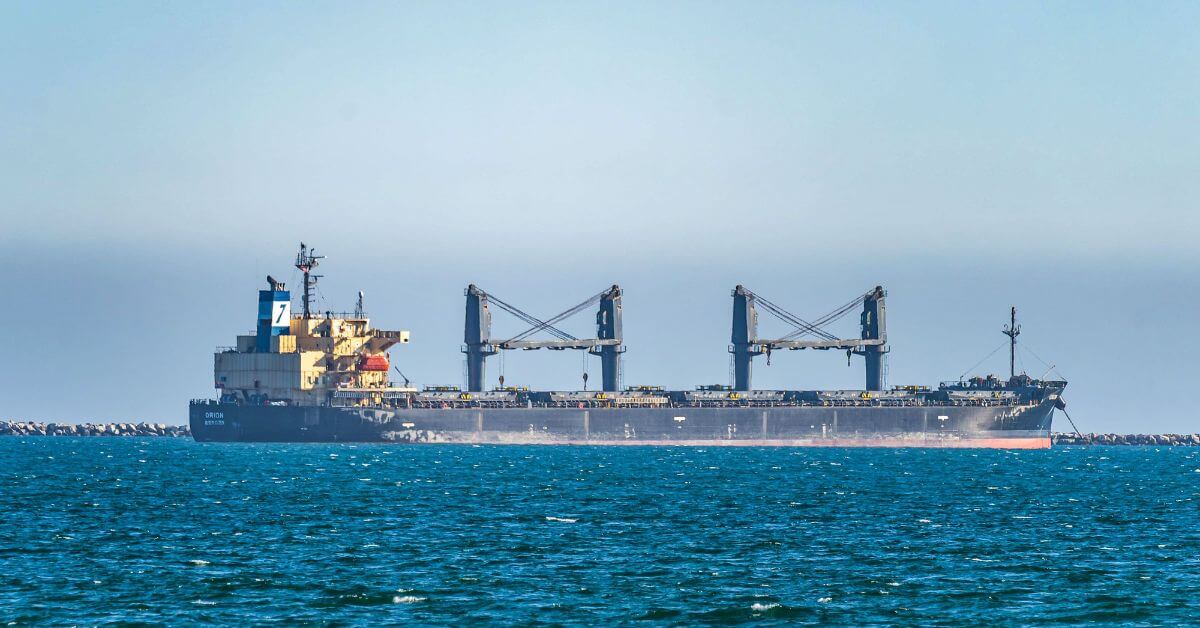
India has told the United Nations that commercial ships must not be targeted because of geopolitical tensions as the conflict in West Asia continues to affect shipping through the Strait of Hormuz, the Red Sea and the Gulf of Aden.
India’s Permanent Representative to the UN, P Harish, made the statement at a UN Security Council meeting hosted by Bahrain on September 17.
The meeting was held under the Arria-formula format and was titled “Safe Seas, Shared Security: Protecting Freedom of Navigation in an Evolving Security Environment”.
“Commercial vessels must not become targets of geopolitical tensions,” Harish said.
He also said navigational rights must not face “coercion, threats, unlawful restrictions or arbitrary interference”.
India supports a “free, open, secure and rules-based maritime domain”, Harish said. He added that navigation and overflight rights must be respected under international law, including the UN Convention on the Law of the Sea.
Harish said problems at major sea routes can quickly affect shipping costs.
Freight and insurance costs can rise when ships face security risks. Ships may also have to use longer routes.
Developing countries can be hit harder by these disruptions, he said.
India said countries should have plans to keep commercial and humanitarian cargo moving during a crisis. It said action should not begin only after an incident has taken place.
The problems in the Gulf and West Asia have also affected energy supplies.
Harish said the blocking of the Strait of Hormuz disrupted oil and gas supplies and led to a steep rise in global petroleum prices.
India has also suffered collateral damage during the conflict in the Strait of Hormuz.
New Delhi has protested to Iran and the United States over incidents in which Indian sailors were killed. It has also protested to Iran over an attack on an Indian-registered ship.
In April, Islamic Revolutionary Guard Corps gunboats fired warning shots at two Indian-flagged tankers.
In July, an Indian sailor was killed and another was injured in Iranian attacks on two UAE-registered ships. India protested both incidents to Iranian diplomats in New Delhi.
In June, India called in the US embassy’s charge d’affaires in New Delhi. It protested the killing of three Indian sailors when the United States attacked their Palau-registered ship.
Indian Navy Supports Merchant Ships
India has also been using its Navy to support shipping in the region.
As of September 14, Indian security operations in the Gulf of Aden and Red Sea had escorted more than 449 merchant vessels.
The ships were carrying nearly 20.3 million metric tonnes of cargo and oil worth more than $8.4 billion.
After the situation in West Asia worsened, the Indian Navy launched Operation Urja Suraksha.
By mid-March, 11 Indian Navy units had been deployed in the western Arabian Sea to protect trade.
India said these operations were helping merchant ships move through waters facing security problems.
Harish also called for better coordination between existing maritime security systems. He said this should be done while respecting the sovereignty of coastal states.
India’s Information Fusion Centre, Indian Ocean Region (IFC-IOR) is now listed as a reporting centre in the International Maritime Organisation’s Best Management Practices on maritime security, Harish said.
New Delhi also wants the IFC-IOR to be added to IMO Maritime Safety Committee Resolution 324(89).
India also called for better support for seafarers during maritime crises.
It also called for navigation rights to be protected under international law and for countries to work more closely through existing maritime security mechanisms.
References: wionews, ommcomnews
Want to read more?
Check out the full article on the original site